HelloChinese review: what Premium and Premium+ actually get you
Our HelloChinese review: the HSK 3.0 course, now 2,500+ words, its speaking drills, 1,000+ graded stories and every plan's price, checked October 2026.


Ask a chatbot which app to learn Chinese with, and it will probably say HelloChinese. Most of the reviews behind that advice describe a course that changed in August.
This review is for you if you're deciding whether HelloChinese is worth paying for, and which plan to buy. We checked its prices and features on HelloChinese's own pages and listings, and read what learners said about it in 2025 and 2026.
Key takeaways
- The course goes further than most reviews say. Since August it teaches 2,500+ words, more than the new HSK 4 list.
- It's made for beginners. Short lessons, a pinyin course and Teacher Talk explanations make the first months easy to follow.
- The stories are the best reason to pay. The full library of graded stories comes with Premium+, the pricier plan.
- Speaking means repeating. You say set lines and see each character marked right or wrong, but nothing asks you to make your own sentences.
- Pay yearly, or wait for a sale. A year of Premium costs less than half of paying month by month.
- Plan for what comes after. The course ends around HSK 4, and it won't hold a conversation with you.
Strong for starting out and reading, weak for talking
HelloChinese does a beginner's jobs well and leaves out the hardest one: speaking freely. We read its listing, its release notes and a year and a half of learner threads, then scored each part:
What you need · Verdict · What HelloChinese gives you
A gentle start from zero
Strong
A pinyin course, then short lessons with Teacher Talk explanations
Reading at your level
Strong
Graded stories with audio, the full library on Premium+
Writing characters
Strong
Stroke-by-stroke handwriting practice
Listening
Partly
Story audio, and native-speaker clips that learners find short
Pronunciation and tones
Partly
Repeat a set line and see each character marked
Material past HSK 4
Partly
The course stops at about 2,500 words
Real conversation
Missing
Nothing open-ended; one learner mentions some AI lessons
Sources: HelloChinese's App Store listing and release notes, and learner threads on r/ChineseLanguage. Each row is explained below.
If you want a course that gets you reading and writing, we think HelloChinese is one of the strongest. If you want to talk, plan on a second tool from day one.
The course now runs past the new HSK 4
HelloChinese's main course is a path of short lessons from zero to upper intermediate. In August it grew again, and HelloChinese says it now covers 2,500+ words and 430+ grammar points.
That's the new course, which learners started getting in April 2025. The old course, built on the HSK used before 2021, is still in the app, and the team says it will stay.
We set the new course's size against the word lists of the new HSK exam:
Source: HelloChinese's August 2026 App Store release notes; the 2025 HSK syllabus that the new exams use from 13 December, counted in our HSK 3.0 guide. HelloChinese doesn't publish its word list, so this compares sizes, not the words themselves.
One caveat if you're aiming at the exam. HelloChinese's team said its stories and new course follow the 2021 HSK standard. The new exam's own syllabus uses smaller lists at every level. Its HSK 1 has 300 words, where the standard has 500.
So we'd treat HelloChinese's HSK labels as a guide, not as exam levels. For a beginner, the course is still a long road: roughly the first four levels of the new exam.
Each unit pairs new words with a story
The new course alternates two kinds of unit, as learners describe it. A content unit teaches a handful of new words and grammar, then drills them. A "pit stop" unit follows, and it's the clever part.
Each pit stop has three parts:
- A chapter of one running story, written with the words you just learned.
- A speaking lesson, which HelloChinese added to every pit stop in October 2025.
- A spaced review that brings back older words before you forget them.
Teacher Talks explain what drills can't. One learner's example: why you can say "my mom" as 我妈妈, without the 的 in 我的妈妈.
Some practice rounds target the mistakes English speakers make. In one question the team described, you have to resist translating the "is" in "the restaurant isn't at the front". Chinese uses 在, "to be at", for where something is, so 是, "to be", is the trap.
The flip side is repetition. Several learners say every level runs the same exercise types with new words, and one switched apps near the end because of it.
We'd set a pace you can keep. One learner who did a pair of units a day, a little over an hour, called it a simple daily goal.
Speaking practice means repeating set lines
HelloChinese checks your pronunciation with speech recognition. You say a set line into the microphone, and each character turns green or red. A learner adds that you can then play your recording next to the model's.
We'd call that pronunciation practice, not conversation. In a July thread, a Premium+ user called it pronunciation practice and shadowing: nothing asks you to form your own sentences.
HelloChinese's App Store images now promise more. This one is headed "Practice Speaking with AI", yet it shows the same read-aloud drill, with one character marked red:
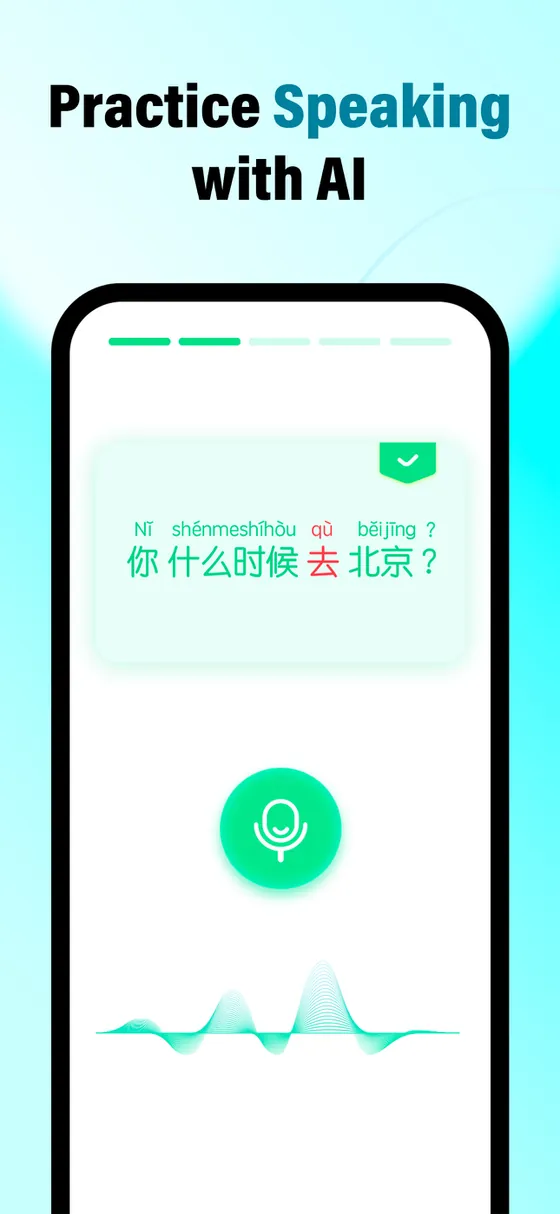
One Premium user reported AI conversation lessons in the first unit, which you can skip. The team said in 2025 that it was building voice conversation practice, and was wary of letting AI judge spoken answers. We found no page that says what has shipped.
We also found no public test of how well it judges tones. Speech recognition guesses the most likely word, so a slip can pass. Say "sugar", 糖, with a level tone, and you've said "soup", 汤.
A review of 15 studies found that speech-recognition practice helps learners' individual sounds a lot, but their pitch only a little. Even a native speaker in the July thread said the exercise sometimes marks them wrong.
We see a similar limit in listening. HelloChinese offers 2,000+ clips of native speakers, but learners describe them as a few seconds long and sometimes noisy. The story audio is better listening practice.
Our advice: use the drills to tune your sounds, and find conversation elsewhere. Our guide to learning tones shows how to train your ear.
The graded stories are the best part
HelloChinese's graded stories are the feature learners praise most, and we'd call them its best. They're short stories written at your level, with audio, and HelloChinese says it has more than 1,000.
Its team says people write, review, record and translate every story. A learner who read almost all of them counted about 900, in 70 series from HSK 1 to HSK 5. They called the library worth every cent.
Here's a story page from HelloChinese's own listing:
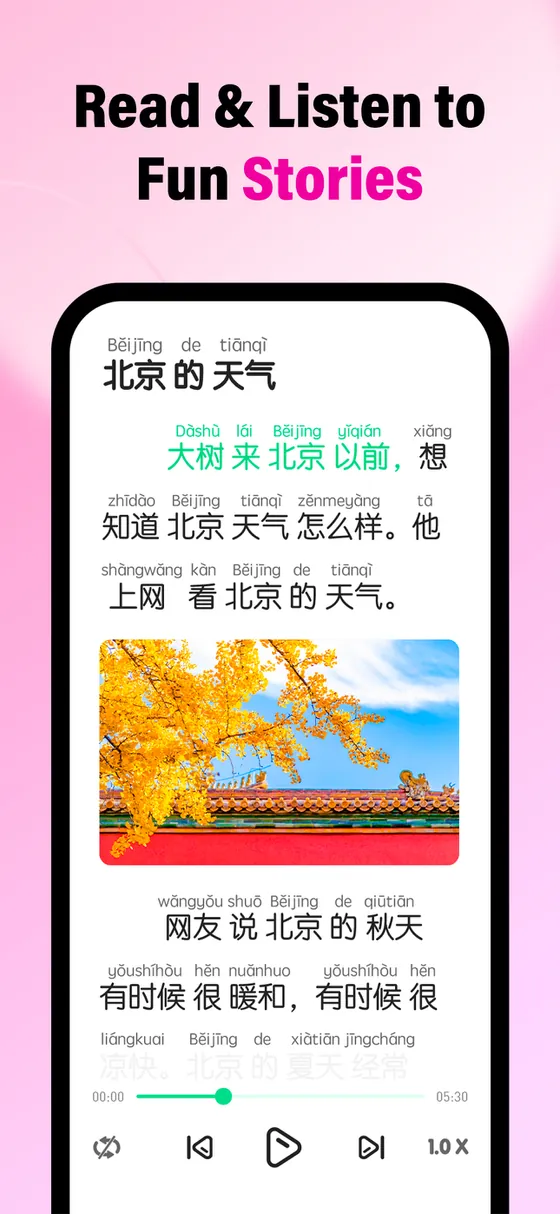
We like two touches for beginners:
- Pinyin you can turn down. Show pinyin above every character, or just the tone marks, which one learner called a godsend for remembering tones.
- Reading from the start. Each pit stop adds a chapter of a story, so you're reading from early in the course.
The catch is the price. Some stories are free, but the full library comes with Premium+, which costs about twice as much a year as Premium.
If reading is your main goal, we'd compare it with dedicated reading apps first. Our comparison of graded readers covers 12 of them, and our stories guide lists free ones by level.
Writing characters is built in
HelloChinese teaches you to write characters, not just recognize them. You trace each one stroke by stroke on a grid:
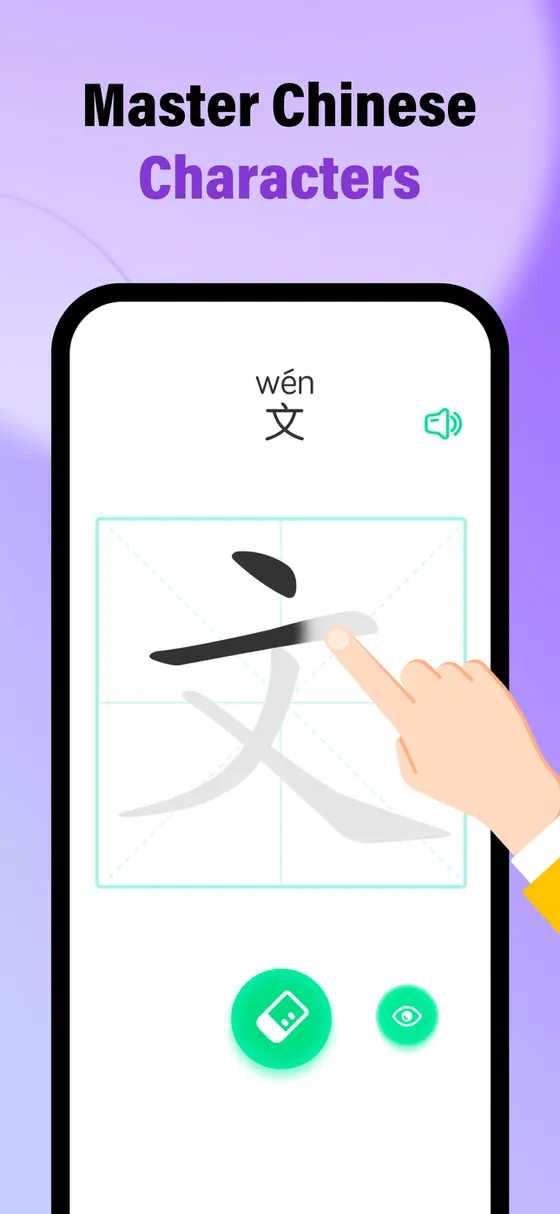
We think that's worth having. In one experiment with adult learners, writing characters by hand built memory for their shape and meaning, while typing pinyin built only their sound.
Premium+ adds a separate Characters course that teaches the parts characters are built from, by theme, according to FluentU's review. You can learn in Simplified characters or in Traditional, the script of Taiwan and Hong Kong, and courses work offline once downloaded.
If you want to read and write Chinese, not just get by in speech, we'd count this as a real strength.
Premium covers the course; Premium+ adds the stories
We found two paid plans on top of a short free start. Premium opens the course, and Premium+ adds the stories. Here's what each includes:
Free
- What you get
- The first few lessons of each course, and some stories
- Price
- $0
Premium
- What you get
- The main course, Teacher Talks, native-speaker videos, games
- Price
- $11.99 a month, $25.99 for 3 months or $69.99 a year
Premium+
- What you get
- Premium, plus every graded story, the Characters course and the immersion lessons
- Price
- $19.99 a month, $89.99 for 6 months or $149.99 a year
Source: HelloChinese's US App Store listing, checked 11 October 2026. The App Store doesn't name Premium+ plan lengths; they and the plan contents come from FluentU's review, updated January 2025, whose prices match today's.
If you're sure you'll stay, pay yearly. We added up a year of Premium, by how you pay:
Source: HelloChinese's US App Store listing. The sale price is one the App Store lists at exactly 30% below the yearly plan.
We'd wait for a sale if you can. The App Store lists three prices at exactly 30% off regular plans, and learners report 30% sales around Chinese New Year and Black Friday.
Don't count on the free version for long. Learners say the new course's free lessons end after about four, early in HSK 1. Switching to the old course gets you its whole HSK 1 section free, they say.
Two more things before you pay. There's no lifetime plan. And purchases through Apple or Google are final, HelloChinese's terms say: only yearly plans bought from HelloChinese directly come with a 30-day refund.
Work out the cheapest way to pay for the time you'll actually use it:
What will HelloChinese cost you?
Pick a plan, how long you'll use it and whether you'll wait for a sale: you get the cheapest way to pay, and what four other apps cost for the same time.
What you want
For how long
Price
For 1 year of Premium, buy the yearly plan once: $69.99
About $5.83 a month. Paying month by month would cost $143.88.
Every way to pay for 1 year of Premium
- Yearly plan, once$69.99covers 12 months
- 3-month plan, 4 times$103.96$25.99 each, covers 12 months
- Monthly plan, 12 times$143.88$11.99 each, covers 12 months
Other apps for 1 year, at full price
Prices checked 11 October 2026: US App Store, and Du Chinese's and SayMei's own pricing pages. A sale uses the three prices the App Store lists at 30% off; learners report sales a few times a year.
Sources: HelloChinese's US App Store listing (Premium+ plan lengths from FluentU's review); SuperChinese's and Duolingo's US App Store listings; Du Chinese's and SayMei's pricing pages. A plan that runs longer than you need still counts in full.
For six months of Premium, two 3-month plans cost least. In a sale, a yearly plan beats even that.
Reviews from before August 2026 are out of date
HelloChinese has changed more since 2025 than its reviews have. We dated each change from its own release notes, so you can date what you read:
| When | What changed |
|---|---|
| April 2025 | Main Course 2.0 reaches learners, built on the new HSK standard |
| October 2025 | Speaking lessons added to every pit stop |
| April 2026 | A new streak system and achievements |
| August 2026 | Upper Intermediate sections take the course past 2,500 words |
| By October 2026 | App Store images advertise "Practice Speaking with AI" |
Source: HelloChinese's App Store and Google Play release notes and listing; the April 2025 date comes from the first learner thread about the new course.
When we searched "HelloChinese review", the top results dated from 2021 to May 2026, and none mentioned the August course.
Two of them quoted $8.99 a month, a quarter below today's $11.99.
Who should use HelloChinese
We'd pick HelloChinese if:
- You're starting from zero. The pinyin course and short lessons make the first months gentle.
- You want to read and write. Characters, handwriting and the story library are its strengths.
- You like a clear path. One course runs from beginner to upper intermediate, with review built in.
- You study on your phone. It works offline, on iPhone, iPad and Android.
We'd skip it, or pair it with something else, if:
- You want to speak soon. Repeating set lines won't prepare you for questions you didn't expect.
- You're already past HSK 4. The course ends about there.
- You're preparing for the exam. HelloChinese doesn't advertise exam practice, so add mock tests.
- You want something free. A keen learner can reach the paywall within days, learners say.
The best alternatives for each goal
No single app does everything. If HelloChinese isn't the right fit, here's what we'd pick for each goal:
A longer course with more speaking
- Pick
 SuperChinese
- Price
- $11.99 a month or $59.99 a year
- Why
- A course to HSK 5 that scores every line you say
A free daily habit
- Pick
 Duolingo
- Price
- Free
- Why
- The whole course is free, though weak on tones
More to read
- Pick
 Du Chinese
- Price
- $14.99 a month or $119.99 a year
- Why
- 3,000+ stories and articles with audio
Cheap stories for HSK 1–4
- Pick
 SayMei Stories
- Price
- $2.99 a month
- Why
- 166 books, in your browser only
Speaking practice that answers back
- Pick
- SayMei
- Price
- $5.99 a month for 200 minutes
- Why
- Mei Lin replies and corrects your tones
A human ear for your tones
- Pick
 An italki tutor
- Price
- About $20 an hour
- Why
- The median of 763 Chinese tutors
Source: each company's US App Store listing or pricing page, checked 11 October 2026; italki's median from our tutors guide, 8 October 2026.
For a closer look at the two apps people compare it with most, read HelloChinese vs SuperChinese and Duolingo vs HelloChinese.
Where SayMei fits
SayMei is built for the part HelloChinese leaves out: talking. In a lesson, Mei Lin, your AI teacher, asks you questions out loud, waits for your answer and corrects your tones and grammar as you go.
SayMei Premium is $5.99 a month for 200 minutes with her.
For reading, SayMei Stories costs $2.99 a month, with pinyin over every character, for about HSK 1 to 4.
We'll be plain: SayMei loses to HelloChinese on plenty. It runs in a web browser, with no app and no offline mode. Its handwriting practice is printable worksheets, not an in-app course, and its stories stop around HSK 4.
If you want one app that walks you through characters and grammar, HelloChinese does that better. Many learners would do best with both: a course for structure, and someone to talk to.
What to do next
- Start with the free lessons. A few days will show you whether the pace suits you.
- Pay yearly, or wait for a sale. Monthly plans add up fast over a year.
- Buy Premium+ only if you'll read. The story library is what the extra money buys.
- Practise talking somewhere else. Repeating set lines won't prepare you for a real reply.
- Plan your next step after HSK 4. Line up a reader or a course for when HelloChinese runs out.
If you're weighing HelloChinese against its closest rival, read HelloChinese vs SuperChinese.
FAQ
Is HelloChinese free?
Only at the start. HelloChinese is free to download, but learners report that the new course's free lessons end after about four, early in HSK 1.
The old course lets you finish its HSK 1 section for free, and some stories are free. After that you need Premium, from $11.99 a month or $69.99 a year on the US App Store.
Is HelloChinese Premium worth it?
For a beginner who'll use it most days, we think so. A year of Premium costs $69.99, about $5.83 a month, for a structured course with handwriting and review built in.
Premium+ is worth the extra only if you'll read the stories. Neither plan is good value if you mainly want to speak, and a 30% sale makes either cheaper.
What HSK level does HelloChinese reach?
About HSK 4 on the new exam, by word count. Its main course teaches 2,500+ words, more than the new HSK 4 list's 2,000.
HSK 5 asks for 3,600. HelloChinese doesn't publish its word list, so we can't say how many of its words are on the exam's lists. Its graded stories reach about HSK 5, one learner counted.
Is HelloChinese good for speaking?
For pronunciation, yes; for conversation, no. Its speaking lessons have you repeat set lines while speech recognition marks each character right or wrong. Nothing asks you to make your own sentences, and we found no public test of how accurately it judges tones. We'd add conversation practice with a tutor, a language partner or an AI teacher.
Does HelloChinese use AI?
In some places. HelloChinese's team says teachers write every course sentence and question, never AI, but it said in 2025 that it used AI to make some images. Its App Store images now advertise "Practice Speaking with AI", and one Premium user reported AI conversation lessons you can skip. HelloChinese hasn't described those features on its pages.
Can you use HelloChinese on a computer?
Not in a web browser. HelloChinese's website offers only its iPhone and Android apps, with no web or Windows version that we could find. Its App Store listing says the iPhone app also runs on iPads and on Macs with Apple's M1 chip or later. On any other computer, plan to study on your phone or tablet.
Is there a cheaper alternative to HelloChinese?
Yes, depending on what you want from it. Duolingo's Chinese course is free, though weak on tones and reading. SuperChinese costs $59.99 a year, $10 less than HelloChinese Premium, and its course goes to HSK 5.
For stories alone, SayMei Stories costs $2.99 a month for about HSK 1 to 4. SayMei's speaking lessons cost $5.99 a month.
Does HelloChinese have a lifetime plan?
No. Neither its App Store listing nor its current terms offer one, so a yearly plan is the cheapest way to pay over time: $69.99, or $48.99 in a sale.
If you'd rather pay once, SuperChinese sells lifetime access to its PLUS plan for $139.99 on the US App Store, about two years of HelloChinese Premium.
Sources
Checked 11 October 2026 unless noted. No accounts were created and nothing was bought.
HelloChinese
- HelloChinese on the App Store: description, plans, in-app prices, version history, ratings, compatibility and listing images
- HelloChinese on Google Play: ratings, downloads, What's new
- hellochinese.cc and its terms of use: refunds, plans, accounts
- HelloChinese's Android release notes for version 7.7.9 (6 October 2025), via APKMirror
- The HelloChinese team's comments on Reddit, including its 2025 AMA: the new course, the stories, AI use (read 7 October 2026)
- FluentU's HelloChinese review (updated 21 January 2025): what Premium and Premium+ include
Other apps
- SuperChinese, Duolingo and Du Chinese on the US App Store; Du Chinese pricing
- SayMei: pricing
- italki's median tutor price: online Chinese tutors compared (8 October 2026)
HSK word lists
- 2025 HSK syllabus, counted in our HSK 3.0 guide
- The 2021 HSK standard (GF 0025-2021)
Research
- Ngo, T. T.-N., Chen, H. H.-J. & Lai, K. K.-W. (2024). The effectiveness of automatic speech recognition in ESL/EFL pronunciation: a meta-analysis. ReCALL 36(1). doi:10.1017/s0958344023000113
- Guan, C. Q. et al. (2011). Writing strengthens orthography and alphabetic-coding strengthens phonology in learning to read Chinese. Journal of Educational Psychology 103(3). https://doi.org/10.1037/a0023730
Learner reports on r/ChineseLanguage
- The first thread on Main Course 2.0 (April 2025); a full-course review (August 2026); how the new course's units work (March 2026); speaking exercises (July 2026); non-AI apps (September 2026); tone marks over characters (March 2026); looking for alternatives (June 2026); sales (June 2026); the free part (May 2026); the Upper Intermediate update (August 2026)
Methods
We read HelloChinese's App Store and Google Play listings, release notes, website and terms on 11 October 2026, the team's own comments on Reddit, FluentU's review, and 25 learner threads on r/ChineseLanguage from April 2025 to October 2026. We didn't subscribe, sign in or take lessons, so a feature is either what HelloChinese says or what learners report, and we say which.
- Prices are US App Store prices. Other countries, and HelloChinese's own sales, can differ.
- Sale prices are the three App Store prices at exactly 30% below a regular plan: $48.99, $62.99 and $104.99.
- The word-list chart compares HelloChinese's own count with the 2025 exam syllabus, counted cumulatively.
- The scorecard is our judgment from those sources, not a test of the app.
- The chatbot claim in the first line comes from 238 answers about which app to use for Chinese, collected from ChatGPT, Claude, Gemini and Perplexity on 6 October 2026. Two in three named HelloChinese.
- The screenshots are HelloChinese's own App Store images, shown unedited for review.
- The Mandarin examples were checked against the CC-CEDICT dictionary.
If you spot a mistake, tell us: we fix errors.