Stories retold in simple Mandarin
Aesop's Fables
伊索寓言
Aesop's Fables (伊索寓言, Yīsuǒ yùyán) is a set of fables by Aesop, retold in simple Mandarin as 6 short stories with audio for learners at about HSK 1 (Beginner).
Retold from Aesop's fables of ancient Greece: on six autumn nights, Grandpa Owl tells two chatty young friends six famous tales, from the tortoise and the hare to the thirsty crow.
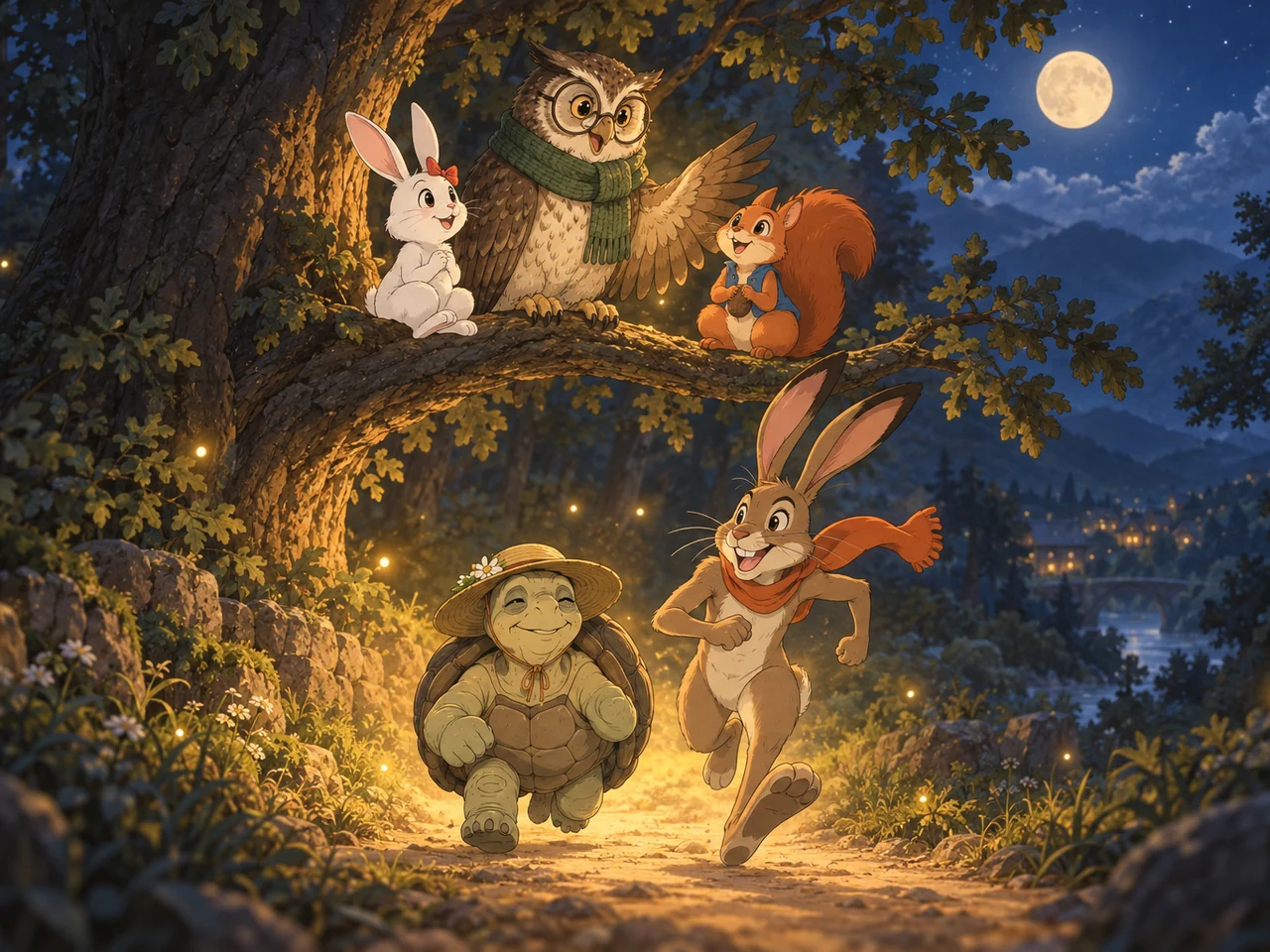
Meet the voices
- Narrator · 旁白 — An old storyteller who sets the scene each night under Grandpa Owl's tree and then lets the owl tell the tale.
- Grandpa Owl · 猫头鹰爷爷 — A wise, twinkly old owl who knows all of Aesop's fables, tells one a night, and loves to tease his listeners with riddles about tomorrow's story.
- Little Rabbit · 小兔子 — A quick, kind-hearted young rabbit who is very proud of how fast she runs and always wants to know why.
- Little Squirrel · 小松鼠 — A cheeky young squirrel who never lets go of his acorn and always shouts that he knows how the story ends.
- The Hare · 兔子 — The fastest runner around, and the first to tell you so.
- The Tortoise · 乌龟 — A slow, calm old tortoise who never hurries and never stops.
- The shepherd boy · 放羊娃 — A bored boy who minds the village sheep on the hillside and thinks a fake wolf is the funniest joke in the world.
- The village woman · 大婶 — A strong village woman who runs up the hill with her hoe whenever someone cries for help, until she stops believing him.
- The Fox · 狐狸 — A proud, hungry fox who would rather call the grapes sour than admit he can't reach them.
- The Lion · 狮子 — The king of the forest, who laughs at the idea that a mouse could ever help him.
- The Mouse · 老鼠 — A tiny, brave mouse who keeps her promise to the lion.
- The Ant · 蚂蚁 — A hard-working ant who spends the whole summer carrying food home for winter.
- The Grasshopper · 蚱蜢 — A carefree grasshopper who sings all summer long and never thinks about winter.
- The Crow · 乌鸦 — A thirsty, clever crow who won't give up on a pitcher with only a little water in the bottom.
6 chapters, one journey
Chapter 1: The Tortoise and the Hare
龟兔赛跑
Little Rabbit wins a race to Grandpa Owl's tree and can't stop bragging. Then the old owl begins his first story: a speedy hare, a slow tortoise, and a race up a hill.
Free to read
Chapter 2: The Boy Who Cried Wolf
狼来了
Little Squirrel plays a mean trick on Little Rabbit, so Grandpa Owl tells a story just for him: a bored shepherd boy who thinks shouting “Wolf!” is the best joke ever.
Free to read
Chapter 3: The Fox and the Grapes
狐狸和葡萄
Little Squirrel loses another race and suddenly decides racing is no fun. Then Grandpa Owl tells of a hungry fox on a hot day, and some grapes hanging just out of reach.
Free to read
Chapter 4: The Lion and the Mouse
狮子和老鼠
Grandpa Owl promises not to eat tonight's mouse. In the story, a tiny mouse wakes up a hungry lion, then makes him a promise that sounds much too big to keep.
Free to read
Chapter 5: The Ant and the Grasshopper
蚂蚁和蚱蜢
A cold wind blows, and Little Squirrel won't share a single acorn. Tonight's story: a busy ant, a grasshopper who sings all summer long, and a winter that comes after all.
Free to read
Chapter 6: The Crow and the Pitcher
乌鸦喝水
On the last night of autumn, Little Rabbit is afraid Grandpa Owl is leaving. His final story: a very thirsty crow, and a pitcher with just a little water at the bottom.
Free to read
Key words in Aesop's Fables
Behind the story
Aesop (伊索) is said to have been a storyteller in ancient Greece about 2,600 years ago; old accounts say he was once a slave who became famous for his wit. Hundreds of short fables have gathered under his name, most of them about animals who talk, boast, trick and help each other, each with a small lesson tucked inside.
In Chinese the collection is called 伊索寓言, and many of its tales are as familiar in China as any Chinese story. Children meet 龟兔赛跑 (the tortoise and the hare) and 狼来了 (the boy who cried wolf) in picture books and cartoons, and 乌鸦喝水, the thirsty crow who drops stones into a bottle, has long been one of the first stories Chinese children read at school.
Did you know?
- Aesop's fables reached China with European missionaries about four hundred years ago. One early Chinese collection, 况义, was printed in 1625.
- The fox's excuse became a Chinese saying: 吃不到葡萄说葡萄酸, “if you can't eat the grapes, say the grapes are sour,” for anyone who pretends not to want what they can't get.
- In the oldest Greek versions, the ant's carefree neighbor is not a grasshopper but a cicada, the insect that buzzes and sings through hot summer days.