World classic, retold in simple Mandarin
Ali Baba and the Forty Thieves
阿里巴巴和四十大盗
Ali Baba and the Forty Thieves (阿里巴巴和四十大盗, Ālǐbābā hé sìshí dàdào) is a fairy tale by Antoine Galland, retold in simple Mandarin as a 5-chapter story with audio for learners at about HSK 2 (Elementary).
Retold from Antoine Galland's Thousand and One Nights: a poor woodcutter overhears two magic words, his greedy brother forgets them, and one clever young woman outwits forty robbers.
Meet the voices
- Narrator · 旁白 — Tells this old tale from the Thousand and One Nights calmly and warmly, like a grandfather by the fire.
- Ali Baba · 阿里巴巴 — A poor, honest woodcutter who takes only what his three donkeys can carry, and who cries “Oh my heavens!” at every surprise.
- Ali Baba's Wife · 妻子 — Ali Baba's chatty, practical wife, who can't see a pile of anything without wanting to count it.
- Cassim · 卡西姆 — Ali Baba's rich older brother, loud and greedy, who thinks everything that shines should be his.
- Morgiana · 玛吉娜 — The quick, sharp-eyed young woman who works in Cassim's house; she notices everything and always has a plan.
- The Robber Captain · 强盗头子 — The cold, clever leader of the forty robbers, and a master of disguise.
- The Young Robber · 小强盗 — The youngest of the forty robbers, always very sure of himself and usually wrong.
5 chapters, one journey
Chapter 1: Open, Sesame!
芝麻开门
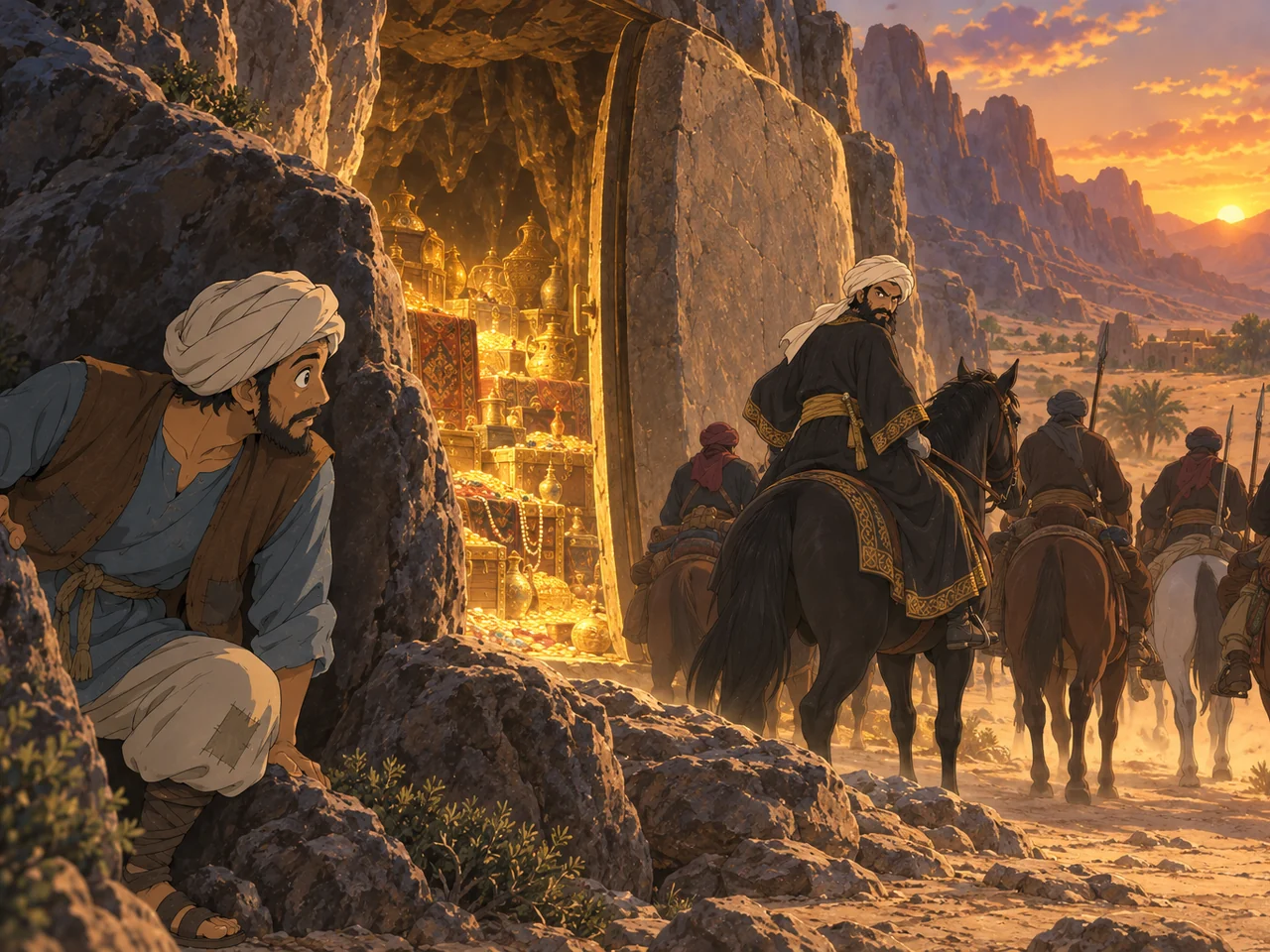
Poor woodcutter Ali Baba hides in a tree, counts forty robbers and hears two magic words. Does he dare to say them himself?
Free to read
Chapter 2: Cassim Forgets
卡西姆忘了
Greedy Cassim wants his brother's secret and every coin in the cave. But what happens inside a magic cave when you forget the magic words?
SayMei Stories
Chapter 3: The White Marks
白色的记号
The robbers are hunting for whoever knows their secret, and a mysterious white circle appears on a door. Can Morgiana stay one step ahead of them?
SayMei Stories
Chapter 4: The Voice in the Jar
罐子里的声音
An oil merchant with forty big jars asks Ali Baba for a bed for the night. But when Morgiana goes to borrow a little oil, one of the jars whispers back.
SayMei Stories
Chapter 5: Morgiana's Dance
玛吉娜跳舞
The robber captain is still free. When a friendly new merchant comes to dinner and refuses to eat any salt, Morgiana starts to wonder who he really is.
SayMei Stories
Key words in Ali Baba and the Forty Thieves
Behind the story
Ali Baba first appeared in print in Antoine Galland's French translation of the Thousand and One Nights, published in the early 1700s. It is one of the Nights' so-called orphan tales: no older Arabic manuscript of it is known. Galland wrote it down from the storytelling of Hanna Diyab, a young traveler from Aleppo in Syria. Like Galland's tale, this retelling makes the clever young Morgiana its real hero, but here the robbers are caught instead of killed.
In Chinese the tale is called 阿里巴巴和四十大盗, and the Nights are 一千零一夜. Early Chinese translations called the collection 天方夜谭, and today that title is an idiom for a story too fantastic to believe. The magic words 芝麻开门 are just as famous: Jack Ma (马云) named his company Alibaba (阿里巴巴) after the hero because people all over the world knew the name, and its sister company Ant Group calls its credit score 芝麻信用, “Sesame Credit.”
Did you know?
- In Galland's French the magic words are “Sésame, ouvre-toi,” or “Sesame, open yourself.” When Cassim forgets them, he tries the names of other grains instead, starting with barley.
- Salt is Morgiana's clue. In the Middle East, eating bread and salt at someone's table was an old bond of friendship, so the captain, who has come to harm his host, refuses to eat any salt at all.
- In Galland's ending, Ali Baba gives Morgiana her freedom and she marries his son, and the secret of the cave is passed down in the family.