Traditional Chinese legend, retold in simple Mandarin
Jingwei and the Sea
精卫填海
Jingwei and the Sea (精卫填海, Jīngwèi tián hǎi) is a Chinese legend, retold in simple Mandarin as a 3-chapter story with audio for learners at about HSK 3 (Intermediate).
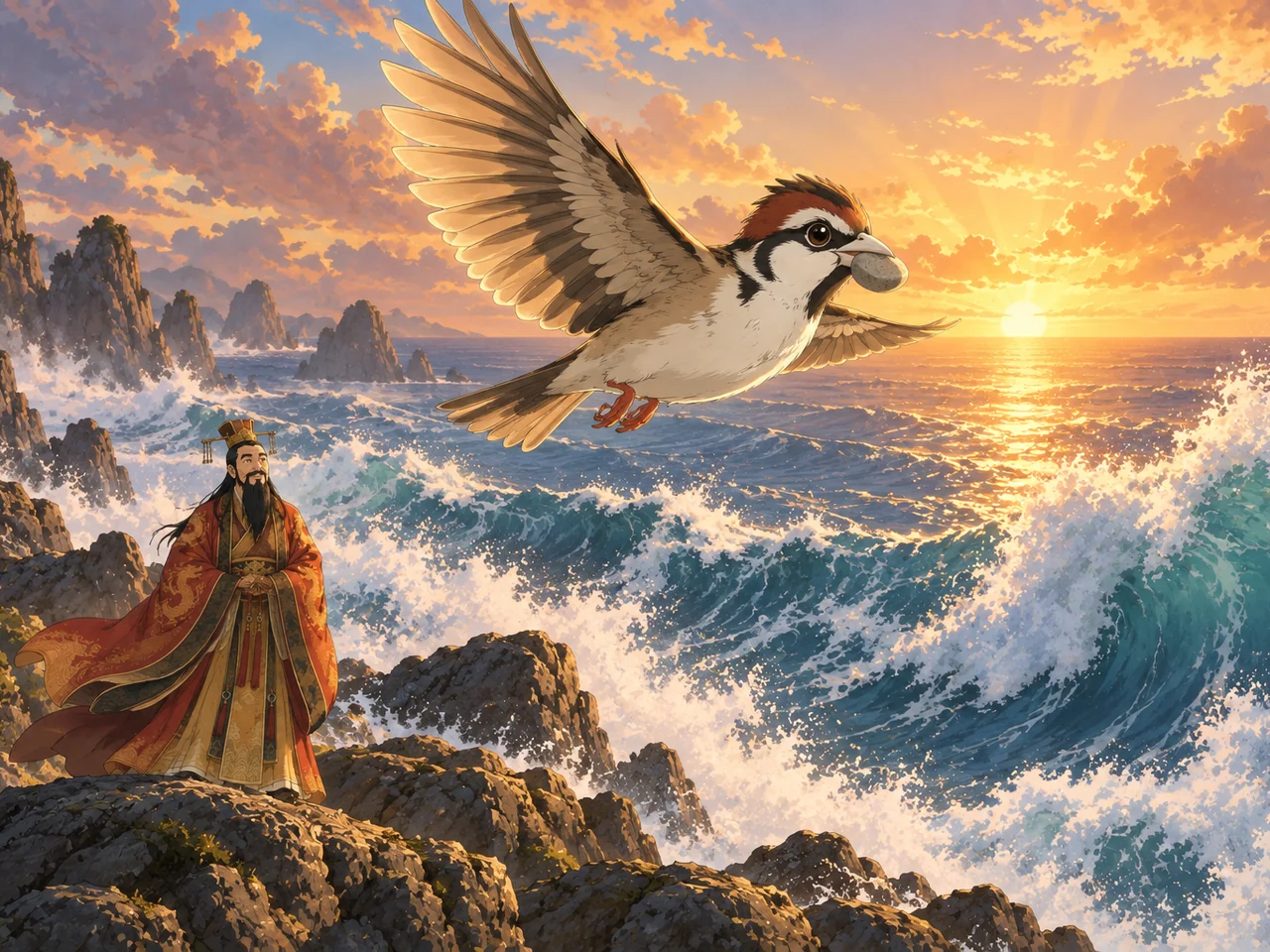
An ancient myth of stubborn hope: a girl lost to the sea returns as a small bird — and decides to fill the ocean, one pebble at a time.
Meet the voices
- Narrator · 旁白 — Tells one of the oldest stories in China, written down more than two thousand years ago.
- Nüwa (Jingwei) · 女娃 — The Flame Emperor's youngest daughter, who loves the sea more than anything — even after it takes her.
- The Flame Emperor · 炎帝 — A great ruler, and a father who cannot stop waiting on the shore.
- The Sea · 大海 — Huge, proud, and very sure that nothing small can ever change it.
- The Petrel · 海燕 — A strong seabird who catches Jingwei in a storm and wants to know why she never stops.
3 chapters, one journey
Chapter 1: The Girl Who Loved the Sea
爱大海的女孩
Nüwa can't wait to see what lies across the sea. One morning, before anyone is awake, she rows out alone.
Free to read
Chapter 2: One Stone at a Time
一颗石子
The little bird begins to carry stones to the sea. The sea laughs at her. She keeps going.
SayMei Stories
Chapter 3: The Sea Is Not Full Yet
大海还没有填平
Someone catches Jingwei before the waves do. One bird becomes many, and a father finally smiles.
SayMei Stories
Key words in Jingwei and the Sea
Behind the story
Jingwei filling the sea (精卫填海) comes from the Classic of Mountains and Seas (山海经), a book of myths and strange creatures written down more than 2,000 years ago.
The Flame Emperor's daughter drowns in the Eastern Sea and comes back as a small bird, Jingwei, who carries twigs and stones from the western hills to fill it in.
Did you know?
- 精卫填海 is now an idiom for stubborn determination against impossible odds.
- The Flame Emperor (炎帝) is one of China's legendary first rulers. Chinese people sometimes call themselves 炎黄子孙, “descendants of the Yan and Yellow Emperors.”
- The girl is 女娃 (Nǚwá). Don't mix her up with 女娲 (Nǚwā), the goddess who made the first humans.