World classic, retold in simple Mandarin
The Elves and the Shoemaker
小精灵和鞋匠
The Elves and the Shoemaker (小精灵和鞋匠, Xiǎo jīnglíng hé xiéjiang) is a fairy tale by Brothers Grimm, retold in simple Mandarin as a 3-chapter story with audio for learners at about HSK 1 (Beginner).
Retold from the Brothers Grimm: a poor old shoemaker has leather for one last pair of shoes, and by morning someone has made them perfectly. But who is sewing in the night?
Meet the voices
- Narrator · 旁白 — The library's grandfatherly storyteller, who tells this snowy Grimm tale slowly and warmly, like a story by the fire.
- The Shoemaker · 鞋匠 — An honest old shoemaker down to his last piece of leather, who believes good shoes take time and can never stay awake after dark.
- The Shoemaker's Wife · 妻子 — The shoemaker's quick-witted wife, who teases him as “old man,” always has a good idea, and notices anyone who is cold.
- Big Brother Elf · 精灵哥哥 — The older of two tiny elf brothers: bossy, quick and proud, he chants as he hammers and is always hurrying his little brother along.
- Little Brother Elf · 精灵弟弟 — The younger elf brother, even tinier, sweet and always shivering, who sews as fast as his brother hammers.
- The Customer · 客人 — A rich, jolly gentleman who buys the first mysterious pair of shoes and sends all his friends to the little shop.
3 chapters, one journey
Chapter 1: One Last Pair
最后一双鞋
With leather for just one last pair of shoes, a poor old shoemaker goes to bed, and wakes to find a mystery waiting on his workbench.
Free to read
Chapter 2: The Midnight Visitors
半夜的小客人
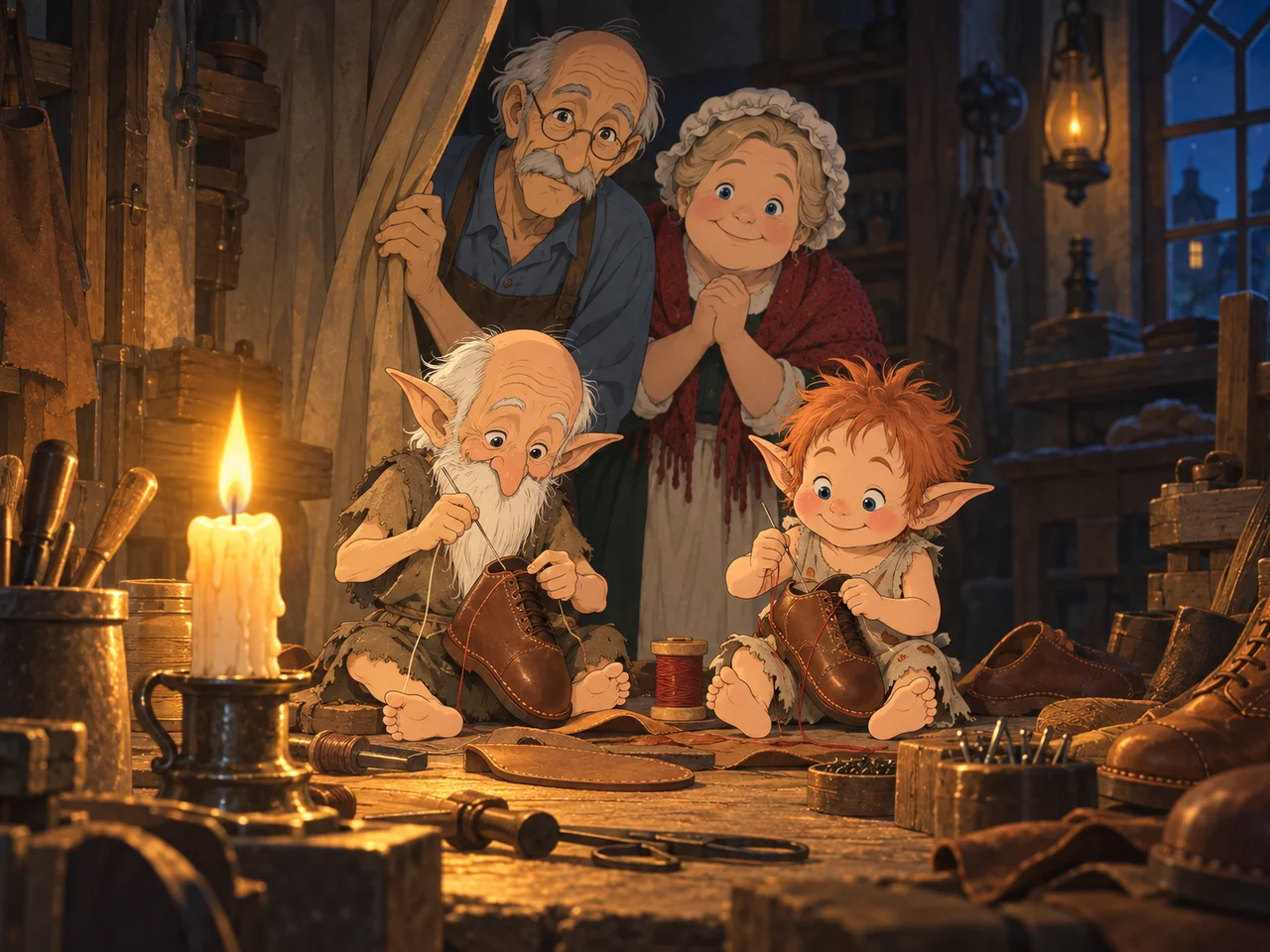
Night after night, the shoes finish themselves. A few nights before Christmas, the shoemaker and his wife hide in the corner to see who is helping them.
SayMei Stories
Chapter 3: Tiny Clothes, Tiny Shoes
小衣服,小鞋子
The shoemaker and his wife sew a secret Christmas surprise, and at midnight two tiny visitors find something on the workbench they never expected.
SayMei Stories
Key words in The Elves and the Shoemaker
Behind the story
The Elves and the Shoemaker comes from the Brothers Grimm, who printed it in 1812 in the first volume of their Children's and Household Tales. Its German title is Die Wichtelmänner, “The Little Elf-Men,” and under that title the Grimms actually printed three short tales; this book retells the first. In the Grimms' version the two little men arrive with nothing on at all, which is why the shoemaker's wife worries that they must be freezing. Here they wear a few thin rags.
Chinese readers know the Grimms' collection as 格林童话, and this story appears in many Chinese picture books, often under the title 小精灵和老鞋匠, “the little elves and the old shoemaker.” Its lesson is often summed up with an old idiom, 知恩图报, “remember a kindness and repay it,” which is just what the shoemaker and his wife do for their secret helpers.
Did you know?
- In Germany, the gift swap that English speakers call Secret Santa is known as Wichteln, named after the same helpful little Wichtel who visit this story's shoemaker.
- 鞋匠 (xiéjiang) means “shoemaker”: 鞋 is “shoe” and 匠 is “craftsman,” the same 匠 as in 木匠 (mùjiang), “carpenter.”
- The other two tales under the Grimms' title are stranger: in one, a servant girl visits the little folk for what feels like three days and comes home to find that seven years have passed; in the other, they swap a baby for a changeling.