World classic, retold in simple Mandarin
The Emperor's New Clothes
皇帝的新装
The Emperor's New Clothes (皇帝的新装, Huángdì de xīn zhuāng) is a fairy tale by Hans Christian Andersen, retold in simple Mandarin as a 3-chapter story with audio for learners at about HSK 1 (Beginner).
Retold from Hans Christian Andersen's fairy tale: a vain emperor buys magic cloth that fools can't see, and nobody, not even the emperor, dares to admit they can't see it.
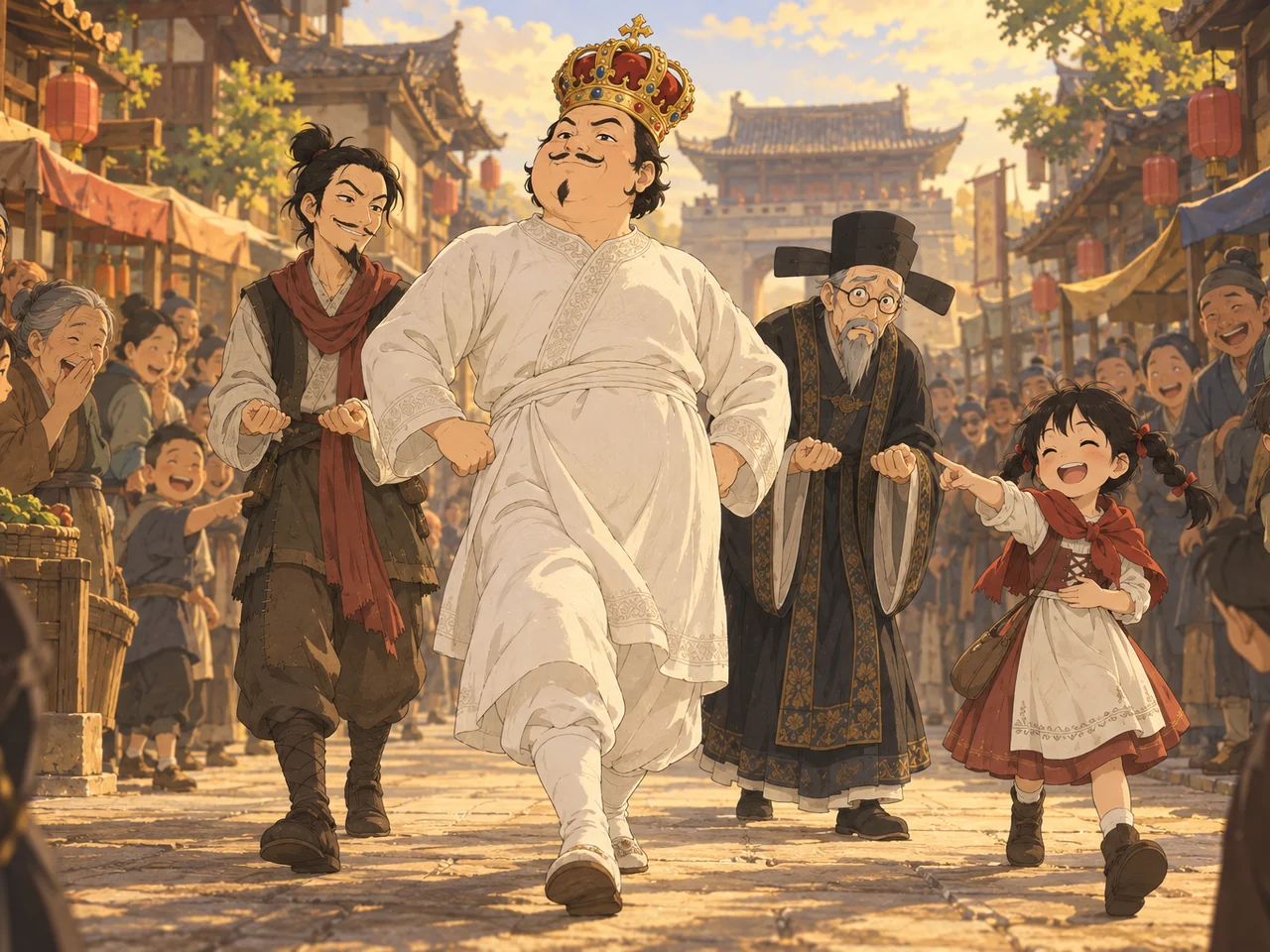
Meet the voices
- Narrator · 旁白 — Tells the old tale plainly and lets the characters make fools of themselves.
- The Emperor · 皇帝 — A vain emperor who changes his clothes every hour and cares about nothing else.
- The Swindler · 骗子 — A smooth-talking stranger who calls himself a weaver and bows very, very low.
- The Old Minister · 老大臣 — The emperor's honest old minister, who has never once doubted his own wits, until now.
- The Little Girl · 小女孩 — A little girl in the parade crowd who says exactly what she sees.
- The Girl's Father · 爸爸 — A man in the crowd who cheers as loudly as everyone else, until his daughter asks a simple question.
3 chapters, one journey
Chapter 1: The Emperor Who Loved Clothes
爱新衣服的皇帝
An emperor who changes his clothes every hour meets a stranger with an irresistible offer: cloth so fine that fools can't see it.
Free to read
Chapter 2: The Invisible Cloth
看不见的布
The emperor sends his trusted old minister to check on the magic cloth. There's just one problem: the loom looks completely empty.
SayMei Stories
Chapter 3: Nothing On at All
什么也没穿
The new clothes are finally ready, the whole town turns out for the parade, and every voice is cheering. Well, almost every voice.
SayMei Stories
Key words in The Emperor's New Clothes
Behind the story
The Danish writer Hans Christian Andersen (安徒生) published The Emperor's New Clothes in 1837. He built it on a much older Spanish tale and gave it the ending the world remembers: a child who simply says what everyone can see.
In Chinese the story is called 皇帝的新装, and it has long been a lesson in Chinese middle-school textbooks. The title has also become a figure of speech: people call something 皇帝的新装 when everyone praises what isn't really there, because nobody dares to say otherwise.
Did you know?
- In Andersen's first draft, no child speaks up. He rewrote the ending shortly before the story was printed.
- In the older Spanish tale, written by Don Juan Manuel in 1335, the swindlers claimed their cloth was invisible to any man who was not truly his father's son.
- 新装 (xīn zhuāng) in the title is a bookish way to say “new outfit.” In everyday Chinese, and in this retelling, people just say 新衣服 (xīn yīfu).