World classic, retold in simple Mandarin
The Last Leaf
最后一片叶子
The Last Leaf (最后一片叶子, Zuìhòu yí piàn yèzi) is a classic by O. Henry, retold in simple Mandarin as a 3-chapter story with audio for learners at about HSK 3 (Intermediate).
Retold from O. Henry's classic short story: one cold November in Greenwich Village, a sick young painter counts the ivy leaves outside her window, sure she'll die when the last one falls.
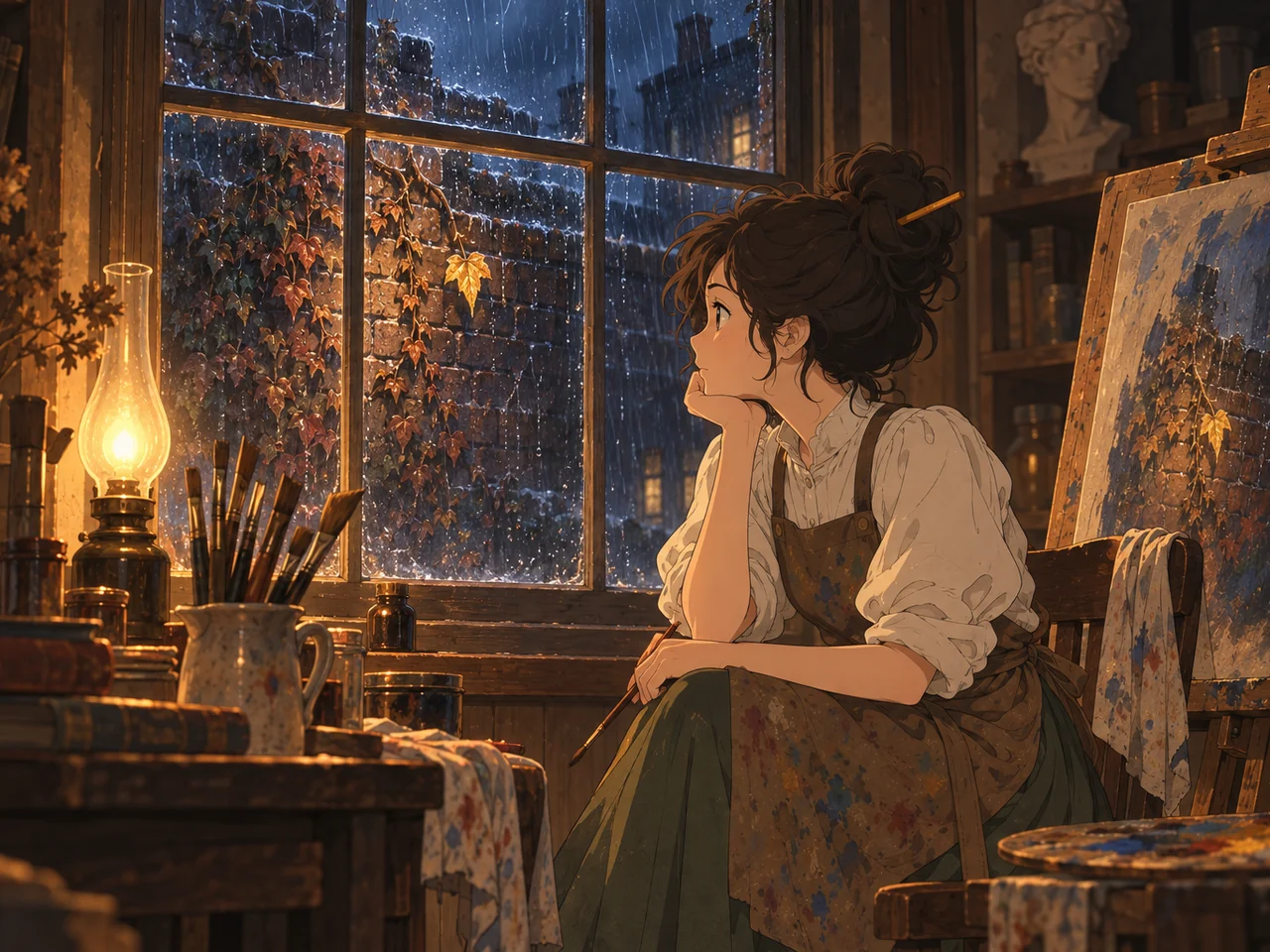
Meet the voices
- Narrator · 旁白 — The library's grandfatherly storyteller, who sets the scene in a cold Greenwich Village November and lets the painters tell their own story.
- Sue · 苏 — A lively young painter from Maine who shares a top-floor studio with Johnsy and hides her fear behind jokes, whistling and hard work.
- Johnsy · 琼西 — Sue's friend and fellow painter from California, who lies ill with pneumonia, counting the ivy leaves outside her window.
- Behrman · 贝尔曼 — A fierce, grumbling old painter on the ground floor who has been about to paint his masterpiece for twenty-five years.
- Doctor · 医生 — A busy, blunt doctor who talks in odds and never wastes a word.
3 chapters, one journey
Chapter 1: Counting Leaves
数叶子
The doctor gives Johnsy one chance in ten. Then Sue finds her counting the leaves on the old ivy outside her window, and learns why.
Free to read
Chapter 2: The Old Painter Downstairs
楼下的老画家
Sue asks old Behrman, who has talked about his masterpiece for twenty-five years, to come upstairs. Then a long night of wind, rain and snow begins.
SayMei Stories
Chapter 3: Behrman's Masterpiece
贝尔曼的杰作
After another stormy night, Johnsy asks Sue to open the shade one more time. Then the doctor brings news from downstairs.
SayMei Stories
Key words in The Last Leaf
Behind the story
The Last Leaf is a short story by the American writer O. Henry, published in 1907 in his collection The Trimmed Lamp. It takes place in Greenwich Village, the New York neighborhood where many poor young artists rented cheap rooms and studios around 1900. Chinese readers know it as 最后一片叶子 (some translations call it 最后的常春藤叶, “The Last Ivy Leaf”), and it is one of O. Henry's best-known stories in China, loved for its unlikely hero.
Its ending is a favorite example of what Chinese readers call an 欧·亨利式结尾, an “O. Henry-style ending”: a surprise in the last few lines that makes you see the whole story differently. It makes a natural pair with The Gift of the Magi, 麦琪的礼物, another O. Henry story in our library. Both are about poor people who give up something precious for someone they love.
Did you know?
- O. Henry, written 欧·亨利 in Chinese, was the pen name of William Sydney Porter, who wrote hundreds of short stories, many of them about ordinary people in New York.
- 常春藤, the Chinese word for ivy, means “ever-spring vine.” The same word names America's Ivy League universities: 常春藤盟校.
- In 1900, pneumonia (肺炎) was one of the leading causes of death in the United States. There were no antibiotics yet, so good nursing, food and rest were often all a doctor could offer.