World classic, retold in simple Mandarin
The Nightingale
夜莺
The Nightingale (夜莺, Yèyīng) is a fairy tale by Hans Christian Andersen, retold in simple Mandarin as a 4-chapter story with audio for learners at about HSK 2 (Elementary).
Retold from Hans Christian Andersen's fairy tale: a plain little bird sings for a Chinese emperor, loses his favor to a jeweled machine, and returns to sing Death away.
Meet the voices
- Narrator · 旁白 — A warm storyteller who sets the scene.
- Xiao Lan · 小兰 — A shy kitchen girl who knows where the nightingale sings.
- The Emperor · 皇上 — A proud emperor who learns to value a real song.
- The Chamberlain · 大臣 — A fussy official who fears the emperor's anger.
- The Nightingale · 夜莺 — A small plain bird with a wonderful song.
- The Music Master · 乐师 — A vain court musician who loves the golden bird.
- Death · 死神 — A quiet, gentle visitor who longs for his garden.
4 chapters, one journey
Chapter 1: The Kitchen Girl
厨房里的小兰
An emperor learns of a bird whose song is the finest in the world, and only a kitchen girl knows where to find it. But can a wild bird live in a palace?
Free to read
Chapter 2: The Jeweled Bird
金鸟
A golden wind-up bird covered in jewels arrives at the palace, and the real nightingale is no longer the favorite. Then one morning the cage is empty.
SayMei Stories
Chapter 3: The Long Night
长长的夜
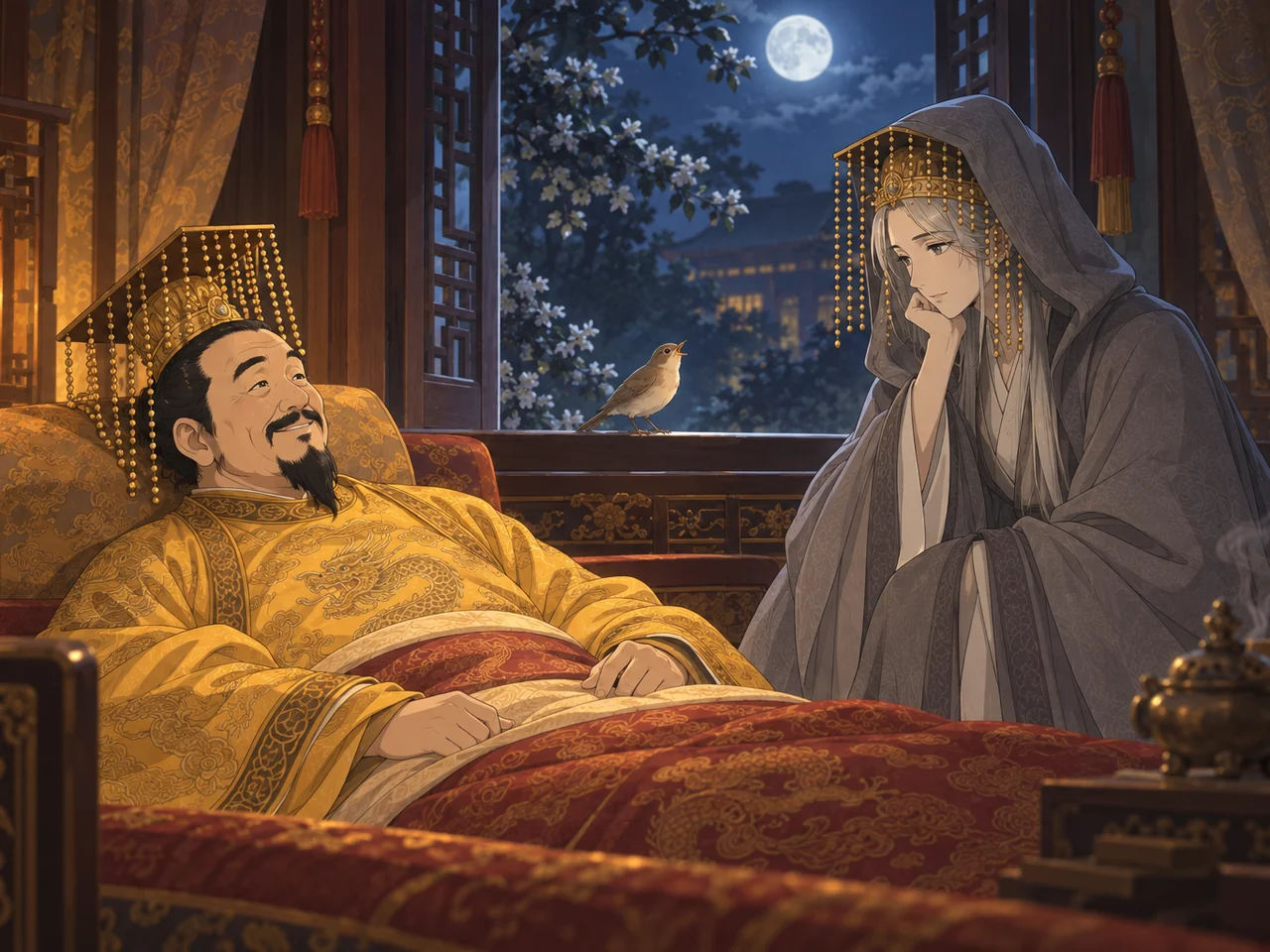
Years pass and the clockwork bird breaks. The emperor falls ill, and a quiet visitor in a crown sits on his chest. Who will sing for him now?
SayMei Stories
Chapter 4: The Song at Midnight
半夜的歌
At midnight a small brown bird sings to Death himself. Can a song win back a crown, a sword, and an emperor's life?
SayMei Stories
Key words in The Nightingale
Behind the story
The Nightingale was written by the Danish author Hans Christian Andersen and published in 1843. Although he never visited China, he set the tale at a Chinese emperor's court, where the palace is made of fine porcelain, a material so linked with China that English still calls fine plates "china".
Chinese readers know Andersen's stories as 安徒生童话, and this tale as 夜莺. Its message is simple: a living, free song is worth more than a beautiful machine. The story is also often said to have been inspired by the singer Jenny Lind, known as the Swedish Nightingale.
Did you know?
- The Chinese title 夜莺 means a nightingale, a small brown bird famous for singing at night.
- Keeping songbirds in cages was a long-loved pastime in old China, and bird lovers still carry their birds to parks in some cities.
- In Chinese, the emperor was addressed as 皇上, which is the word the characters in this story use.