World classic, retold in simple Mandarin
Thumbelina
拇指姑娘
Thumbelina (拇指姑娘, Mǔzhǐ gūniang) is a fairy tale by Hans Christian Andersen, retold in simple Mandarin as a 4-chapter story with audio for learners at about HSK 1 (Beginner).
Retold from Hans Christian Andersen's fairy tale: a girl born in a flower, no bigger than a thumb, escapes a toad, a beetle and a rich mole to find a sunny home.
Meet the voices
- Narrator · 旁白 — The warm storyteller who tells the tale.
- Thumbelina · 拇指姑娘 — A kind, brave girl no bigger than a thumb.
- The Woman · 妈妈 — A lonely woman who longs for a child.
- Granny · 老奶奶 — A wise old neighbor who gives the woman a seed.
- The Toad · 蟾蜍 — A greedy mother toad who wants a wife for her son.
- The Toad's Son · 蟾蜍的儿子 — A silly young toad.
- The Fish · 小鱼 — Kind little fish who set Thumbelina free.
- The Beetle · 甲虫 — A vain beetle who first admires Thumbelina, then gives her up.
- Beetle's Friend · 甲虫朋友 — A snooty friend of the beetle.
- Field Mouse · 田鼠 — A fussy but warm old field mouse.
- Mr. Mole · 鼹鼠先生 — A rich, grumpy mole who hates sun and flowers.
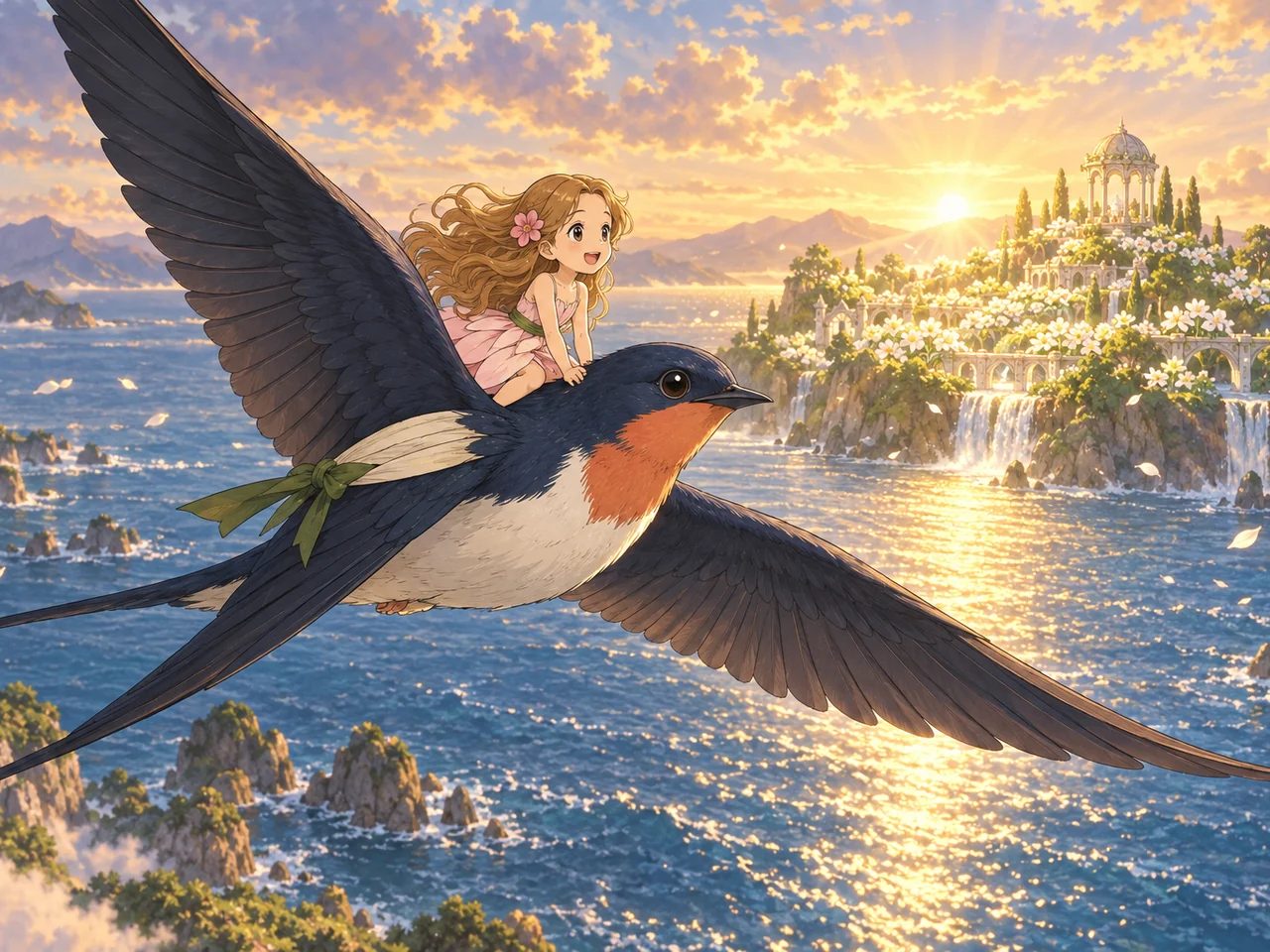
- The Swallow · 燕子 — A swallow saved by Thumbelina, who carries her south.
- The Flower Prince · 花园王子 — A tiny, kind prince of the flower garden.
4 chapters, one journey
Chapter 1: The Tiny Girl
花里的小女孩
A lonely woman plants a seed and a girl no bigger than a thumb opens inside the flower. But someone else has plans for the tiny girl.
Free to read
Chapter 2: The Toad's Son
蟾蜍的儿子
Carried off to a pond, Thumbelina must escape a toad's wedding plan, then survive summer and a snowy winter alone.
SayMei Stories
Chapter 3: The Rich Mole
有钱的鼹鼠
Safe with a kind field mouse, Thumbelina meets a rich mole who wants her for his wife. Then she finds something in his tunnel.
SayMei Stories
Chapter 4: Flying South
飞到南方
Thumbelina has one last day before a wedding she does not want. Then a friend comes back with strong wings.
SayMei Stories
Key words in Thumbelina
Behind the story
Thumbelina was written by the Danish author Hans Christian Andersen and first published in 1835. He made up the tale himself, though it feels like a folk story, and it is one of his earliest fairy tales.
Chinese readers know it as 拇指姑娘, "Thumb Girl". Andersen's stories were translated into Chinese more than a century ago, and children still read them in picture books and school reading lists.
Did you know?
- Andersen's first name for her was a word meaning "Little Tiny"; in Chinese she is named after the thumb, 拇指.
- Chinese calls a swallow 燕子, a bird that many Chinese poems and paintings connect with the return of spring.
- Andersen was born in Odense, Denmark, and wrote about 160 fairy tales.