The Old Man Under the Moon · chapter 4 of 4
Fourteen Years Later
十四年以后
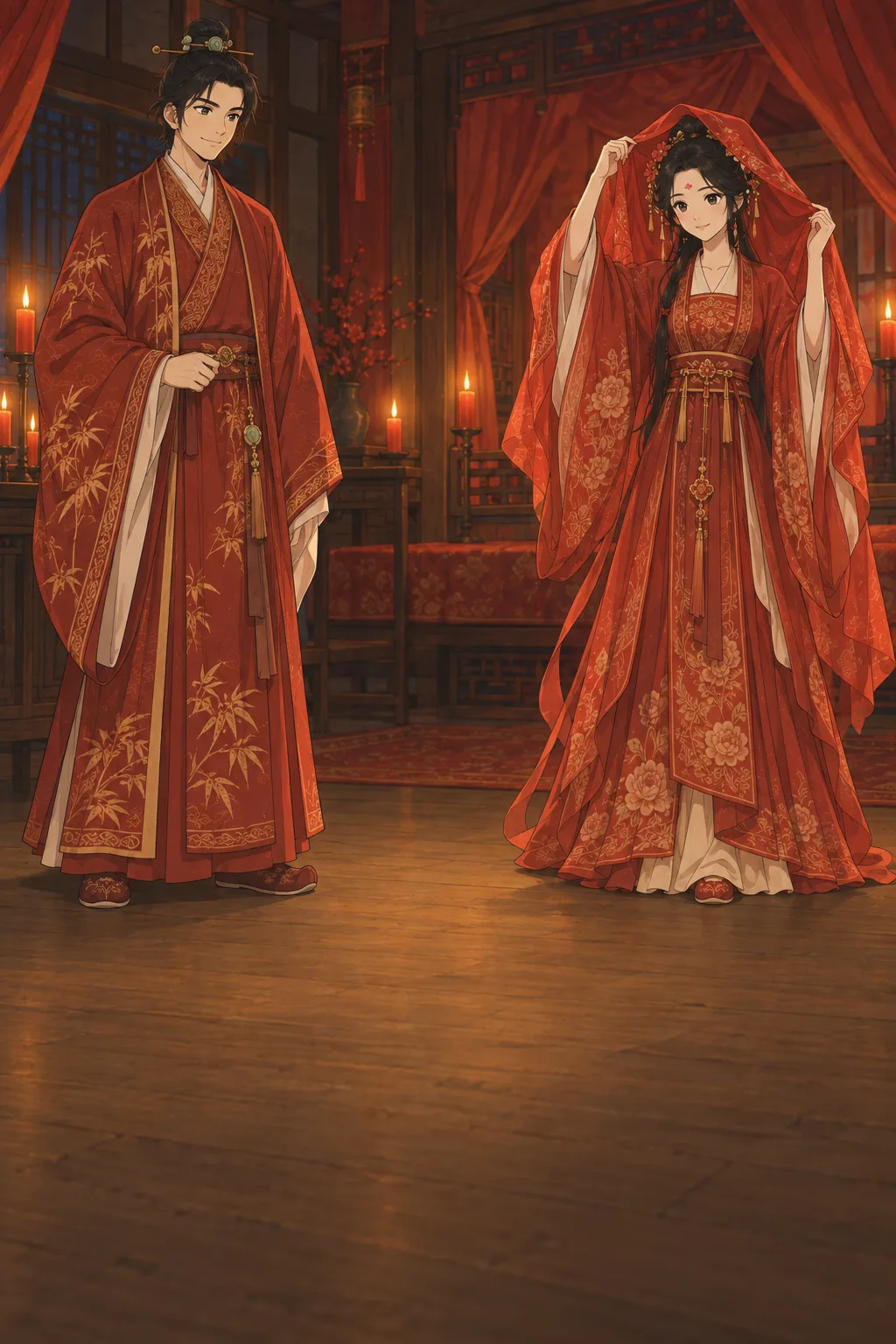
Fourteen years later, Wei Gu finally marries. On their wedding night, his bride tells him why she never takes off the little flower between her brows.
Read what you hear
- Narrator 十四年过去了。这些年,韦固找过很多次妻子,可是一次也没有成。
Shísì nián guòqù le. Zhèxiē nián, Wéi Gù zhǎo guo hěn duō cì qīzi, kěshì yí cì yě méiyǒu chéng.
Fourteen years went by. In all that time, Wei Gu tried again and again to find a wife, but not once did it work out.
- Narrator 后来,他做了官。王刺史很喜欢他,把十七岁的女儿嫁给了他。
Hòulái, tā zuò le guān. Wáng cìshǐ hěn xǐhuan tā, bǎ shíqī suì de nǚ'ér jià gěi le tā.
In time, he became an official. Governor Wang thought highly of him and gave him his seventeen-year-old daughter as a bride.
- Wei Gu 今天是我们结婚的好日子。我……可以看看你吗?
Jīntiān shì wǒmen jiéhūn de hǎo rìzi. Wǒ… kěyǐ kànkan nǐ ma?
Today is our wedding day. May I… may I see your face?
Chapter 4 is part of SayMei Stories ($2.99 a month) and SayMei Premium. Chapter 1 of The Old Man Under the Moon is free, and so are The Second Cup of Tea, Mulan, The Butterfly Lovers, Journey to the West: The Monkey King, Cinderella, The Night of the Nian, Chang'e and the Moon, The Great Race: The Twelve Animals, Aesop's Fables, Little Red Riding Hood, The Three Little Pigs, The Ugly Duckling, Pangu and Nüwa: How the World Began, Beauty and the Beast, The Magic Lotus Lantern, Alice in Wonderland, Zhong Kui the Demon Queller and The Odyssey from start to finish.
- The Bride 你别动,我自己来。
Nǐ bié dòng, wǒ zìjǐ lái.
Stay where you are. I'll do it myself.
- Narrator 新娘慢慢拿下了红盖头。她的眉间,贴着一朵红色的小花。
Xīnniáng mànmàn ná xià le hóng gàitou. Tā de méijiān, tiēzhe yì duǒ hóngsè de xiǎo huā.
Slowly, the bride lifted off her red veil. Between her eyebrows sat a small red flower.
- Wei Gu 你真好看。眉间的这朵小花,也很好看。
Nǐ zhēn hǎokàn. Méijiān de zhè duǒ xiǎo huā, yě hěn hǎokàn.
You're beautiful. And the little flower between your eyebrows is lovely too.
- The Bride 这朵花,我每天都贴着,洗脸、睡觉的时候,也不拿下来。
Zhè duǒ huā, wǒ měi tiān dōu tiēzhe, xǐ liǎn, shuìjiào de shíhou, yě bù ná xiàlái.
I wear this flower every day. I don't take it off even to wash my face or to sleep.
- Wei Gu 从来不拿下来?为什么?
Cónglái bù ná xiàlái? Wèishénme?
Never? Why not?
- The Bride 因为……花的下面,有一个小小的疤。
Yīnwèi… huā de xiàmiàn, yǒu yí gè xiǎoxiǎo de bā.
Because… under the flower, there's a small scar.
- Wei Gu 疤?是怎么来的?
Bā? Shì zěnme lái de?
A scar? How did you get it?
- The Bride 其实,我不是爸爸的亲女儿。他是我叔叔,后来才把我接到他家。
Qíshí, wǒ bú shì bàba de qīn nǚ'ér. Tā shì wǒ shūshu, hòulái cái bǎ wǒ jiē dào tā jiā.
The truth is, the man I call Father isn't my real father. He's my uncle, and he only took me into his home later.
- The Bride 我很小的时候,亲爸爸妈妈就去世了。一位老奶奶照顾我,每天背着我,在宋城卖菜。
Wǒ hěn xiǎo de shíhou, qīn bàba māma jiù qùshì le. Yí wèi lǎo nǎinai zhàogù wǒ, měi tiān bēizhe wǒ, zài Sòngchéng mài cài.
My own parents died when I was very small. An old woman looked after me. Every day she carried me on her back while she sold vegetables in Songcheng.
- Wei Gu 宋城?卖菜?
Sòngchéng? Mài cài?
Songcheng? Vegetables?
- The Bride 奶奶说,我三岁那年,有人踢翻了我们的菜篮子。我从她背上掉下来,就有了这个疤。
Nǎinai shuō, wǒ sān suì nà nián, yǒu rén tīfān le wǒmen de càilánzi. Wǒ cóng tā bèi shang diào xiàlái, jiù yǒu le zhège bā.
Granny told me that when I was three, someone kicked over our vegetable basket. I fell off her back, and that's how I got this scar.
- Wei Gu 那位老奶奶……是不是姓陈?
Nà wèi lǎo nǎinai… shì bu shì xìng Chén?
That old woman… was her name Chen?
- The Bride 是啊!你怎么知道?
Shì a! Nǐ zěnme zhīdào?
Yes! How did you know?
- Wei Gu 因为那个踢翻菜篮子的人……就是我。
Yīnwèi nàge tīfān càilánzi de rén… jiù shì wǒ.
Because the one who kicked over that basket… was me.
- The Bride 是……是你?
Shì… shì nǐ?
It… it was you?
- Wei Gu 那天,一个老人告诉我,你是我以后的妻子。我不信,还很生气。对不起……真的对不起。
Nà tiān, yí gè lǎorén gàosu wǒ, nǐ shì wǒ yǐhòu de qīzi. Wǒ bú xìn, hái hěn shēngqì. Duìbuqǐ… zhēn de duìbuqǐ.
That day, an old man told me you would be my wife one day. I didn't believe him, and I was so angry. I'm sorry… I'm truly sorry.
- The Bride 我不怪你。那时候你还不认识我,现在你认识了,这就够了。
Wǒ bú guài nǐ. Nà shíhou nǐ hái bú rènshi wǒ, xiànzài nǐ rènshi le, zhè jiù gòu le.
I don't blame you. Back then, you didn't know me. Now you do, and that's enough.
- Wei Gu 这就是命吧。那天月亮下的老人,说的都是真的。我们的脚上,真的有一根红线。
Zhè jiù shì mìng ba. Nà tiān yuèliang xià de lǎorén, shuō de dōu shì zhēn de. Wǒmen de jiǎo shang, zhēn de yǒu yì gēn hóngxiàn.
This must be fate. The old man under the moon that day was telling the truth. There really is a red thread tying our feet together.
- Narrator 从那以后,他们互相敬爱,一辈子没有分开。人们都叫那位老人“月下老人”,也叫他“月老”。
Cóng nà yǐhòu, tāmen hùxiāng jìng'ài, yíbèizi méiyǒu fēnkāi. Rénmen dōu jiào nà wèi lǎorén “Yuèxià Lǎorén”, yě jiào tā “Yuèlǎo”.
From then on, they loved and honored each other, and they stayed together all their lives. People came to call that old man the Old Man Under the Moon, or Yuelao for short.
- Narrator 今天,还有很多人去月老庙,求一根红线,希望早点儿找到对的人。
Jīntiān, hái yǒu hěn duō rén qù Yuèlǎo miào, qiú yì gēn hóngxiàn, xīwàng zǎo diǎnr zhǎodào duì de rén.
Even today, many people visit temples to Yuelao and ask for a red thread, hoping to find the right person soon.
Hear the chapter
What changed in the story?
- How old is the bride when she marries Wei Gu?
“把十七岁的女儿嫁给了他”
- Why does the bride never take off the flower between her eyebrows?
“花的下面,有一个小小的疤。”
- Who looked after the bride when she was very small?
“一位老奶奶照顾我,每天背着我,在宋城卖菜。”
- What does Wei Gu confess on their wedding night?
“因为那个踢翻菜篮子的人……就是我。”
- How does the bride answer his apology?
“我不怪你。那时候你还不认识我”