World classic, retold in simple Mandarin
The Fisherman and the Golden Fish
渔夫和金鱼
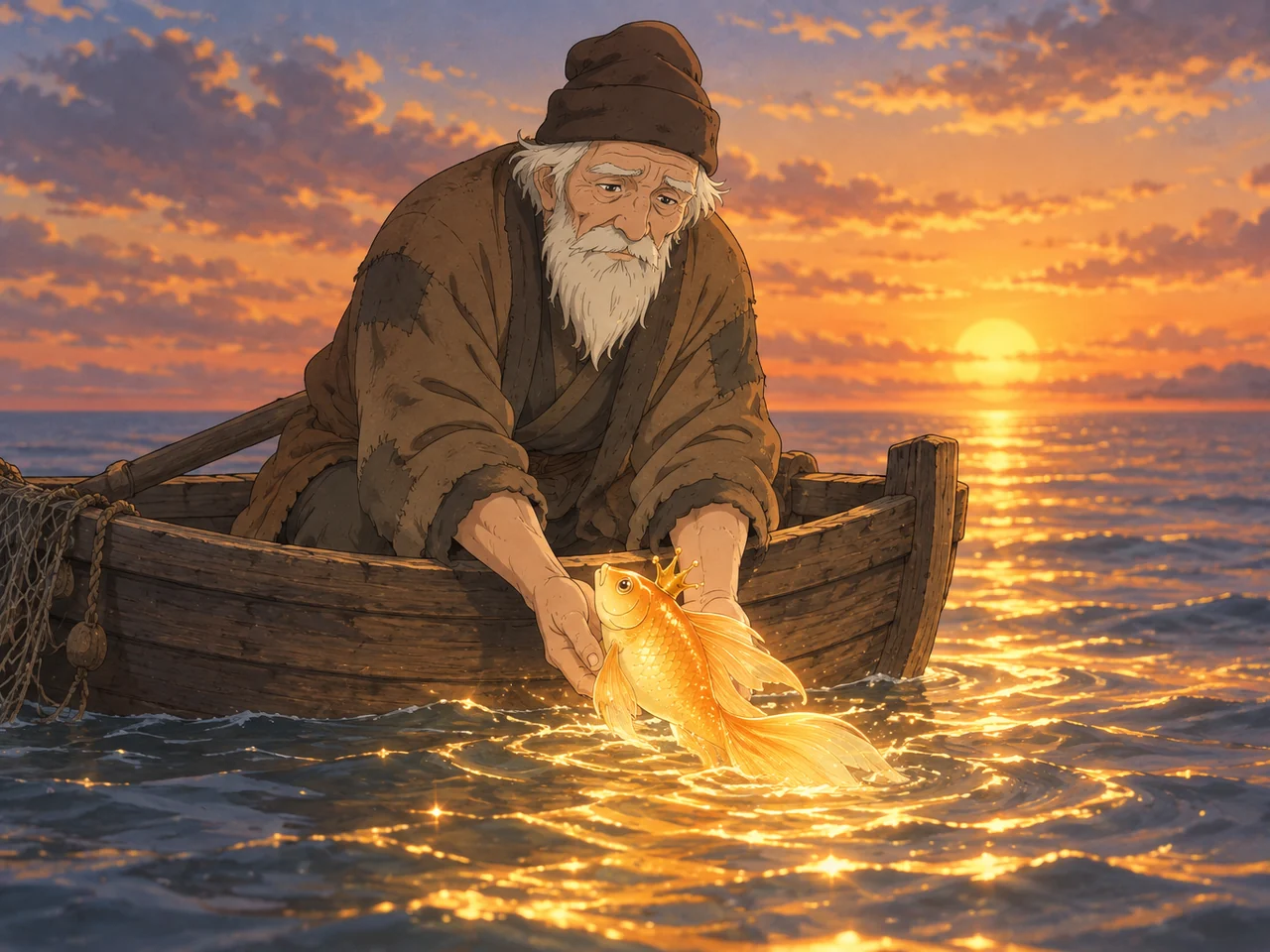
The Fisherman and the Golden Fish (渔夫和金鱼, Yúfū hé jīnyú) is a fairy tale by Alexander Pushkin, retold in simple Mandarin as a 4-chapter story with audio for learners at about HSK 1 (Beginner).
Retold from Alexander Pushkin's fairy tale: a poor old fisherman frees a talking golden fish, and his wife keeps sending him back to the sea to ask for more.
Meet the voices
- Narrator · 旁白 — A warm storyteller who sets the scene.
- The Old Fisherman · 老渔夫 — A gentle, poor old man who cannot say no to his wife.
- The Golden Fish · 金鱼 — A shining, talking fish that grants wishes until the wishes grow too greedy.
- The Old Wife · 老太太 — The fisherman's sharp-tongued wife who always wants more.
- The Noblewoman · 贵妇人 — The wife after her first wish, proud and bossy.
- The Queen · 女王 — The wife as queen, ruled by greed.
- The Servant · 仆人 — A nervous servant who hurries to obey.
4 chapters, one journey
Chapter 1: The Golden Fish
金鱼说话了
A poor old fisherman catches a golden fish that can talk, and lets it go for free. His wife has other ideas.
Free to read
Chapter 2: The New Washtub
新木盆
The fisherman asks the golden fish for a washtub. It is only the start of his wife's wishes, and the sea is changing.
SayMei Stories
Chapter 3: The Noblewoman
贵妇人
The wife has a big house, but she does not want to be an old woman anymore. What will the sea say now?
SayMei Stories
Chapter 4: The Dark Sea
黑色的海
The queen wants more than a kingdom. When the fisherman calls the fish this time, the sea is black.
SayMei Stories
Key words in The Fisherman and the Golden Fish
Behind the story
This tale comes from Alexander Pushkin, the great Russian poet, who wrote it as a poem in 1833. He based it on a folk tale about a greedy wife who asks for more and more, until she loses everything.
Chinese readers know it as 渔夫和金鱼, and it has long been a favorite in Chinese translation for young readers. Its lesson, that greed can take away what you already have, fits well with Chinese sayings about being content.
Did you know?
- Alexander Pushkin (1799-1837) is often called the founder of modern Russian literature.
- Pushkin wrote this poem in the autumn of 1833, at his family's country estate in Boldino.
- The story's pattern of asking again and again, with the sea getting darker each time, is what makes it so easy to remember.