Pronunciation · Beginner to intermediate
Chinese Homophones: 100 Words That Sound Alike, with Pinyin, Meanings and Audio
One hundred Chinese words that sound the same or almost the same, in 38 sets, each with pinyin, meanings, the words in everyday partners, an example that uses them all and a tip to tell them apart.
- Level:
- Beginner to intermediate · HSK 1–3
- Format:
- Reference guide · PDF · 12 pages · US Letter (prints on A4)
- Price:
- Free · free with a saymei account · updated Nov 12, 2026
Listening audio: play every track free, no account needed.
Download the free PDF: create a free SayMei account on this page, and we'll email you a copy too.
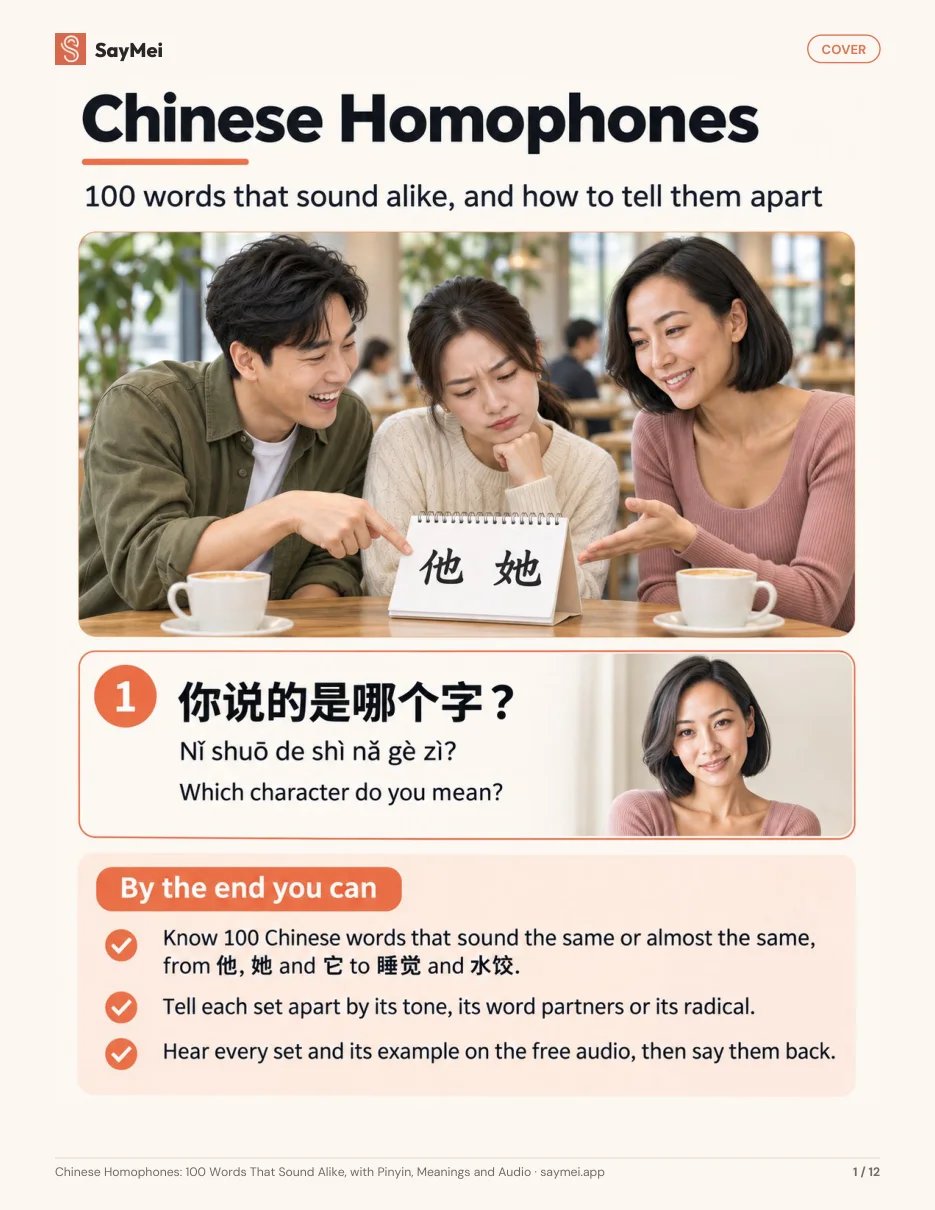
你说的是哪个字? · Nǐ shuō de shì nǎ gè zì? · Which character do you mean?
By the end you can
- Tell apart words that sound exactly the same. Seventeen sets share one sound and one tone, like 是, 事, 试 and 市, or 元, 园, 员 and 原. Word partners and radicals tell them apart.
叔叔下棋输了,就送我一本书。 · Shūshu xià qí shū le, jiù sòng wǒ yī běn shū. · Uncle lost at chess, so he gave me a book. - Hear how tone changes the word. Fifteen sets share a syllable but not a tone, from 问 and 文 to 包, 薄, 饱 and 报, all four tones on one syllable.
我吃了水饺就去睡觉。 · Wǒ chī le shuǐjiǎo jiù qù shuìjiào. · I'll have some dumplings and then go to bed. - Get the classic mix-ups right. 他, 她 and 它; 在 and 再; 又 and 右; 的, 得 and 地; 那 and 哪; 已 and 以, each with a tip on which to use when.
他是老师,她是医生,它是我们家的猫。 · Tā shì lǎoshī, tā shì yīshēng, tā shì wǒmen jiā de māo. · He's a teacher, she's a doctor, and it's our family cat. - Hear every set on the free audio. The audio reads each set's words inside everyday partners (一本书, 输了, 叔叔), then its example sentence, with a pause to say it back.
今天的西瓜很甜。 · Jīntiān de xīguā hěn tián. · Today's watermelon is very sweet. - Ask which character someone means. When a sound could be several characters, Chinese speakers simply ask. The Start Here pages show how.
你说的是哪个字? · Nǐ shuō de shì nǎ gè zì? · Which character do you mean? - See how sound-alikes shape customs and luck. Why 福 hangs upside down, why fish is served at New Year, why 8 is lucky and 4 is avoided, and why a clock is not a gift.
福到了! · Fú dào le! · Good luck has arrived!
What’s inside
- Start Here: Why So Many Words Sound Alike · Hear the Difference · Sound-Alikes in Chinese Culture
- Homophones: 100 Chinese Homophones in 38 Sets
How to use this book
Read the three Start Here pages, then take one group of sets at a sitting with the free audio. Say each set aloud before you read its example, so you hear the tones side by side.
- Day 1: Start Here. Pages 3 to 5: why words sound alike, the listening page and the culture page. Check your answers at the back.
- Day 2: Classic mix-ups. The last six sets: 他她它, 在 and 再, 又 and 右, 的得地, 那 and 哪, 已 and 以. Read each tip twice.
- Days 3–4: Same syllable, different tone. Play the audio for these 15 sets and say each word after it, listening for the tone.
- Days 5–6: Same sound, same tone. Learn these 17 sets by their word partners: 一本书, 输了, 叔叔.
Who it’s for
Beginners and intermediate learners who mix up 他, 她 and 它 or 在 and 再, and anyone looking for a list of Chinese homophones with pinyin, meanings and audio.
Before you start: Every word and example has pinyin and English, and the words are everyday ones. Knowing the four tones helps; the audio lets you hear each one.
Frequently asked questions
Why does Chinese have so many homophones?
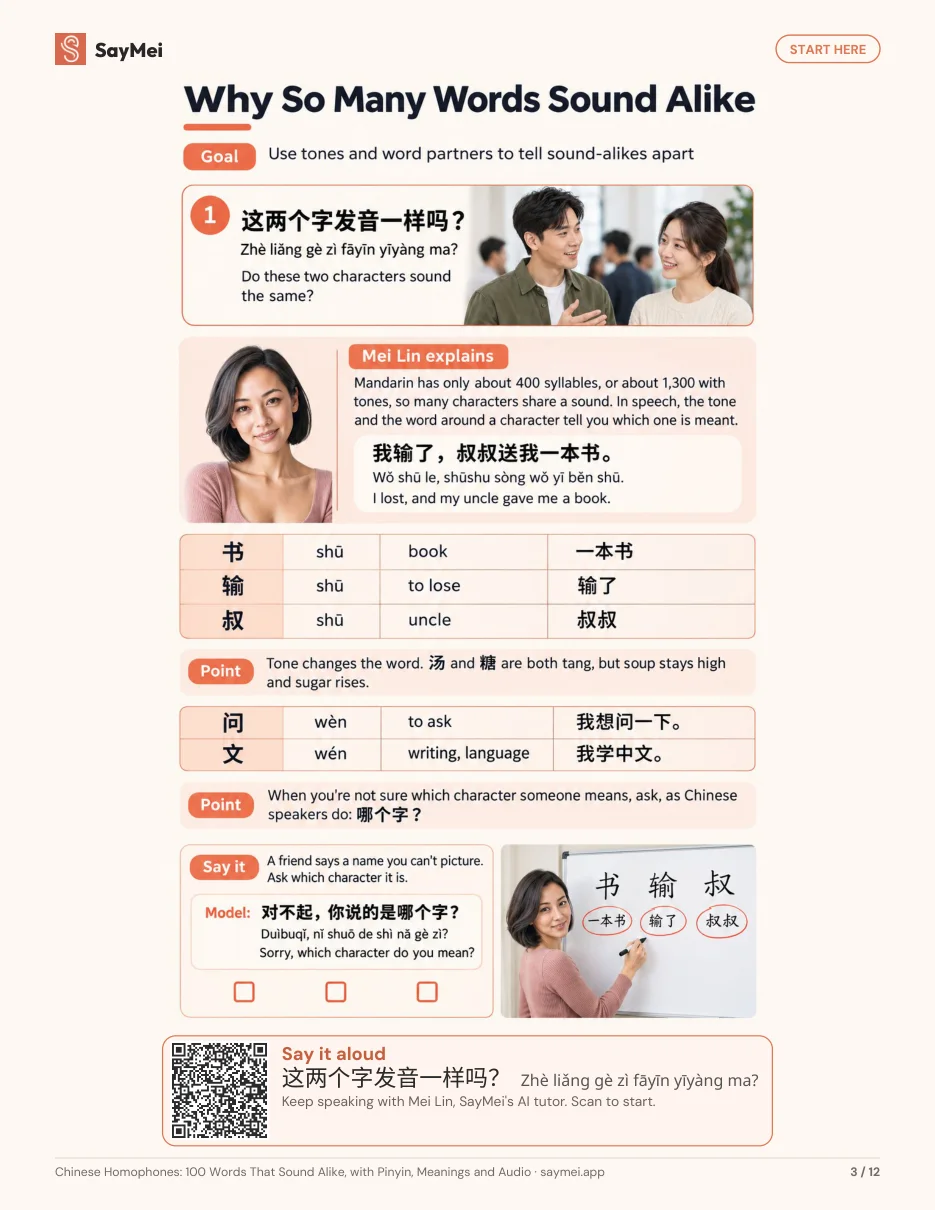
Mandarin has only about 400 syllables, or about 1,300 counting tones, but thousands of characters, so many share a sound. In speech, the tone and the word around a character tell you which one is meant.
How do Chinese speakers tell them apart?
Mostly from context and two-character words: 书 in 一本书, 输 in 输了, 叔 in 叔叔. When it's still unclear, people ask 哪个字? and describe the character by its parts.
Are 他, 她 and 它 pronounced differently?
No. All three are tā. The difference is only in writing: 他 for a man, 她 for a woman, 它 for an animal or thing. 他们 also covers mixed groups.
Where is the audio?
On this book's page on saymei.app: scan the code on the how-to page. It reads each set and its example with a pause to say it back.
Do I need a SayMei account?
Yes, to download the PDF, and the account is free: sign up with Google, Apple or your email address. With it we email you a copy of the workbook, keep every workbook you download on your account on all your devices, save your place in the free online practice, and you can practise speaking with Mei Lin, SayMei's AI tutor.
How do I print it?
The PDF is US Letter size. On A4 paper, choose "Fit to page" (or "Scale to fit") in the print dialog so nothing is cut off. Print the whole workbook or only the pages you need; colour looks best, and black and white works too.
Keep going
Chinese Tone Chart and Tone Pair Practice: 20 Tone Pairs · Tone Sandhi in Everyday Mandarin: Third Tone, Yī and Bù Tone Changes · Mandarin Tongue Twisters: 20 Rhymes for Clearer Pronunciation · Mandarin Pronunciation and Tones Test: Check Your Accent, with Audio · Browse all 340 workbooks
Version 2026-11 · Updated Nov 12, 2026 · Report a correction