Traditional Chinese legend, retold in simple Mandarin
Mr. Dongguo and the Wolf
东郭先生和狼
Mr. Dongguo and the Wolf (东郭先生和狼, Dōngguō xiānsheng hé láng) is a set of fables by Ma Zhongxi, retold in simple Mandarin as 4 short stories with audio for learners at about HSK 1 (Beginner).
Retold from Ma Zhongxi's Ming dynasty tale of the wolf of Zhongshan: a kind scholar hides a hunted wolf, then must ask three judges if the wolf may eat him.
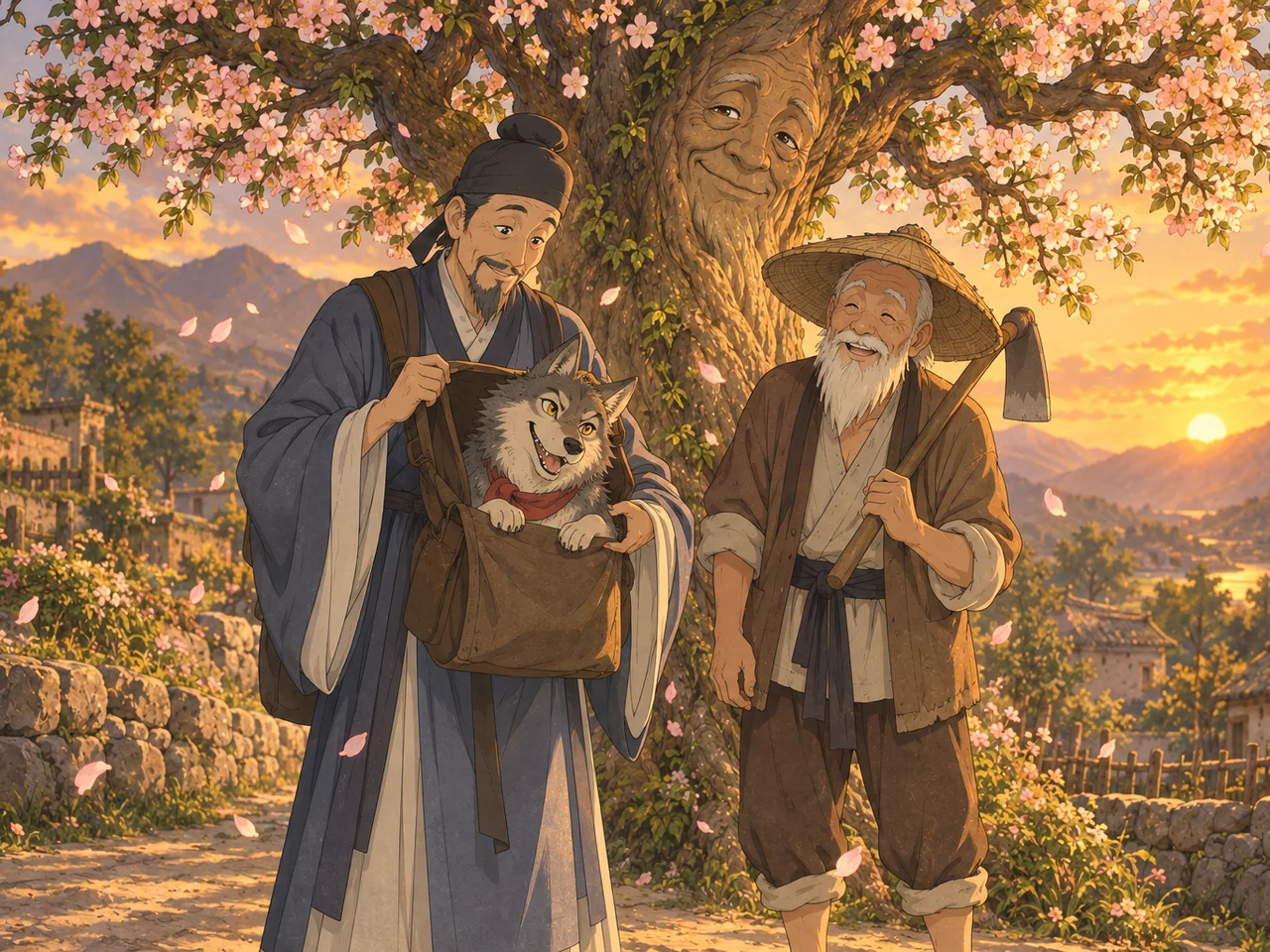
Meet the voices
- Narrator · 旁白 — A warm storyteller who sets the scene.
- Mr. Dongguo · 东郭先生 — A gentle, bookish scholar whose kind heart gets him into trouble.
- The Wolf · 狼 — A sly, hungry wolf who is very good at sounding reasonable.
- The Hunter · 猎人 — A strong young hunter who has lost the wolf's trail.
- The Apricot Tree · 老杏树 — An ancient, sleepy tree with a grumpy view of people.
- The Old Ox · 老牛 — A worn-out ox who has worked hard and been treated badly.
- The Old Farmer · 老农夫 — A calm, clever old farmer who tricks the wolf.
4 chapters, one journey
Chapter 1: The Hunted Wolf
被追的狼
Kind Mr. Dongguo hides a scared wolf from a hunter. Then the wolf climbs out of the bag, rubs his belly and says he is hungry.
Free to read
Chapter 2: The Apricot Tree
老杏树
Mr. Dongguo begs to ask three judges before the wolf eats him. The first is a grumpy old apricot tree with a great deal to say about people.
SayMei Stories
Chapter 3: The Old Ox
老牛
The second judge is a tired old ox with his own sad story. Two judges have now sided with the wolf, until Mr. Dongguo spots someone on the path.
SayMei Stories
Chapter 4: The Farmer and the Bag
老农夫的办法
An old farmer says he cannot believe a big wolf fit in a small bag. Mr. Dongguo watches the wolf try to prove it, and a lesson is learned.
SayMei Stories
Key words in Mr. Dongguo and the Wolf
Behind the story
This fable is retold from a Ming dynasty story by Ma Zhongxi called Zhongshan Lang Zhuan (The Wolf of Zhongshan). A scholar saves a wolf from a hunter, and the wolf tries to eat him in return.
Chinese readers still use the story in everyday speech. A 中山狼 is someone who bites the hand that helped them, and a 东郭先生 is someone so soft-hearted that they help people who do not deserve it.
Did you know?
- The idiom 中山狼 describes an ungrateful person who harms the one who saved them.
- The idiom 东郭先生 is used for a person whose kindness is foolish because they do not look at who they are helping.
- Apricot trees have a special place in Chinese culture: 杏林 (apricot grove) is a poetic name for the world of doctors and medicine.