Traditional Chinese legend, retold in simple Mandarin
The White Snake
白蛇传
The White Snake (白蛇传, Bái shé zhuàn) is a Chinese legend, retold in simple Mandarin as a 3-chapter story with audio for learners at about HSK 3 (Intermediate).
One of China's four great folk tales: a white snake who becomes a woman, a borrowed umbrella at West Lake, and a monk who insists their love must end.
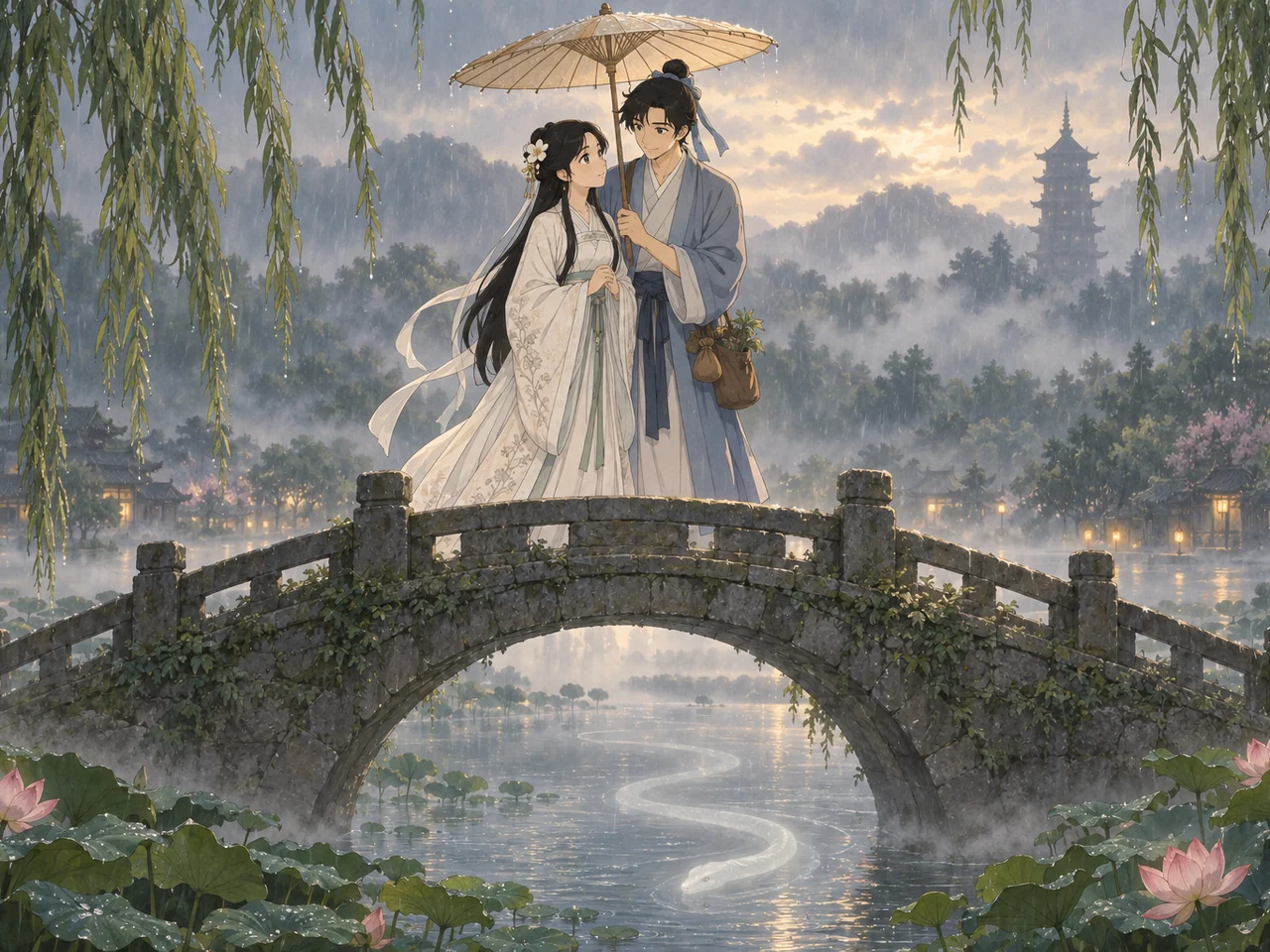
Meet the voices
- Narrator · 旁白 — Tells the story that Hangzhou has loved for a thousand years.
- Bai Suzhen · 白素贞 — A white snake who spent a thousand years learning magic — and chose to spend it on a kind man.
- Xu Xian · 许仙 — A gentle young pharmacist who lends his umbrella to a stranger in the rain.
- Fahai · 法海 — A powerful monk of Jinshan Temple, certain that humans and spirits must never love.
3 chapters, one journey
Chapter 1: An Umbrella at West Lake
西湖边的伞
Spring rain at West Lake, a young woman with a secret, and a kind stranger who gives away his umbrella, while an old monk watches from the bridge.
Free to read
Chapter 2: The Dragon Boat Wine
端午节的酒
A festival cup that Bai Suzhen should never drink, a terrible discovery, and a long flight to Mount Kunlun to set things right.
SayMei Stories
Chapter 3: The Pagoda Falls
雷峰塔倒了
A flood against a temple, a reunion on the Broken Bridge, and a monk with a golden bowl who is not finished yet.
SayMei Stories
Key words in The White Snake
Behind the story
The Legend of the White Snake (白蛇传) is another of China's Four Great Folk Legends. It grew over centuries of storytelling and opera, and by the Ming dynasty it looked much as it does today.
It is Hangzhou's story. Bai Suzhen meets Xu Xian in the rain at West Lake, the two meet again on the Broken Bridge (断桥), and the tale ends at Leifeng Pagoda (雷峰塔), which you can still visit.
Did you know?
- The real Leifeng Pagoda collapsed in 1924. The pagoda visitors climb today was rebuilt in 2002.
- The realgar wine (雄黄酒) in chapter 2 is an old Dragon Boat Festival custom, meant to keep snakes and insects away.
- Fahai's temple, Jinshan Temple (金山寺), still stands in Zhenjiang, Jiangsu.