HSK handwriting characters · HSK 3
HSK 3 Handwriting Characters: 150 with Stroke Order (Free PDF)
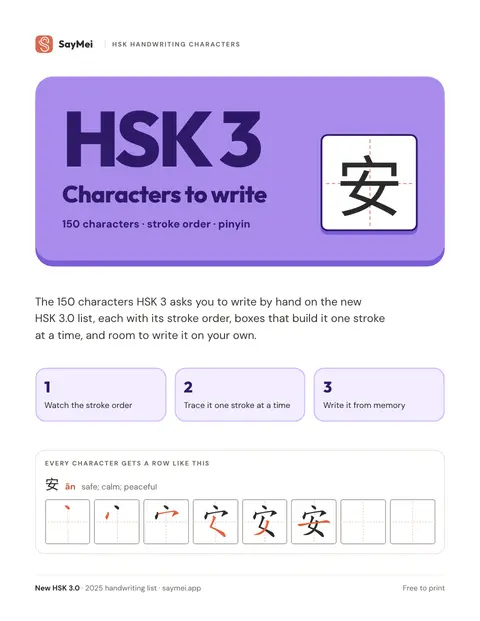
The 150 characters HSK 3 asks you to write by hand on the 2025 HSK syllabus (HSK 3.0), 250 in all with the levels below. Each gets its stroke order, a row of boxes that builds it one stroke at a time, empty boxes to write it from memory and a pinyin line.
- Characters:
- 150 to write · 250 in all by HSK 3
- Format:
- PDF · 8 sheets of up to 20 · 70 pages on A4 / 74 on US Letter
- Practice:
- Stroke order · boxes that add one stroke at a time · empty 田字格 (tián zì gé) boxes · a pinyin line
- List:
- HSK 3.0 handwriting list (2025 syllabus) · a QR code on every sheet for online practice
- Price:
- Free · no sign-up · updated Oct 27, 2026
Practice these characters online
Next step after the characters: HSK 3 Guided Writing Workbook, free with a SayMei account.
All 150 HSK 3 characters to write
HSK 3's characters take from 2 to 12 strokes, 7.1 on average. The fewest: 力 (lì, strength) and 又 (yòu, again). The most: 答 (dá, to answer) and 渴 (kě, thirsty). 56 of the 150 are written differently in traditional Chinese, and 20 have a second reading in the official word list. They are listed below in the syllabus's own order, which is roughly alphabetical by pinyin.
| # | Character | Pinyin | Meaning | Strokes | Traditional | Example words |
|---|---|---|---|---|---|---|
| 1 | 安 | ān | safe; calm; peaceful | 6 | 安 | 安全 ānquán safe; safety; 安静 ānjìng quiet |
| 2 | 把 | bǎ | to hold; (object marker); handle | 7 | 把 | 把握 bǎwò to grasp; confidence |
| 3 | 般 | bān | kind; sort; like (as in 一般) | 10 | 般 | 一般 yìbān usually; ordinary |
| 4 | 板 | bǎn | board; plank | 8 | 板 | 黑板 hēibǎn blackboard; 老板 lǎobǎn boss |
| 5 | 办 | bàn | to do; to handle | 4 | 辦 | 办法 bànfǎ way; method; 办公室 bàngōngshì office |
| 6 | 饱 | bǎo | full (after eating) | 8 | 飽 | |
| 7 | 报 | bào | newspaper; to report | 7 | 報 | 报纸 bàozhǐ newspaper; 报名 bàomíng to sign up |
| 8 | 北 | běi | north | 5 | 北 | 东北 dōngběi northeast; 西北 xīběi northwest |
| 9 | 被 | bèi | by (passive marker); quilt | 10 | 被 | 被子 bèizi quilt; duvet |
| 10 | 必 | bì | must; certainly | 5 | 必 | 必须 bìxū must; 不必 búbì need not |
| 11 | 变 | biàn | to change; to become | 8 | 變 | 变化 biànhuà change; to change; 变成 biànchéng to become; to turn into |
| 12 | 冰 | bīng | ice | 6 | 冰 | 冰箱 bīngxiāng refrigerator; 冰激凌 bīngjīlíng ice cream |
| 13 | 才 | cái | only then; just; talent | 3 | 才 | 刚才 gāngcái a moment ago; 人才 réncái talented person; talent |
| 14 | 参 | cān | to take part; to join | 8 | 參 | 参加 cānjiā to take part in; 参观 cānguān to visit (a place) |
| 15 | 草 | cǎo | grass | 9 | 草 | 草地 cǎodì lawn; grassland |
| 16 | 层 | céng | floor (of a building); layer | 7 | 層 | |
| 17 | 查 | chá | to check; to look up | 9 | 查 | 检查 jiǎnchá to check; to examine; 调查 diàochá to investigate; survey |
| 18 | 差 | chà | poor; to fall short; to lack | 9 | 差 | 差不多 chàbuduō almost; about the same; 出差 chūchāi to go on a business trip |
| 19 | 成 | chéng | to become; to succeed | 6 | 成 | 完成 wánchéng to finish; to complete; 变成 biànchéng to become; to turn into |
| 20 | 城 | chéng | city; town; city wall | 9 | 城 | 城市 chéngshì city; 城区 chéngqū urban area |
| 21 | 除 | chú | to remove; except | 9 | 除 | 除了 chúle except; besides; 删除 shānchú to delete |
| 22 | 处 | chù | place; office | 5 | 處 | 到处 dàochù everywhere; 处理 chǔlǐ to deal with; to handle |
| 23 | 春 | chūn | spring (season) | 9 | 春 | 春天 chūntiān spring |
| 24 | 答 | dá | to answer | 12 | 答 | 回答 huídá to answer; 答应 dāying to agree; to promise |
| 25 | 带 | dài | to bring; to take; belt | 9 | 帶 | 带动 dàidòng to drive; to spur on; 领带 lǐngdài necktie |
| 26 | 单 | dān | single; list; bill | 8 | 單 | 简单 jiǎndān simple; 名单 míngdān list (of names) |
| 27 | 当 | dāng | to serve as; when; at | 6 | 當 | 当然 dāngrán of course; 适当 shìdàng appropriate |
| 28 | 灯 | dēng | lamp; light | 6 | 燈 | 红绿灯 hóng-lǜdēng traffic light; 灯光 dēngguāng light; lighting |
| 29 | 典 | diǎn | standard work; classic (as in 词典) | 8 | 典 | 词典 cídiǎn dictionary; 字典 zìdiǎn dictionary (of characters) |
| 30 | 调 | tiáo | to adjust; to mix (as in 空调) | 10 | 調 | 空调 kōngtiáo air conditioner; 调查 diàochá to investigate; survey |
| 31 | 定 | dìng | to decide; to fix; settled | 8 | 定 | 决定 juédìng to decide; decision; 一定 yídìng surely; definitely |
| 32 | 丢 | diū | to lose; to throw | 6 | 丟 | 丢失 diūshī to lose |
| 33 | 冬 | dōng | winter | 5 | 冬 | 冬天 dōngtiān winter |
| 34 | 段 | duàn | section; paragraph | 9 | 段 | 阶段 jiēduàn stage; phase; 手段 shǒuduàn means; method |
| 35 | 而 | ér | and; but; yet | 6 | 而 | 而且 érqiě and also; moreover; 然而 rán'ér however |
| 36 | 耳 | ěr | ear | 6 | 耳 | 耳朵 ěrduo ear; 耳机 ěrjī earphones |
| 37 | 发 | fā | to send; to issue; to grow | 5 | 發 | 发展 fāzhǎn to develop; development; 发现 fāxiàn to discover; to find |
| 38 | 法 | fǎ | law; method; way | 8 | 法 | 方法 fāngfǎ method; way; 办法 bànfǎ way; method |
| 39 | 方 | fāng | square; direction; side | 4 | 方 | 地方 dìfang place; 方法 fāngfǎ method; way |
| 40 | 放 | fàng | to put; to release; to let go | 8 | 放 | 放心 fàngxīn to feel relieved; don't worry; 放假 fàngjià to have a holiday |
| 41 | 风 | fēng | wind | 4 | 風 | 风景 fēngjǐng scenery; 风险 fēngxiǎn risk |
| 42 | 复 | fù | again; to return; complex | 9 | 復 | 复习 fùxí to review; 复杂 fùzá complicated |
| 43 | 该 | gāi | should; ought to | 8 | 該 | 应该 yīnggāi should |
| 44 | 干 | gàn | to do; to work | 3 | 幹 | 干净 gānjìng clean; 干活儿 gànhuór to work; to do a job |
| 45 | 刚 | gāng | just; only a moment ago | 6 | 剛 | 刚才 gāngcái a moment ago; 刚刚 gānggāng just now |
| 46 | 更 | gèng | more; even more | 7 | 更 | 更加 gèngjiā even more; 更新 gēngxīn to update |
| 47 | 共 | gòng | together; common; in total | 6 | 共 | 一共 yígòng in total; 共同 gòngtóng common; together |
| 48 | 故 | gù | reason; cause; former | 9 | 故 | 故事 gùshi story; 故意 gùyì on purpose |
| 49 | 瓜 | guā | melon; gourd | 5 | 瓜 | 西瓜 xīguā watermelon; 黄瓜 huángguā cucumber |
| 50 | 海 | hǎi | sea; ocean | 10 | 海 | 海洋 hǎiyáng ocean; 海外 hǎiwài overseas |
| 51 | 合 | hé | to close; to join; to suit | 6 | 合 | 合适 héshì suitable; right; 符合 fúhé to fit; to match |
| 52 | 河 | hé | river | 8 | 河 | 河流 héliú river |
| 53 | 护 | hù | to protect | 7 | 護 | 护照 hùzhào passport; 保护 bǎohù to protect |
| 54 | 化 | huà | to change; to melt; -ize | 4 | 化 | 文化 wénhuà culture; 变化 biànhuà change; to change |
| 55 | 换 | huàn | to change; to exchange | 10 | 換 | 换乘 huànchéng to transfer (trains or buses); 交换 jiāohuàn to exchange |
| 56 | 活 | huó | to live; alive; work | 9 | 活 | 生活 shēnghuó life; to live; 活动 huódòng activity |
| 57 | 或 | huò | or; maybe | 8 | 或 | 或者 huòzhě or; 或是 huòshì or |
| 58 | 级 | jí | level; grade | 6 | 級 | 年级 niánjí grade (in school); 班级 bānjí class (in school) |
| 59 | 急 | jí | anxious; urgent | 9 | 急 | 着急 zháojí worried; anxious; 紧急 jǐnjí urgent |
| 60 | 加 | jiā | to add; plus | 5 | 加 | 参加 cānjiā to take part in; 增加 zēngjiā to increase |
| 61 | 假 | jià | holiday; vacation | 11 | 假 | 假期 jiàqī holiday; vacation; 请假 qǐngjià to ask for time off |
| 62 | 讲 | jiǎng | to speak; to explain | 6 | 講 | 讲话 jiǎnghuà to speak; speech; 讲究 jiǎngjiu to be particular about |
| 63 | 角 | jiǎo | corner; horn; 1/10 of a yuan | 7 | 角 | 角度 jiǎodù angle; point of view; 角色 juésè role; character |
| 64 | 饺 | jiǎo | dumpling (as in 饺子) | 9 | 餃 | 饺子 jiǎozi dumpling |
| 65 | 节 | jié | festival; section; joint | 5 | 節 | 季节 jìjié season; 节目 jiémù program; show |
| 66 | 结 | jié | to tie; knot; to end | 9 | 結 | 结束 jiéshù to end; to finish; 结婚 jiéhūn to get married |
| 67 | 借 | jiè | to borrow; to lend | 10 | 借 | 凭借 píngjiè to rely on; by means of |
| 68 | 斤 | jīn | jin (half a kilogram) | 4 | 斤 | 公斤 gōngjīn kilogram |
| 69 | 净 | jìng | clean; net; only | 8 | 淨 | 干净 gānjìng clean |
| 70 | 久 | jiǔ | long (time) | 3 | 久 | 不久 bùjiǔ soon; before long; 好久 hǎojiǔ a long time |
| 71 | 句 | jù | sentence | 5 | 句 | 句子 jùzi sentence |
| 72 | 卡 | kǎ | card | 5 | 卡 | 信用卡 xìnyòngkǎ credit card; 银行卡 yínhángkǎ bank card |
| 73 | 渴 | kě | thirsty | 12 | 渴 | |
| 74 | 刻 | kè | quarter (hour); moment; to carve | 8 | 刻 | 立刻 lìkè immediately; 时刻 shíkè moment; at all times |
| 75 | 空 | kōng | empty; sky; air | 8 | 空 | 空调 kōngtiáo air conditioner; 空气 kōngqì air |
| 76 | 哭 | kū | to cry | 10 | 哭 | |
| 77 | 礼 | lǐ | gift; ceremony; courtesy | 5 | 禮 | 礼物 lǐwù gift; present; 礼貌 lǐmào polite; manners |
| 78 | 李 | lǐ | plum; (common surname Li) | 7 | 李 | 行李 xíngli luggage |
| 79 | 力 | lì | strength; power | 2 | 力 | 努力 nǔlì to work hard; 能力 nénglì ability |
| 80 | 练 | liàn | to practice; to train | 8 | 練 | 练习 liànxí to practice; exercise; 教练 jiàoliàn coach |
| 81 | 凉 | liáng | cool; cold | 10 | 涼 | 凉快 liángkuai nice and cool; 着凉 zháoliáng to catch a cold |
| 82 | 马 | mǎ | horse | 3 | 馬 | 马上 mǎshàng right away; 马路 mǎlù road; street |
| 83 | 毛 | máo | hair; fur; 1/10 of a yuan | 4 | 毛 | 羽毛球 yǔmáoqiú badminton; 毛巾 máojīn towel |
| 84 | 目 | mù | eye; item | 5 | 目 | 节目 jiémù program; show; 目前 mùqián at present |
| 85 | 南 | nán | south | 9 | 南 | 西南 xīnán southwest; 东南 dōngnán southeast |
| 86 | 难 | nán | difficult; hard | 10 | 難 | 难题 nántí difficult problem; 难过 nánguò sad |
| 87 | 努 | nǔ | to strive (as in 努力) | 7 | 努 | 努力 nǔlì to work hard |
| 88 | 怕 | pà | to fear; to be afraid | 8 | 怕 | 害怕 hàipà to be afraid; 恐怕 kǒngpà I'm afraid; probably |
| 89 | 胖 | pàng | fat; plump | 9 | 胖 | |
| 90 | 片 | piàn | slice; piece; film | 4 | 片 | 照片 zhàopiàn photo; 图片 túpiàn picture; image |
| 91 | 平 | píng | flat; level; peaceful | 5 | 平 | 水平 shuǐpíng level; standard; 平时 píngshí usually; normally |
| 92 | 瓶 | píng | bottle | 10 | 瓶 | 瓶子 píngzi bottle |
| 93 | 其 | qí | his; her; its; that | 8 | 其 | 其他 qítā other; 其实 qíshí actually |
| 94 | 汽 | qì | steam; vapor | 7 | 汽 | 汽车 qìchē car; 汽水 qìshuǐ soda; soft drink |
| 95 | 且 | qiě | moreover; and (as in 而且) | 5 | 且 | 而且 érqiě and also; moreover; 并且 bìngqiě and; moreover |
| 96 | 轻 | qīng | light (weight); gentle | 9 | 輕 | 年轻 niánqīng young; 轻松 qīngsōng relaxed; easy |
| 97 | 秋 | qiū | autumn | 9 | 秋 | 秋天 qiūtiān autumn |
| 98 | 求 | qiú | to ask; to seek; to request | 7 | 求 | 要求 yāoqiú to require; requirement; 需求 xūqiú demand; need |
| 99 | 区 | qū | area; district | 4 | 區 | 小区 xiǎoqū residential community; 区别 qūbié difference |
| 100 | 全 | quán | all; whole; complete | 6 | 全 | 安全 ānquán safe; safety; 完全 wánquán completely |
| 101 | 如 | rú | like; as; if | 6 | 如 | 如果 rúguǒ if; 比如 bǐrú for example |
| 102 | 伞 | sǎn | umbrella | 6 | 傘 | |
| 103 | 山 | shān | mountain; hill | 3 | 山 | 山区 shānqū mountain area |
| 104 | 勺 | sháo | spoon; ladle | 3 | 勺 | 勺子 sháozi spoon |
| 105 | 声 | shēng | sound; voice; tone | 7 | 聲 | 声音 shēngyīn sound; voice; 歌声 gēshēng singing voice |
| 106 | 实 | shí | real; true; solid | 8 | 實 | 其实 qíshí actually; 实际 shíjì actual; reality |
| 107 | 适 | shì | to suit; to fit | 9 | 適 | 合适 héshì suitable; right; 适应 shìyìng to adapt |
| 108 | 收 | shōu | to receive; to collect | 6 | 收 | 收到 shōudào to receive; 收入 shōurù income |
| 109 | 受 | shòu | to receive; to suffer | 8 | 受 | 受到 shòudào to receive; to be given; 接受 jiēshòu to accept |
| 110 | 树 | shù | tree | 9 | 樹 | 树林 shùlín woods; 树木 shùmù trees |
| 111 | 特 | tè | special; especially | 10 | 特 | 特别 tèbié special; especially; 特点 tèdiǎn feature; characteristic |
| 112 | 挺 | tǐng | quite; very; straight | 9 | 挺 | |
| 113 | 图 | tú | picture; map; chart | 8 | 圖 | 地图 dìtú map; 图书馆 túshūguǎn library |
| 114 | 闻 | wén | to smell; to hear; news | 9 | 聞 | 新闻 xīnwén news |
| 115 | 务 | wù | affair; task; duty | 5 | 務 | 服务 fúwù service; to serve; 任务 rènwu task; mission |
| 116 | 物 | wù | thing; object | 8 | 物 | 动物 dòngwù animal; 礼物 lǐwù gift; present |
| 117 | 夏 | xià | summer | 10 | 夏 | 夏天 xiàtiān summer |
| 118 | 相 | xiāng | each other; mutually | 9 | 相 | 相信 xiāngxìn to believe; 相机 xiàngjī camera |
| 119 | 香 | xiāng | fragrant; tasty | 9 | 香 | 香蕉 xiāngjiāo banana |
| 120 | 响 | xiǎng | loud; to make a sound | 9 | 響 | 影响 yǐngxiǎng to affect; influence; 响声 xiǎngshēng sound; noise |
| 121 | 向 | xiàng | towards; direction | 6 | 向 | 方向 fāngxiàng direction; 面向 miànxiàng to face; aimed at |
| 122 | 心 | xīn | heart; mind | 4 | 心 | 心里 xīnlǐ in one's heart; in the mind; 担心 dānxīn to worry |
| 123 | 信 | xìn | letter; to believe; to trust | 9 | 信 | 相信 xiāngxìn to believe; 信用卡 xìnyòngkǎ credit card |
| 124 | 行 | xíng | to go; to walk; OK | 6 | 行 | 不行 bùxíng won't do; not OK; 银行 yínháng bank |
| 125 | 须 | xū | must; beard | 9 | 須 | 必须 bìxū must |
| 126 | 选 | xuǎn | to choose; to elect | 9 | 選 | 选择 xuǎnzé to choose; choice; 选手 xuǎnshǒu player; contestant |
| 127 | 牙 | yá | tooth | 4 | 牙 | 牙刷 yáshuā toothbrush; 牙膏 yágāo toothpaste |
| 128 | 言 | yán | words; speech | 7 | 言 | 语言 yǔyán language; 发言 fāyán to speak (at a meeting) |
| 129 | 羊 | yáng | sheep; goat | 6 | 羊 | |
| 130 | 阳 | yáng | sun; sunshine | 6 | 陽 | 太阳 tàiyáng sun; 阳光 yángguāng sunlight |
| 131 | 养 | yǎng | to raise; to keep (a pet) | 9 | 養 | 养成 yǎngchéng to form (a habit); 培养 péiyǎng to train; to foster |
| 132 | 业 | yè | business; job; studies | 5 | 業 | 作业 zuòyè homework; 职业 zhíyè occupation; job |
| 133 | 页 | yè | page | 6 | 頁 | 网页 wǎngyè web page |
| 134 | 音 | yīn | sound; tone | 9 | 音 | 声音 shēngyīn sound; voice; 音乐 yīnyuè music |
| 135 | 饮 | yǐn | to drink; drink | 7 | 飲 | 饮料 yǐnliào drink; beverage; 饮食 yǐnshí diet; food and drink |
| 136 | 应 | yīng | should; ought to | 7 | 應 | 应该 yīnggāi should; 适应 shìyìng to adapt |
| 137 | 用 | yòng | to use | 5 | 用 | 不用 búyòng no need to; 常用 cháng yòng commonly used |
| 138 | 又 | yòu | again; and | 2 | 又 | |
| 139 | 于 | yú | in; at; to; from | 3 | 於 | 关于 guānyú about; concerning; 终于 zhōngyú finally |
| 140 | 育 | yù | to raise; to educate | 8 | 育 | 体育 tǐyù sports; PE; 体育馆 tǐyùguǎn gym; stadium |
| 141 | 咱 | zán | we; us (including you) | 9 | 咱 | 咱们 zánmen we (including you) |
| 142 | 张 | zhāng | sheet (measure word); to open | 7 | 張 | 紧张 jǐnzhāng nervous; tense |
| 143 | 者 | zhě | -er; person who does something | 8 | 者 | 或者 huòzhě or; 记者 jìzhě reporter; journalist |
| 144 | 直 | zhí | straight; directly | 8 | 直 | 一直 yìzhí always; straight ahead; 直到 zhídào until |
| 145 | 纸 | zhǐ | paper | 7 | 紙 | 报纸 bàozhǐ newspaper; 纸巾 zhǐjīn tissue; paper towel |
| 146 | 种 | zhǒng | kind; type; seed | 9 | 種 | 各种 gèzhǒng all kinds of; 种植 zhòngzhí to plant; to grow |
| 147 | 重 | zhòng | heavy; important | 9 | 重 | 重要 zhòngyào important; 重新 chóngxīn again; anew |
| 148 | 主 | zhǔ | owner; master; main | 5 | 主 | 主要 zhǔyào main; mainly; 主意 zhǔyi idea; plan |
| 149 | 助 | zhù | to help | 7 | 助 | 帮助 bāngzhù to help; help; 有助于 yǒuzhùyú to help; to contribute to |
| 150 | 总 | zǒng | always; total; general | 9 | 總 | 总是 zǒngshì always; 总结 zǒngjié to sum up; summary |
How to use it
- Read the pinyin and meaning on the sheet's first page, and say each character out loud.
- Follow the row that builds the character one stroke at a time, tracing each new stroke in the order shown.
- Write it from memory in the empty boxes and its pinyin on the line, then scan the QR code to check your strokes online.
Common questions
How many characters do you need to write for HSK 3?
150 new ones. The 2025 HSK syllabus (HSK 3.0) adds 150 characters to its handwriting list, 书写字 (shū xiě zì), at HSK 3, for 250 in all with the levels below. You need to recognize more than you write: 284 new reading characters at HSK 3, 655 in all.
Is the HSK 3 characters PDF free?
Yes. It is a free PDF in A4 or US Letter, with no account or email needed; the page picks the paper used in your country. The 150 characters come in 8 sheets of up to 20, 70 pages on A4, and every sheet has a QR code that opens online practice for its characters.
What is on each page?
Each sheet starts with its characters' pinyin and meanings. Then every character gets its stroke order as a strip, a row of 田字格 (tián zì gé) boxes that adds one stroke at a time in color, empty boxes to write it from memory and a line for its pinyin. Stroke-direction cards close each sheet.
Which HSK 3 characters have the most strokes?
答 (dá, to answer) and 渴 (kě, thirsty) have 12 strokes, the most at HSK 3; 力 (lì, strength) and 又 (yòu, again) have just 2. The average is 7.1 strokes.
How is this different from the HSK 3 writing workbook?
The writing workbook traces every word of the level in fading boxes, a word at a time. These sheets are for the 150 single characters HSK 3 asks you to write from memory, built up one stroke at a time. Learn the characters here first, then write them inside words in the workbook.
Can I print copies for my class?
Yes. Print as many copies as you like — it's free. Print every sheet or only the ones your class needs; to change the characters on a sheet, open it in the worksheet generator and edit it there.
Keep going
HSK 3 writing workbook · HSK 4 handwriting characters · HSK 1–2 handwriting characters · All 1,200 HSK handwriting characters · Stroke order worksheet maker · Chinese writing grid paper · HSK 3 lessons with Mei Lin
Handwriting characters by level
Character list: the 2025 HSK syllabus, 书写字 (Center for Language Education and Cooperation). Pinyin choices, meanings and traditional forms: SayMei. Updated Oct 27, 2026.