HSK handwriting characters · HSK 1–2
HSK 1–2 Handwriting Characters: 100 with Stroke Order (Free PDF)
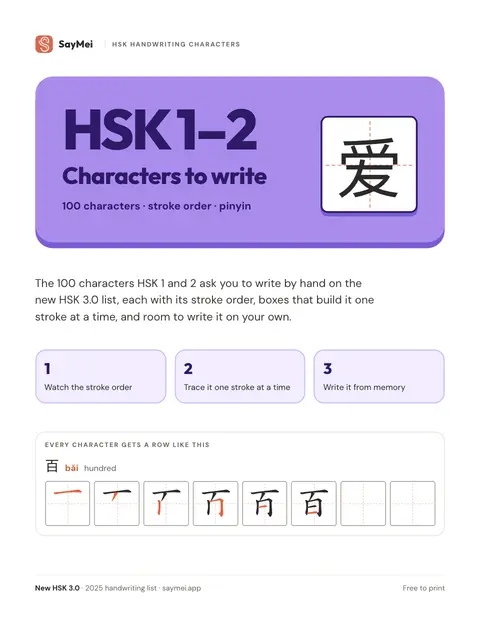
The 100 characters HSK 1 and 2 ask you to write by hand on the 2025 HSK syllabus (HSK 3.0), HSK 1 and HSK 2 share this one list. Each gets its stroke order, a row of boxes that builds it one stroke at a time, empty boxes to write it from memory and a pinyin line.
- Characters:
- 100 to write · the whole list for HSK 1 and 2
- Format:
- PDF · 5 sheets of up to 20 · 45 pages on A4 / 49 on US Letter
- Practice:
- Stroke order · boxes that add one stroke at a time · empty 田字格 (tián zì gé) boxes · a pinyin line
- List:
- HSK 3.0 handwriting list (2025 syllabus) · a QR code on every sheet for online practice
- Price:
- Free · no sign-up · updated Oct 27, 2026
Practice these characters online
Next step after the characters: HSK 1 Guided Writing Workbook, free with a SayMei account.
All 100 HSK 1–2 characters to write
HSK 1–2's characters take from 1 to 10 strokes, 5.3 on average. The fewest: 一 (yī, one). The most: 爱 (ài, love), 哥 (gē, older brother) and 家 (jiā, home). 33 of the 100 are written differently in traditional Chinese, and 21 have a second reading in the official word list. They are listed below in the syllabus's own order, which is roughly alphabetical by pinyin.
| # | Character | Pinyin | Meaning | Strokes | Traditional | Example words |
|---|---|---|---|---|---|---|
| 1 | 爱 | ài | love; to love | 10 | 愛 | 爱好 àihào hobby; 喜爱 xǐ'ài to love; to like |
| 2 | 八 | bā | eight | 2 | 八 | |
| 3 | 爸 | bà | dad; father | 8 | 爸 | 爸爸 bàba dad |
| 4 | 百 | bǎi | hundred | 6 | 百 | |
| 5 | 半 | bàn | half | 5 | 半 | 一半 yíbàn half; 半天 bàntiān half a day; a long time |
| 6 | 比 | bǐ | to compare; than | 4 | 比 | 比较 bǐjiào to compare; fairly; 比赛 bǐsài match; competition |
| 7 | 边 | biān | side; edge | 5 | 邊 | 那边 nàbiān over there; 外边 wàibian outside |
| 8 | 不 | bù | not; no | 4 | 不 | 不要 búyào don't; 对不起 duìbuqǐ sorry |
| 9 | 茶 | chá | tea | 9 | 茶 | 绿茶 lǜchá green tea; 红茶 hóngchá black tea |
| 10 | 打 | dǎ | to hit; to play (a sport) | 5 | 打 | 打电话 dǎ diànhuà to make a phone call; 打开 dǎkāi to open; to turn on |
| 11 | 大 | dà | big; large | 3 | 大 | 大学 dàxué university; 大家 dàjiā everyone |
| 12 | 地 | dì | ground; earth; place | 6 | 地 | 地铁 dìtiě subway; metro; 地方 dìfang place |
| 13 | 的 | de | possessive particle ('s; of) | 8 | 的 | 有的 yǒude some; 目的 mùdì purpose; aim |
| 14 | 点 | diǎn | dot; point; o'clock | 9 | 點 | 一点儿 yìdiǎnr a little; 有点儿 yǒudiǎnr a bit; somewhat |
| 15 | 对 | duì | right; correct; towards | 5 | 對 | 对不起 duìbuqǐ sorry; 对话 duìhuà dialogue; conversation |
| 16 | 多 | duō | many; much | 6 | 多 | 多少 duōshao how many; how much; 差不多 chàbuduō almost; about the same |
| 17 | 儿 | ér | child; son | 2 | 兒 | 儿子 érzi son; 这儿 zhèr here |
| 18 | 二 | èr | two | 2 | 二 | |
| 19 | 分 | fēn | to divide; minute; point | 4 | 分 | 分钟 fēnzhōng minute; 分开 fēnkāi to separate; apart |
| 20 | 哥 | gē | older brother | 10 | 哥 | 哥哥 gēge older brother |
| 21 | 个 | gè | general measure word | 3 | 個 | 这个 zhège this; this one; 那个 nàge that; that one |
| 22 | 工 | gōng | work; worker | 3 | 工 | 工作 gōngzuò work; job; 工作日 gōngzuòrì workday |
| 23 | 口 | kǒu | mouth; opening | 3 | 口 | 门口 ménkǒu doorway; entrance; 路口 lùkǒu intersection |
| 24 | 国 | guó | country; nation | 8 | 國 | 中国 Zhōngguó China; 外国 wàiguó foreign country |
| 25 | 过 | guò | to pass; to cross; to spend (time) | 6 | 過 | 过去 guòqù in the past; to go over; 过来 guòlái to come over |
| 26 | 还 | hái | still; also | 7 | 還 | 还是 háishi or; still |
| 27 | 汉 | hàn | Chinese; Han (people) | 5 | 漢 | 汉语 Hànyǔ Chinese (language); 汉字 Hànzì Chinese character |
| 28 | 好 | hǎo | good; well | 6 | 好 | 好吃 hǎochī delicious; 爱好 àihào hobby |
| 29 | 和 | hé | and; with; peace | 8 | 和 | |
| 30 | 很 | hěn | very | 9 | 很 | |
| 31 | 后 | hòu | after; behind; back | 6 | 後 | 后面 hòumiàn behind; back; 以后 yǐhòu after; later |
| 32 | 会 | huì | can; to be able to; meeting | 6 | 會 | 一会儿 yíhuìr a moment; a little while; 会议 huìyì meeting |
| 33 | 几 | jǐ | how many; a few | 2 | 幾 | 几乎 jīhū almost |
| 34 | 家 | jiā | home; family | 10 | 家 | 大家 dàjiā everyone; 家人 jiārén family members |
| 35 | 间 | jiān | room; between | 7 | 間 | 时间 shíjiān time; 房间 fángjiān room |
| 36 | 叫 | jiào | to call; to be called | 5 | 叫 | 叫作 jiàozuò to be called |
| 37 | 姐 | jiě | older sister | 8 | 姐 | 姐姐 jiějie older sister; 姐妹 jiěmèi sisters |
| 38 | 今 | jīn | now; today | 4 | 今 | 今天 jīntiān today; 今年 jīnnián this year |
| 39 | 男 | nán | male; man | 7 | 男 | 男朋友 nánpéngyou boyfriend; 男孩儿 nánháir boy |
| 40 | 九 | jiǔ | nine | 2 | 九 | |
| 41 | 可 | kě | can; may; but | 5 | 可 | 可以 kěyǐ can; may; 可能 kěnéng maybe; possible |
| 42 | 来 | lái | to come | 7 | 來 | 起来 qǐlái to get up; to stand up; 出来 chūlái to come out |
| 43 | 了 | le | particle for a completed action or change | 2 | 了 | 为了 wèile in order to; for; 了解 liǎojiě to understand; to know about |
| 44 | 两 | liǎng | two; both | 7 | 兩 | |
| 45 | 六 | liù | six | 4 | 六 | |
| 46 | 妈 | mā | mom; mother | 6 | 媽 | 妈妈 māma mom |
| 47 | 吗 | ma | question particle | 6 | 嗎 | |
| 48 | 么 | me | suffix in 什么 and 怎么 | 3 | 麼 | 什么 shénme what; 怎么 zěnme how; why |
| 49 | 没 | méi | not (have); no | 7 | 沒 | 没有 méiyǒu not have; there is not; 没事 méishì it's nothing; no problem |
| 50 | 们 | men | plural suffix for people | 5 | 們 | 我们 wǒmen we; us; 他们 tāmen they; them |
| 51 | 名 | míng | name; famous | 6 | 名 | 名字 míngzi name; 姓名 xìngmíng full name |
| 52 | 那 | nà | that | 6 | 那 | 那些 nàxiē those; 那个 nàge that; that one |
| 53 | 你 | nǐ | you | 7 | 你 | 你们 nǐmen you (plural); 你好 nǐ hǎo hello |
| 54 | 年 | nián | year | 6 | 年 | 今年 jīnnián this year; 去年 qùnián last year |
| 55 | 七 | qī | seven | 2 | 七 | |
| 56 | 去 | qù | to go | 5 | 去 | 去年 qùnián last year; 过去 guòqù in the past; to go over |
| 57 | 人 | rén | person; people | 2 | 人 | 家人 jiārén family members; 别人 biérén other people |
| 58 | 日 | rì | sun; day | 4 | 日 | 星期日 xīngqīrì Sunday; 生日 shēngrì birthday |
| 59 | 三 | sān | three | 3 | 三 | |
| 60 | 少 | shǎo | few; less | 4 | 少 | 多少 duōshao how many; how much; 少年 shàonián teenager; youth |
| 61 | 上 | shàng | up; on; above; to go up | 3 | 上 | 晚上 wǎnshang evening; 上午 shàngwǔ morning |
| 62 | 什 | shén | in 什么 (what) | 4 | 什 | 什么 shénme what; 为什么 wèi shénme why |
| 63 | 生 | shēng | to be born; life; raw | 5 | 生 | 学生 xuéshēng student; 先生 xiānsheng Mr.; sir; husband |
| 64 | 十 | shí | ten | 2 | 十 | 十分 shífēn very; extremely |
| 65 | 时 | shí | time; hour | 7 | 時 | 时间 shíjiān time; 时候 shíhou time; when |
| 66 | 是 | shì | to be; yes | 9 | 是 | 但是 dànshì but; 还是 háishi or; still |
| 67 | 书 | shū | book | 4 | 書 | 读书 dúshū to read; to study; 书店 shūdiàn bookstore |
| 68 | 说 | shuō | to speak; to say | 9 | 說 | 说话 shuōhuà to talk; to speak; 听说 tīngshuō to hear that |
| 69 | 四 | sì | four | 5 | 四 | 四季 sìjì four seasons |
| 70 | 岁 | suì | years old; age | 6 | 歲 | |
| 71 | 他 | tā | he; him | 5 | 他 | 他们 tāmen they; them; 其他 qítā other |
| 72 | 她 | tā | she; her | 6 | 她 | 她们 tāmen they; them (female) |
| 73 | 天 | tiān | sky; day | 4 | 天 | 今天 jīntiān today; 昨天 zuótiān yesterday |
| 74 | 同 | tóng | same; together | 6 | 同 | 同学 tóngxué classmate; 不同 bù tóng different |
| 75 | 为 | wèi | for; because of | 4 | 為 | 因为 yīnwèi because; 为什么 wèi shénme why |
| 76 | 文 | wén | writing; language; culture | 4 | 文 | 中文 Zhōngwén Chinese (language); 文化 wénhuà culture |
| 77 | 我 | wǒ | I; me | 7 | 我 | 我们 wǒmen we; us |
| 78 | 五 | wǔ | five | 4 | 五 | |
| 79 | 午 | wǔ | noon | 4 | 午 | 下午 xiàwǔ afternoon; 上午 shàngwǔ morning |
| 80 | 习 | xí | to practice; habit | 3 | 習 | 学习 xuéxí to study; 习惯 xíguàn habit; to be used to |
| 81 | 下 | xià | down; below; next | 3 | 下 | 一下 yíxià (do something) a bit; once; 下午 xiàwǔ afternoon |
| 82 | 小 | xiǎo | small; little | 3 | 小 | 小时 xiǎoshí hour; 小学 xiǎoxué primary school |
| 83 | 现 | xiàn | now; present; to appear | 8 | 現 | 现在 xiànzài now; 发现 fāxiàn to discover; to find |
| 84 | 写 | xiě | to write | 5 | 寫 | 填写 tiánxiě to fill in (a form) |
| 85 | 学 | xué | to study; to learn | 8 | 學 | 学生 xuéshēng student; 大学 dàxué university |
| 86 | 要 | yào | to want; will; must | 9 | 要 | 不要 búyào don't; 快要 kuàiyào about to |
| 87 | 也 | yě | also; too | 3 | 也 | 也许 yěxǔ perhaps |
| 88 | 一 | yī | one | 1 | 一 | 一些 yìxiē some; a few; 一下 yíxià (do something) a bit; once |
| 89 | 以 | yǐ | with; by; in order to | 4 | 以 | 可以 kěyǐ can; may; 所以 suǒyǐ so; therefore |
| 90 | 有 | yǒu | to have; there is | 6 | 有 | 没有 méiyǒu not have; there is not; 有些 yǒuxiē some |
| 91 | 语 | yǔ | language; speech | 9 | 語 | 汉语 Hànyǔ Chinese (language); 语言 yǔyán language |
| 92 | 月 | yuè | moon; month | 4 | 月 | 月亮 yuèliang moon; 月份 yuèfèn month |
| 93 | 在 | zài | at; in; to be (somewhere) | 6 | 在 | 现在 xiànzài now; 正在 zhèngzài in the middle of (doing) |
| 94 | 长 | cháng | long | 4 | 長 | 校长 xiàozhǎng principal; headmaster |
| 95 | 这 | zhè | this | 7 | 這 | 这个 zhège this; this one; 这些 zhèxiē these |
| 96 | 中 | zhōng | middle; China | 4 | 中 | 中国 Zhōngguó China; 中学 zhōngxué middle school |
| 97 | 子 | zǐ | child; seed | 3 | 子 | 孩子 háizi child; 电子书 diànzǐshū e-book |
| 98 | 女 | nǚ | woman; female | 3 | 女 | 女儿 nǚ'ér daughter; 女士 nǚshì lady; Ms. |
| 99 | 字 | zì | character; word | 6 | 字 | 名字 míngzi name; 汉字 Hànzì Chinese character |
| 100 | 作 | zuò | to do; to make; to write (as in 作业) | 7 | 作 | 工作 gōngzuò work; job; 作业 zuòyè homework |
How to use it
- Read the pinyin and meaning on the sheet's first page, and say each character out loud.
- Follow the row that builds the character one stroke at a time, tracing each new stroke in the order shown.
- Write it from memory in the empty boxes and its pinyin on the line, then scan the QR code to check your strokes online.
Common questions
How many characters do you need to write for HSK 1 and HSK 2?
100. HSK 1 and HSK 2 share one handwriting list, 书写字 (shū xiě zì), of 100 characters in the 2025 HSK syllabus (HSK 3.0). You need to recognize more than you write: 246 reading characters at HSK 1 and 371 by HSK 2.
Is the HSK 1–2 characters PDF free?
Yes. It is a free PDF in A4 or US Letter, with no account or email needed; the page picks the paper used in your country. The 100 characters come in 5 sheets of up to 20, 45 pages on A4, and every sheet has a QR code that opens online practice for its characters.
What is on each page?
Each sheet starts with its characters' pinyin and meanings. Then every character gets its stroke order as a strip, a row of 田字格 (tián zì gé) boxes that adds one stroke at a time in color, empty boxes to write it from memory and a line for its pinyin. Stroke-direction cards close each sheet.
Which HSK 1–2 characters have the most strokes?
爱 (ài, love), 哥 (gē, older brother) and 家 (jiā, home) have 10 strokes, the most at HSK 1–2; 一 (yī, one) has just 1. The average is 5.3 strokes.
How is this different from the HSK 1 and HSK 2 writing workbooks?
The writing workbooks trace every word of the level in fading boxes, a word at a time. These sheets are for the 100 single characters HSK 1 and 2 ask you to write from memory, built up one stroke at a time. Learn the characters here first, then write them inside words in the workbook.
Can I print copies for my class?
Yes. Print as many copies as you like — it's free. Print every sheet or only the ones your class needs; to change the characters on a sheet, open it in the worksheet generator and edit it there.
Keep going
HSK 1 writing workbook · HSK 2 writing workbook · HSK 3 handwriting characters · All 1,200 HSK handwriting characters · Stroke order worksheet maker · Chinese writing grid paper · HSK 1 lessons with Mei Lin
Handwriting characters by level
Character list: the 2025 HSK syllabus, 书写字 (Center for Language Education and Cooperation). Pinyin choices, meanings and traditional forms: SayMei. Updated Oct 27, 2026.