HSK handwriting characters · HSK 6
HSK 6 Handwriting Characters: 150 with Stroke Order (Free PDF)
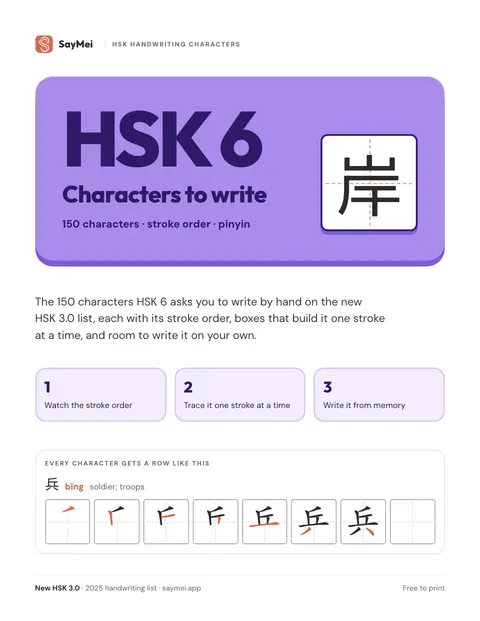
The 150 characters HSK 6 asks you to write by hand on the 2025 HSK syllabus (HSK 3.0), 700 in all with the levels below. Each gets its stroke order, a row of boxes that builds it one stroke at a time, empty boxes to write it from memory and a pinyin line.
- Characters:
- 150 to write · 700 in all by HSK 6
- Format:
- PDF · 8 sheets of up to 20 · 67 pages on A4 / 71 on US Letter
- Practice:
- Stroke order · boxes that add one stroke at a time · empty 田字格 (tián zì gé) boxes · a pinyin line
- List:
- HSK 3.0 handwriting list (2025 syllabus) · a QR code on every sheet for online practice
- Price:
- Free · no sign-up · updated Oct 27, 2026
Practice these characters online
Next step after the characters: HSK 6 Synthesis & Extended Writing, free with a SayMei account.
All 150 HSK 6 characters to write
HSK 6's characters take from 3 to 17 strokes, 7.2 on average. The fewest: 寸 (cùn, inch), 凡 (fán, ordinary) and 亡 (wáng, to die). The most: 瞧 (qiáo, to look). 66 of the 150 are written differently in traditional Chinese, and 8 have a second reading in the official word list. They are listed below in the syllabus's own order, which is roughly alphabetical by pinyin.
| # | Character | Pinyin | Meaning | Strokes | Traditional | Example words |
|---|---|---|---|---|---|---|
| 1 | 岸 | àn | shore; bank (of a river) | 8 | 岸 | 两岸 liǎng'àn both sides (of a river or strait); 海岸 hǎi'àn coast |
| 2 | 昂 | áng | to raise (the head); high; expensive (as in 昂贵) | 8 | 昂 | 昂贵 ángguì expensive; 高昂 gāo'áng high; expensive |
| 3 | 拔 | bá | to pull out | 8 | 拔 | 海拔 hǎibá altitude; above sea level; 选拔 xuǎnbá to select |
| 4 | 摆 | bǎi | to put; to arrange; to swing | 13 | 擺 | 摆脱 bǎituō to get rid of; 摆放 bǎifàng to place; to arrange |
| 5 | 悲 | bēi | sad; sorrow | 12 | 悲 | 悲剧 bēijù tragedy; 悲伤 bēishāng sad; sorrowful |
| 6 | 奔 | bēn | to run; to rush | 8 | 奔 | 奔跑 bēnpǎo to run; 投奔 tóubèn to go to sb for help |
| 7 | 编 | biān | to edit; to weave; to make up | 12 | 編 | 编辑 biānjí to edit; editor; 改编 gǎibiān to adapt |
| 8 | 兵 | bīng | soldier; troops | 7 | 兵 | 士兵 shìbīng soldier; 官兵 guānbīng officers and soldiers |
| 9 | 财 | cái | wealth; money | 7 | 財 | 财产 cáichǎn property; 财富 cáifù wealth |
| 10 | 仓 | cāng | storehouse; warehouse | 4 | 倉 | 仓库 cāngkù warehouse; 仓促 cāngcù hasty |
| 11 | 侧 | cè | side; to lean to one side | 8 | 側 | 侧面 cèmiàn side; aspect; 侧重 cèzhòng to focus on |
| 12 | 策 | cè | plan; policy | 12 | 策 | 政策 zhèngcè policy; 决策 juécè decision; to make a decision |
| 13 | 肠 | cháng | intestines | 7 | 腸 | 香肠 xiāngcháng sausage; 心肠 xīncháng heart; intentions |
| 14 | 畅 | chàng | smooth; unhindered | 8 | 暢 | 畅销 chàngxiāo best-selling; 畅通 chàngtōng unblocked; flowing freely |
| 15 | 抄 | chāo | to copy | 7 | 抄 | 抄袭 chāoxí to plagiarize |
| 16 | 臣 | chén | official; minister (old) | 6 | 臣 | 大臣 dàchén minister (of a monarch); 功臣 gōngchén person of great merit |
| 17 | 尘 | chén | dust | 6 | 塵 | 灰尘 huīchén dust |
| 18 | 呈 | chéng | to show; to present | 7 | 呈 | 呈现 chéngxiàn to appear; to present; 辞呈 cíchéng resignation letter |
| 19 | 愁 | chóu | to worry; sorrow | 13 | 愁 | 发愁 fāchóu to worry; 忧愁 yōuchóu worried; sad |
| 20 | 串 | chuàn | string (of things); to string together | 7 | 串 | 一连串 yìliánchuàn a series of; 串门 chuànmén to drop by (a neighbor's home) |
| 21 | 闯 | chuǎng | to rush; to break through | 6 | 闖 | |
| 22 | 纯 | chún | pure; simple | 7 | 純 | 单纯 dānchún simple; pure; 纯粹 chúncuì pure; purely |
| 23 | 匆 | cōng | hurried; hasty | 5 | 匆 | 匆匆 cōngcōng hurriedly; 匆忙 cōngmáng in a hurry |
| 24 | 寸 | cùn | inch (Chinese unit); very short | 3 | 寸 | 尺寸 chǐcùn size; measurements; 分寸 fēncun sense of propriety |
| 25 | 呆 | dāi | to stay; dull; blank | 7 | 呆 | 痴呆 chīdāi dementia; dull; 发呆 fādāi to stare blankly; to daydream |
| 26 | 诞 | dàn | birth (as in 圣诞) | 8 | 誕 | 诞生 dànshēng to be born; 诞辰 dànchén birthday (of a famous person) |
| 27 | 岛 | dǎo | island | 7 | 島 | 岛屿 dǎoyǔ islands; 半岛 bàndǎo peninsula |
| 28 | 德 | dé | virtue; morality; Germany | 15 | 德 | 道德 dàodé morality; ethics; 品德 pǐndé moral character |
| 29 | 抵 | dǐ | to resist; to arrive; to offset | 8 | 抵 | 抵抗 dǐkàng to resist; 抵达 dǐdá to arrive |
| 30 | 吊 | diào | to hang; to lift with a crane | 6 | 吊 | 吊销 diàoxiāo to revoke |
| 31 | 顶 | dǐng | top; to carry on the head; to prop up | 8 | 頂 | 山顶 shāndǐng mountaintop; 顶级 dǐngjí top-level |
| 32 | 夺 | duó | to seize; to win (a prize) | 6 | 奪 | 夺取 duóqǔ to seize; to win; 争夺 zhēngduó to fight for |
| 33 | 恶 | è | evil; bad; fierce | 10 | 惡 | 恶劣 èliè bad; vile; 恶心 ěxin nauseous; disgusting |
| 34 | 帆 | fān | sail | 6 | 帆 | 一帆风顺 yìfān-fēngshùn smooth sailing (idiom); 帆船 fānchuán sailboat |
| 35 | 凡 | fán | ordinary; every | 3 | 凡 | 凡是 fánshì every; all; 平凡 píngfán ordinary |
| 36 | 犯 | fàn | to commit (a crime); to violate | 5 | 犯 | 犯罪 fànzuì to commit a crime; crime; 侵犯 qīnfàn to violate; to infringe |
| 37 | 妨 | fáng | to hinder; harm | 7 | 妨 | 妨碍 fáng'ài to hinder; 不妨 bùfáng might as well |
| 38 | 肺 | fèi | lung | 8 | 肺 | 肺炎 fèiyán pneumonia |
| 39 | 氛 | fēn | atmosphere (as in 气氛) | 8 | 氛 | 气氛 qìfēn atmosphere; mood; 氛围 fēnwéi atmosphere |
| 40 | 奉 | fèng | to offer respectfully; to receive (orders) | 8 | 奉 | 奉献 fèngxiàn to devote; dedication; 供奉 gòngfèng to make offerings to |
| 41 | 辅 | fǔ | to assist; auxiliary | 11 | 輔 | 辅助 fǔzhù to assist; 辅导 fǔdǎo to tutor; to coach |
| 42 | 肝 | gān | liver | 7 | 肝 | |
| 43 | 岗 | gǎng | post; job; mound | 7 | 崗 | 岗位 gǎngwèi post; position; 上岗 shànggǎng to start a job; to go on duty |
| 44 | 攻 | gōng | to attack; to study hard | 7 | 攻 | 攻击 gōngjī to attack; 进攻 jìngōng to attack |
| 45 | 巩 | gǒng | to consolidate (as in 巩固) | 6 | 鞏 | 巩固 gǒnggù to consolidate |
| 46 | 孤 | gū | alone; lonely; orphaned | 8 | 孤 | 孤独 gūdú lonely; 孤立 gūlì isolated; to isolate |
| 47 | 股 | gǔ | share; stock; thigh | 8 | 股 | 股票 gǔpiào stock; share; 股市 gǔshì stock market |
| 48 | 骨 | gǔ | bone | 9 | 骨 | 骨头 gǔtou bone; 骨干 gǔgàn backbone; mainstay |
| 49 | 拐 | guǎi | to turn (a corner); to kidnap; walking stick | 8 | 拐 | 拐弯 guǎiwān to turn a corner; 拐杖 guǎizhàng walking stick |
| 50 | 官 | guān | official; officer | 8 | 官 | 官员 guānyuán official; 官方 guānfāng official (government) |
| 51 | 贯 | guàn | to pass through; consistent | 8 | 貫 | 一贯 yíguàn consistent; always; 贯彻 guànchè to carry out |
| 52 | 归 | guī | to return; to belong to | 5 | 歸 | 归还 guīhuán to give back; 回归 huíguī to return |
| 53 | 龟 | guī | turtle; tortoise | 7 | 龜 | 乌龟 wūguī turtle; tortoise |
| 54 | 轨 | guǐ | track; rail | 6 | 軌 | 轨道 guǐdào track; orbit; 轨迹 guǐjì track; trajectory |
| 55 | 罕 | hǎn | rare | 7 | 罕 | 罕见 hǎnjiàn rare; 稀罕 xīhan rare; to value |
| 56 | 旱 | hàn | drought; dry | 7 | 旱 | 干旱 gānhàn drought; dry; 旱灾 hànzāi drought |
| 57 | 恨 | hèn | to hate; to regret | 9 | 恨 | 仇恨 chóuhèn hatred; 恨不得 hènbude to be dying to |
| 58 | 宏 | hóng | grand; great | 7 | 宏 | 宏大 hóngdà grand; 宏观 hóngguān macro; overall |
| 59 | 幻 | huàn | illusion; fantasy | 4 | 幻 | 幻想 huànxiǎng fantasy; to imagine; 科幻 kēhuàn science fiction |
| 60 | 皇 | huáng | emperor; imperial | 9 | 皇 | 皇帝 huángdì emperor; 皇上 huángshang emperor (address) |
| 61 | 击 | jī | to hit; to strike | 5 | 擊 | 攻击 gōngjī to attack; 打击 dǎjī to strike; blow |
| 62 | 饥 | jī | hungry; famine | 5 | 飢 | 饥饿 jī'è hunger |
| 63 | 吉 | jí | lucky; auspicious | 6 | 吉 | 吉祥 jíxiáng lucky; auspicious; 吉利 jílì lucky |
| 64 | 夹 | jiā | to clip; to pinch; folder | 6 | 夾 | 夹杂 jiāzá to be mixed with; 夹子 jiāzi clip; folder |
| 65 | 尖 | jiān | sharp; pointed; tip | 6 | 尖 | 尖锐 jiānruì sharp; intense; 尖端 jiānduān tip; cutting-edge |
| 66 | 肩 | jiān | shoulder | 8 | 肩 | 肩膀 jiānbǎng shoulder; 并肩 bìngjiān side by side |
| 67 | 杰 | jié | outstanding; hero | 8 | 傑 | 杰出 jiéchū outstanding |
| 68 | 戒 | jiè | to quit; to guard against; ring | 7 | 戒 | 戒指 jièzhi ring (on a finger); 警戒 jǐngjiè to be on guard |
| 69 | 劲 | jìn | strength; energy; interest | 7 | 勁 | 使劲 shǐjìn to make an effort; 有劲 yǒujìn strong; interesting |
| 70 | 井 | jǐng | well | 4 | 井 | |
| 71 | 径 | jìng | path; way | 8 | 徑 | 途径 tújìng way; channel; 田径 tiánjìng track and field |
| 72 | 纠 | jiū | to correct; to entangle | 5 | 糾 | 纠正 jiūzhèng to correct; 纠纷 jiūfēn dispute |
| 73 | 刊 | kān | publication; periodical | 5 | 刊 | 报刊 bàokān newspapers and magazines; 刊物 kānwù publication; journal |
| 74 | 抗 | kàng | to resist; to fight | 7 | 抗 | 抵抗 dǐkàng to resist; 对抗 duìkàng to resist; confrontation |
| 75 | 夸 | kuā | to praise; to boast | 6 | 誇 | 夸张 kuāzhāng to exaggerate; 夸奖 kuājiǎng to praise |
| 76 | 兰 | lán | orchid | 5 | 蘭 | 兰花 lánhuā orchid |
| 77 | 拦 | lán | to block; to stop | 8 | 攔 | 阻拦 zǔlán to stop; to block |
| 78 | 牢 | láo | firm; prison; pen (for animals) | 7 | 牢 | 牢牢 láoláo firmly; 牢固 láogù firm; solid |
| 79 | 雷 | léi | thunder | 13 | 雷 | 打雷 dǎléi to thunder; 雷达 léidá radar |
| 80 | 劣 | liè | bad; inferior | 6 | 劣 | 恶劣 èliè bad; vile; 劣势 lièshì disadvantage |
| 81 | 轮 | lún | wheel; to take turns | 8 | 輪 | 轮流 lúnliú to take turns; 轮船 lúnchuán steamship |
| 82 | 迈 | mài | to step; to stride | 6 | 邁 | 豪迈 háomài heroic; bold; 年迈 niánmài elderly |
| 83 | 麦 | mài | wheat | 7 | 麥 | 小麦 xiǎomài wheat; 麦克风 màikèfēng microphone |
| 84 | 盲 | máng | blind | 8 | 盲 | 盲人 mángrén blind person; 盲目 mángmù blind; blindly |
| 85 | 贸 | mào | trade | 9 | 貿 | 贸易 màoyì trade; 外贸 wàimào foreign trade |
| 86 | 妙 | miào | wonderful; clever | 7 | 妙 | 巧妙 qiǎomiào clever; ingenious; 不妙 búmiào not good; bad |
| 87 | 灭 | miè | to put out; to destroy | 5 | 滅 | 消灭 xiāomiè to wipe out; 扑灭 pūmiè to put out (a fire) |
| 88 | 纳 | nà | to accept; to receive; to pay | 7 | 納 | 采纳 cǎinà to accept; to adopt; 纳入 nàrù to bring into |
| 89 | 泥 | ní | mud; paste | 8 | 泥 | 水泥 shuǐní cement; 泥土 nítǔ soil; earth |
| 90 | 拟 | nǐ | to draft; to plan; to imitate | 7 | 擬 | 模拟 mónǐ to simulate; 拟定 nǐdìng to draw up |
| 91 | 扭 | niǔ | to twist; to turn | 7 | 扭 | 扭转 niǔzhuǎn to turn around; 扭曲 niǔqū to twist; to distort |
| 92 | 盼 | pàn | to hope for; to look forward to | 9 | 盼 | 盼望 pànwàng to look forward to; 期盼 qīpàn to look forward to |
| 93 | 抛 | pāo | to throw; to toss | 7 | 拋 | 抛弃 pāoqì to abandon |
| 94 | 泡 | pào | bubble; to soak; to brew (tea) | 8 | 泡 | 泡沫 pàomò foam; bubble; 浸泡 jìnpào to soak |
| 95 | 佩 | pèi | to wear; to admire | 8 | 佩 | 佩服 pèifú to admire; 钦佩 qīnpèi to admire |
| 96 | 披 | pī | to drape over the shoulders | 8 | 披 | 披露 pīlù to disclose |
| 97 | 贫 | pín | poor | 8 | 貧 | 贫困 pínkùn poor; poverty; 贫穷 pínqióng poor; poverty |
| 98 | 坡 | pō | slope | 8 | 坡 | 山坡 shānpō hillside |
| 99 | 迫 | pò | to force; urgent | 8 | 迫 | 被迫 bèipò to be forced; 强迫 qiǎngpò to force |
| 100 | 扑 | pū | to pounce; to throw oneself at | 5 | 撲 | 扑灭 pūmiè to put out (a fire); 扑克 pūkè playing cards; poker |
| 101 | 朴 | pǔ | plain; simple | 6 | 樸 | 朴素 pǔsù plain; simple; 朴实 pǔshí simple; honest |
| 102 | 启 | qǐ | to open; to start | 7 | 啟 | 启动 qǐdòng to start; to launch; 启发 qǐfā to inspire; inspiration |
| 103 | 枪 | qiāng | gun | 8 | 槍 | 手枪 shǒuqiāng pistol; 枪毙 qiāngbì to execute by shooting |
| 104 | 瞧 | qiáo | to look; to see | 17 | 瞧 | |
| 105 | 圈 | quān | circle; ring | 11 | 圈 | 圈子 quānzi circle (of people); 圈套 quāntào trap; trick |
| 106 | 券 | quàn | ticket; voucher | 8 | 券 | 证券 zhèngquàn securities; 债券 zhàiquàn bond (finance) |
| 107 | 丧 | sàng | to lose | 8 | 喪 | 丧失 sàngshī to lose; 沮丧 jǔsàng depressed; discouraged |
| 108 | 杀 | shā | to kill | 6 | 殺 | 自杀 zìshā suicide; 杀害 shāhài to murder |
| 109 | 闪 | shǎn | to flash; to dodge; lightning | 5 | 閃 | 闪电 shǎndiàn lightning; 闪烁 shǎnshuò to twinkle; to flicker |
| 110 | 尚 | shàng | still; to value; fashion | 8 | 尚 | 时尚 shíshàng fashion; fashionable; 高尚 gāoshàng noble |
| 111 | 舌 | shé | tongue | 6 | 舌 | 舌头 shétou tongue |
| 112 | 审 | shěn | to examine; to check | 8 | 審 | 审美 shěnměi sense of beauty; 审判 shěnpàn trial; to try (a case) |
| 113 | 寿 | shòu | long life; birthday (of an elder) | 7 | 壽 | 寿命 shòumìng life span; 长寿 chángshòu long life |
| 114 | 汰 | tài | to eliminate | 7 | 汰 | 淘汰 táotài to eliminate |
| 115 | 坛 | tán | altar; jar; circles (as in 文坛) | 7 | 壇 | 论坛 lùntán forum |
| 116 | 吐 | tǔ | to spit; to say | 6 | 吐 | 吐槽 tǔcáo to roast; to complain (slang); 呕吐 ǒutù to vomit |
| 117 | 吞 | tūn | to swallow | 7 | 吞 | |
| 118 | 托 | tuō | to hold up; to ask (sb to do sth) | 6 | 托 | 委托 wěituō to entrust; 摩托车 mótuōchē motorcycle |
| 119 | 亡 | wáng | to die; to perish; lost | 3 | 亡 | 死亡 sǐwáng death; 伤亡 shāngwáng casualties |
| 120 | 委 | wěi | to entrust; committee | 8 | 委 | 委托 wěituō to entrust; 委屈 wěiqu to feel wronged |
| 121 | 谓 | wèi | to say; to call; meaning | 11 | 謂 | 无所谓 wúsuǒwèi doesn't matter; not care; 所谓 suǒwèi so-called |
| 122 | 沃 | wò | fertile | 7 | 沃 | 肥沃 féiwò fertile |
| 123 | 乌 | wū | crow; black | 4 | 烏 | 乌龟 wūguī turtle; tortoise; 乌云 wūyún dark clouds |
| 124 | 吓 | xià | to scare; to frighten | 6 | 嚇 | 吓唬 xiàhu to scare; 恐吓 kǒnghè to threaten |
| 125 | 雄 | xióng | male; mighty | 12 | 雄 | 英雄 yīngxióng hero; 雄伟 xióngwěi magnificent |
| 126 | 旬 | xún | period of ten days | 6 | 旬 | 中旬 zhōngxún middle ten days of a month; 下旬 xiàxún last ten days of a month |
| 127 | 讯 | xùn | message; to question | 5 | 訊 | 通讯 tōngxùn communication; 资讯 zīxùn information |
| 128 | 讶 | yà | surprised (as in 惊讶) | 6 | 訝 | 惊讶 jīngyà surprised |
| 129 | 炎 | yán | scorching; inflammation | 8 | 炎 | 炎热 yánrè scorching hot; 炎症 yánzhèng inflammation |
| 130 | 央 | yāng | center (as in 中央) | 5 | 央 | 中央 zhōngyāng center; central |
| 131 | 仰 | yǎng | to look up; to admire | 6 | 仰 | 信仰 xìnyǎng belief; faith; 瞻仰 zhānyǎng to look at with respect |
| 132 | 仪 | yí | ceremony; instrument | 5 | 儀 | 仪式 yíshì ceremony; 仪器 yíqì instrument; apparatus |
| 133 | 异 | yì | different; strange | 6 | 異 | 异常 yìcháng unusual; abnormal; 差异 chāyì difference |
| 134 | 抑 | yì | to hold back; to suppress | 7 | 抑 | 抑制 yìzhì to suppress; to hold back; 压抑 yāyì to hold back (feelings); oppressive |
| 135 | 英 | yīng | hero; Britain | 8 | 英 | 英雄 yīngxióng hero; 英勇 yīngyǒng heroic; brave |
| 136 | 忧 | yōu | to worry; anxiety | 7 | 憂 | 担忧 dānyōu to worry; 忧虑 yōulǜ to worry; anxiety |
| 137 | 予 | yǔ | to give | 4 | 予 | 给予 jǐyǔ to give; 赋予 fùyǔ to give; to entrust |
| 138 | 晕 | yūn | dizzy; to faint | 10 | 暈 | 晕车 yùnchē carsick |
| 139 | 匀 | yún | even; uniform | 4 | 勻 | 均匀 jūnyún even; uniform |
| 140 | 孕 | yùn | pregnant | 5 | 孕 | 怀孕 huáiyùn to be pregnant; 孕妇 yùnfù pregnant woman |
| 141 | 灾 | zāi | disaster | 7 | 災 | 灾难 zāinàn disaster; 灾害 zāihài disaster |
| 142 | 扎 | zhā | to prick; to plunge into | 4 | 扎 | 驻扎 zhùzhā to be stationed; 挣扎 zhēngzhá to struggle |
| 143 | 宅 | zhái | home; residence | 6 | 宅 | 住宅 zhùzhái residence; housing |
| 144 | 仗 | zhàng | battle; to rely on | 5 | 仗 | 打仗 dǎzhàng to fight a war |
| 145 | 枝 | zhī | branch; twig | 8 | 枝 | |
| 146 | 肿 | zhǒng | swollen; to swell | 8 | 腫 | 肿瘤 zhǒngliú tumor |
| 147 | 州 | zhōu | state; prefecture | 6 | 州 | |
| 148 | 妆 | zhuāng | makeup | 6 | 妝 | 化妆 huàzhuāng to put on makeup; 嫁妆 jiàzhuang dowry |
| 149 | 庄 | zhuāng | village; farmstead | 6 | 莊 | 村庄 cūnzhuāng village; 庄稼 zhuāngjia crops |
| 150 | 壮 | zhuàng | strong; to strengthen | 6 | 壯 | 强壮 qiángzhuàng strong; sturdy; 壮丽 zhuànglì magnificent |
How to use it
- Read the pinyin and meaning on the sheet's first page, and say each character out loud.
- Follow the row that builds the character one stroke at a time, tracing each new stroke in the order shown.
- Write it from memory in the empty boxes and its pinyin on the line, then scan the QR code to check your strokes online.
Common questions
How many characters do you need to write for HSK 6?
150 new ones. The 2025 HSK syllabus (HSK 3.0) adds 150 characters to its handwriting list, 书写字 (shū xiě zì), at HSK 6, for 700 in all with the levels below. You need to recognize more than you write: 413 new reading characters at HSK 6, 1,940 in all.
Is the HSK 6 characters PDF free?
Yes. It is a free PDF in A4 or US Letter, with no account or email needed; the page picks the paper used in your country. The 150 characters come in 8 sheets of up to 20, 67 pages on A4, and every sheet has a QR code that opens online practice for its characters.
What is on each page?
Each sheet starts with its characters' pinyin and meanings. Then every character gets its stroke order as a strip, a row of 田字格 (tián zì gé) boxes that adds one stroke at a time in color, empty boxes to write it from memory and a line for its pinyin. Stroke-direction cards close each sheet.
Which HSK 6 characters have the most strokes?
瞧 (qiáo, to look) has 17 strokes, the most at HSK 6; 寸 (cùn, inch), 凡 (fán, ordinary) and 亡 (wáng, to die) have just 3. The average is 7.2 strokes.
How is this different from the HSK 6 writing workbook?
The writing workbook traces every word of the level in fading boxes, a word at a time. These sheets are for the 150 single characters HSK 6 asks you to write from memory, built up one stroke at a time. Learn the characters here first, then write them inside words in the workbook.
Can I print copies for my class?
Yes. Print as many copies as you like — it's free. Print every sheet or only the ones your class needs; to change the characters on a sheet, open it in the worksheet generator and edit it there.
Keep going
HSK 6 writing workbook · HSK 7–9 handwriting characters · HSK 5 handwriting characters · All 1,200 HSK handwriting characters · Stroke order worksheet maker · Chinese writing grid paper · HSK 6 lessons with Mei Lin
Handwriting characters by level
Character list: the 2025 HSK syllabus, 书写字 (Center for Language Education and Cooperation). Pinyin choices, meanings and traditional forms: SayMei. Updated Oct 27, 2026.