HSK handwriting characters · HSK 4
HSK 4 Handwriting Characters: 150 with Stroke Order (Free PDF)
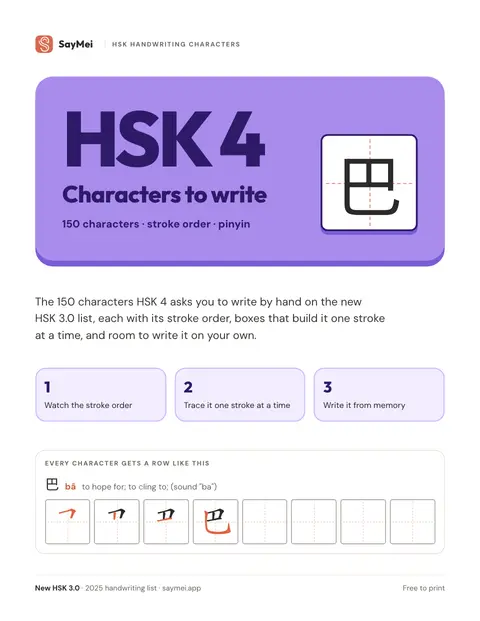
The 150 characters HSK 4 asks you to write by hand on the 2025 HSK syllabus (HSK 3.0), 400 in all with the levels below. Each gets its stroke order, a row of boxes that builds it one stroke at a time, empty boxes to write it from memory and a pinyin line.
- Characters:
- 150 to write · 400 in all by HSK 4
- Format:
- PDF · 8 sheets of up to 20 · 75 pages on A4 / 77 on US Letter
- Practice:
- Stroke order · boxes that add one stroke at a time · empty 田字格 (tián zì gé) boxes · a pinyin line
- List:
- HSK 3.0 handwriting list (2025 syllabus) · a QR code on every sheet for online practice
- Price:
- Free · no sign-up · updated Oct 27, 2026
Practice these characters online
Next step after the characters: HSK 4 Guided Writing Workbook, free with a SayMei account.
All 150 HSK 4 characters to write
HSK 4's characters take from 2 to 16 strokes, 8 on average. The fewest: 厂 (chǎng, factory), 刀 (dāo, knife) and 入 (rù, to enter). The most: 餐 (cān, meal). 53 of the 150 are written differently in traditional Chinese, and 11 have a second reading in the official word list. They are listed below in the syllabus's own order, which is roughly alphabetical by pinyin.
| # | Character | Pinyin | Meaning | Strokes | Traditional | Example words |
|---|---|---|---|---|---|---|
| 1 | 巴 | bā | to hope for; to cling to; (sound "ba") | 4 | 巴 | 大巴 dàbā coach; large bus; 嘴巴 zuǐba mouth |
| 2 | 保 | bǎo | to protect; to keep; to guarantee | 9 | 保 | 保护 bǎohù to protect; 保证 bǎozhèng to guarantee |
| 3 | 抱 | bào | to hold in the arms; to hug | 8 | 抱 | 抱歉 bàoqiàn sorry; to apologize; 抱怨 bàoyuàn to complain |
| 4 | 背 | bēi | to carry on the back | 9 | 背 | 背包 bēibāo backpack; 背景 bèijǐng background |
| 5 | 标 | biāo | mark; sign; label | 9 | 標 | 目标 mùbiāo goal; target; 标准 biāozhǔn standard |
| 6 | 并 | bìng | and; also; to combine | 6 | 並 | 并且 bìngqiě and; moreover; 合并 hébìng to merge |
| 7 | 部 | bù | part; department; ministry | 10 | 部 | 部分 bùfen part; section; 部门 bùmén department |
| 8 | 餐 | cān | meal | 16 | 餐 | 餐厅 cāntīng restaurant; dining hall; 早餐 zǎocān breakfast |
| 9 | 产 | chǎn | to produce; product | 6 | 產 | 产生 chǎnshēng to produce; to cause; 生产 shēngchǎn to produce; production |
| 10 | 厂 | chǎng | factory | 2 | 廠 | 工厂 gōngchǎng factory; 厂商 chǎngshāng manufacturer |
| 11 | 晨 | chén | morning; dawn | 11 | 晨 | 早晨 zǎochen morning; 清晨 qīngchén early morning |
| 12 | 程 | chéng | procedure; journey; rule | 12 | 程 | 过程 guòchéng process; 课程 kèchéng course; curriculum |
| 13 | 吹 | chuī | to blow | 7 | 吹 | |
| 14 | 此 | cǐ | this; these | 6 | 此 | 因此 yīncǐ therefore; 此外 cǐwài in addition |
| 15 | 村 | cūn | village | 7 | 村 | 农村 nóngcūn countryside; village; 乡村 xiāngcūn countryside; village |
| 16 | 达 | dá | to reach; to achieve | 6 | 達 | 达到 dádào to reach; to achieve; 发达 fādá developed |
| 17 | 刀 | dāo | knife | 2 | 刀 | 剪刀 jiǎndāo scissors |
| 18 | 导 | dǎo | to guide; to lead | 6 | 導 | 导游 dǎoyóu tour guide; 领导 lǐngdǎo leader; to lead |
| 19 | 倒 | dào | to pour; upside down; contrary to expectation | 10 | 倒 | 倒是 dàoshì actually; though; 倒闭 dǎobì to go bankrupt |
| 20 | 低 | dī | low; to lower | 7 | 低 | 降低 jiàngdī to lower; to reduce; 低于 dīyú lower than; below |
| 21 | 掉 | diào | to drop; to fall; to lose | 11 | 掉 | |
| 22 | 度 | dù | degree; extent | 9 | 度 | 速度 sùdù speed; 态度 tàidù attitude |
| 23 | 断 | duàn | to break; to cut off | 11 | 斷 | 不断 búduàn continuously; 判断 pànduàn to judge; judgment |
| 24 | 队 | duì | team; line (of people) | 4 | 隊 | 队员 duìyuán team member; 球队 qiúduì sports team |
| 25 | 烦 | fán | annoyed; to bother | 10 | 煩 | 麻烦 máfan trouble; troublesome; 烦恼 fánnǎo worry; to be worried |
| 26 | 反 | fǎn | opposite; reverse; against | 4 | 反 | 反对 fǎnduì to oppose; 相反 xiāngfǎn opposite; on the contrary |
| 27 | 份 | fèn | portion; copy (measure word) | 6 | 份 | 月份 yuèfèn month; 身份证 shēnfènzhèng ID card |
| 28 | 否 | fǒu | no; not; to deny | 7 | 否 | 是否 shìfǒu whether; 否则 fǒuzé otherwise |
| 29 | 父 | fù | father | 4 | 父 | 父亲 fùqīn father; 父母 fùmǔ parents |
| 30 | 改 | gǎi | to change; to correct | 7 | 改 | 改变 gǎibiàn to change; 改革 gǎigé reform |
| 31 | 敢 | gǎn | to dare | 11 | 敢 | 勇敢 yǒnggǎn brave; 敢于 gǎnyú to dare to |
| 32 | 各 | gè | each; every | 6 | 各 | 各种 gèzhǒng all kinds of; 各地 gèdì all over; various places |
| 33 | 够 | gòu | enough | 11 | 夠 | 能够 nénggòu can; to be able to; 不够 búgòu not enough |
| 34 | 挂 | guà | to hang | 9 | 掛 | 挂号 guàhào to register (at a hospital) |
| 35 | 观 | guān | to look at; view | 6 | 觀 | 观众 guānzhòng audience; viewers; 参观 cānguān to visit (a place) |
| 36 | 管 | guǎn | to manage; to be in charge of; tube | 14 | 管 | 管理 guǎnlǐ to manage; management; 尽管 jǐnguǎn although; even though |
| 37 | 广 | guǎng | wide; broad | 3 | 廣 | 广告 guǎnggào advertisement; 广播 guǎngbō broadcast; radio |
| 38 | 喊 | hǎn | to shout; to call | 12 | 喊 | |
| 39 | 忽 | hū | suddenly; to neglect | 8 | 忽 | 忽然 hūrán suddenly; 忽视 hūshì to ignore |
| 40 | 虎 | hǔ | tiger | 8 | 虎 | 老虎 lǎohǔ tiger; 马虎 mǎhu careless |
| 41 | 划 | huà | to plan; to mark (as in 计划) | 6 | 劃 | 计划 jìhuà plan; to plan; 规划 guīhuà to plan; plan |
| 42 | 基 | jī | base; foundation | 11 | 基 | 基本 jīběn basic; basically; 基础 jīchǔ foundation; basis |
| 43 | 及 | jí | and; to reach; in time | 3 | 及 | 及时 jíshí in time; timely; 来不及 láibují too late; not enough time |
| 44 | 计 | jì | to count; to calculate; plan | 4 | 計 | 计划 jìhuà plan; to plan; 估计 gūjì to estimate |
| 45 | 技 | jì | skill | 7 | 技 | 技术 jìshù technology; skill; 科技 kējì science and technology |
| 46 | 际 | jì | border; between (as in 国际) | 7 | 際 | 国际 guójì international; 实际 shíjì actual; reality |
| 47 | 济 | jì | to help; to cross (a river) | 9 | 濟 | 经济 jīngjì economy |
| 48 | 寄 | jì | to mail; to send | 11 | 寄 | 邮寄 yóujì to mail; to post |
| 49 | 建 | jiàn | to build; to set up | 8 | 建 | 建议 jiànyì to suggest; suggestion; 建设 jiànshè to build; construction |
| 50 | 江 | jiāng | river | 6 | 江 | |
| 51 | 将 | jiāng | will; to be going to | 9 | 將 | 将来 jiānglái future; 将要 jiāngyào will; be going to |
| 52 | 金 | jīn | gold; metal; money | 8 | 金 | 奖金 jiǎngjīn bonus; prize money; 现金 xiànjīn cash |
| 53 | 京 | jīng | capital city | 8 | 京 | 京剧 jīngjù Peking opera |
| 54 | 究 | jiū | to investigate; after all | 7 | 究 | 研究 yánjiū to research; research; 究竟 jiūjìng after all; exactly |
| 55 | 举 | jǔ | to lift; to hold up | 9 | 舉 | 举行 jǔxíng to hold (a meeting or ceremony); 举办 jǔbàn to hold (an event) |
| 56 | 科 | kē | subject; department | 9 | 科 | 科技 kējì science and technology; 科学 kēxué science |
| 57 | 克 | kè | gram; to overcome | 7 | 克 | 千克 qiānkè kilogram; 巧克力 qiǎokèlì chocolate |
| 58 | 况 | kuàng | situation; moreover | 7 | 況 | 情况 qíngkuàng situation; 状况 zhuàngkuàng condition; situation |
| 59 | 困 | kùn | trapped; difficult; sleepy | 7 | 困 | 困难 kùnnan difficulty; difficult; 贫困 pínkùn poor; poverty |
| 60 | 拉 | lā | to pull | 8 | 拉 | |
| 61 | 利 | lì | benefit; sharp | 7 | 利 | 顺利 shùnlì smooth; successfully; 流利 liúlì fluent |
| 62 | 例 | lì | example; case | 8 | 例 | 例如 lìrú for example; 例子 lìzi example |
| 63 | 俩 | liǎ | two (people); both | 9 | 倆 | |
| 64 | 连 | lián | to connect; even | 7 | 連 | 连续 liánxù continuous; in a row; 连接 liánjiē to connect |
| 65 | 联 | lián | to unite; to connect | 12 | 聯 | 联系 liánxì to contact; 互联网 hùliánwǎng internet |
| 66 | 量 | liàng | amount; quantity | 12 | 量 | 大量 dàliàng a large amount; 质量 zhìliàng quality |
| 67 | 另 | lìng | other; another | 5 | 另 | 另外 lìngwài besides; another |
| 68 | 流 | liú | to flow | 10 | 流 | 交流 jiāoliú to exchange; to communicate; 流行 liúxíng popular; fashionable |
| 69 | 论 | lùn | to discuss; theory | 6 | 論 | 讨论 tǎolùn to discuss; 无论 wúlùn no matter (what) |
| 70 | 麻 | má | hemp; numb | 11 | 麻 | 麻烦 máfan trouble; troublesome |
| 71 | 美 | měi | beautiful; America | 9 | 美 | 美丽 měilì beautiful; 美好 měihǎo wonderful; happy |
| 72 | 民 | mín | people; citizen | 5 | 民 | 民族 mínzú ethnic group; nation; 人民 rénmín the people |
| 73 | 内 | nèi | inside; inner | 4 | 內 | 内容 nèiróng content; 内心 nèixīn inner heart |
| 74 | 农 | nóng | farming; farmer | 6 | 農 | 农村 nóngcūn countryside; village; 农业 nóngyè agriculture |
| 75 | 弄 | nòng | to do; to make; to handle | 7 | 弄 | |
| 76 | 排 | pái | row; to line up; to arrange | 11 | 排 | 安排 ānpái to arrange; plan; 排队 páiduì to line up; to queue |
| 77 | 牌 | pái | sign; brand; card | 12 | 牌 | 牌子 páizi sign; brand; 品牌 pǐnpái brand |
| 78 | 篇 | piān | piece of writing (measure word) | 15 | 篇 | |
| 79 | 品 | pǐn | product; article; to taste | 9 | 品 | 商品 shāngpǐn goods; product; 作品 zuòpǐn work (of art or writing) |
| 80 | 普 | pǔ | general; universal | 12 | 普 | 普通 pǔtōng ordinary; common; 普遍 pǔbiàn common; widespread |
| 81 | 强 | qiáng | strong | 12 | 強 | 加强 jiāqiáng to strengthen; 勉强 miǎnqiǎng reluctantly; barely |
| 82 | 青 | qīng | green; blue; young | 8 | 青 | 青年 qīngnián young people; youth; 青春 qīngchūn youth |
| 83 | 取 | qǔ | to take; to get; to fetch | 8 | 取 | 取得 qǔdé to obtain; to achieve; 取消 qǔxiāo to cancel |
| 84 | 确 | què | true; firm; really | 12 | 確 | 正确 zhèngquè correct; 确实 quèshí indeed; really |
| 85 | 任 | rèn | to appoint; duty; any | 6 | 任 | 任务 rènwu task; mission; 任何 rènhé any |
| 86 | 扔 | rēng | to throw; to throw away | 5 | 扔 | |
| 87 | 入 | rù | to enter; to join | 2 | 入 | 进入 jìnrù to enter; 收入 shōurù income |
| 88 | 社 | shè | society; organization | 7 | 社 | 社会 shèhuì society; 社区 shèqū community |
| 89 | 深 | shēn | deep; dark (color) | 11 | 深 | 深入 shēnrù thorough; to go deep into; 深刻 shēnkè profound |
| 90 | 省 | shěng | province; to save | 9 | 省 | 省会 shěnghuì provincial capital; 省份 shěngfèn province |
| 91 | 食 | shí | food; to eat | 9 | 食 | 食品 shípǐn food; food products; 食物 shíwù food |
| 92 | 使 | shǐ | to make; to cause; to use | 8 | 使 | 使用 shǐyòng to use; 即使 jíshǐ even if |
| 93 | 示 | shì | to show | 5 | 示 | 表示 biǎoshì to show; to express; 显示 xiǎnshì to show; to display |
| 94 | 式 | shì | style; type; form | 6 | 式 | 方式 fāngshì way; manner; 正式 zhèngshì formal; official |
| 95 | 输 | shū | to lose; to transport | 13 | 輸 | 运输 yùnshū to transport; transportation; 输入 shūrù to input; to enter |
| 96 | 熟 | shú | ripe; cooked; familiar | 15 | 熟 | 熟悉 shúxi to be familiar with; 成熟 chéngshú mature; ripe |
| 97 | 术 | shù | skill; method | 5 | 術 | 技术 jìshù technology; skill; 艺术 yìshù art |
| 98 | 顺 | shùn | smooth; along; to follow | 9 | 順 | 顺利 shùnlì smooth; successfully; 顺序 shùnxù order; sequence |
| 99 | 随 | suí | to follow; at will | 11 | 隨 | 随着 suízhe along with; 随便 suíbiàn as you like; casual |
| 100 | 台 | tái | platform; stage; measure word for machines | 5 | 台 | 平台 píngtái platform; 舞台 wǔtái stage |
| 101 | 态 | tài | attitude; state | 8 | 態 | 态度 tàidù attitude; 状态 zhuàngtài state; condition |
| 102 | 谈 | tán | to talk; to discuss | 10 | 談 | 谈话 tánhuà conversation; to talk; 谈判 tánpàn to negotiate |
| 103 | 汤 | tāng | soup | 6 | 湯 | 汤圆 tāngyuán sweet rice balls |
| 104 | 堂 | táng | hall; class period | 11 | 堂 | 课堂 kètáng classroom; 食堂 shítáng cafeteria; canteen |
| 105 | 讨 | tǎo | to discuss; to ask for | 5 | 討 | 讨论 tǎolùn to discuss; 讨厌 tǎoyàn to dislike; annoying |
| 106 | 套 | tào | set; cover; to put on | 10 | 套 | 外套 wàitào coat; jacket; 手套 shǒutào glove |
| 107 | 庭 | tíng | courtyard; hall; family (as in 家庭) | 9 | 庭 | 家庭 jiātíng family; household |
| 108 | 停 | tíng | to stop; to park | 11 | 停 | 停止 tíngzhǐ to stop; 暂停 zàntíng to pause |
| 109 | 通 | tōng | to go through; to connect | 10 | 通 | 通过 tōngguò to pass; through; 交通 jiāotōng traffic; transportation |
| 110 | 痛 | tòng | pain; ache; painful | 12 | 痛 | 头痛 tóutòng headache; 痛苦 tòngkǔ pain; painful |
| 111 | 土 | tǔ | soil; earth; local | 3 | 土 | 土地 tǔdì land; 土豆 tǔdòu potato |
| 112 | 推 | tuī | to push | 11 | 推 | 推出 tuīchū to launch; to release; 推迟 tuīchí to postpone |
| 113 | 味 | wèi | taste; flavor; smell | 8 | 味 | 味道 wèidào taste; flavor; 意味着 yìwèizhe to mean; to imply |
| 114 | 温 | wēn | warm; temperature | 12 | 溫 | 温度 wēndù temperature; 气温 qìwēn air temperature |
| 115 | 无 | wú | no; without | 4 | 無 | 无法 wúfǎ unable to; 无论 wúlùn no matter (what) |
| 116 | 误 | wù | mistake; to miss | 9 | 誤 | 错误 cuòwù mistake; wrong; 误会 wùhuì misunderstanding; to misunderstand |
| 117 | 线 | xiàn | line; thread; wire | 8 | 線 | 线下 xiànxià offline; 线上 xiànshàng online |
| 118 | 象 | xiàng | elephant; image; shape | 11 | 象 | 印象 yìnxiàng impression; 现象 xiànxiàng phenomenon |
| 119 | 性 | xìng | nature; quality; sex | 8 | 性 | 女性 nǚxìng woman; female; 男性 nánxìng man; male |
| 120 | 兄 | xiōng | older brother | 5 | 兄 | 兄弟 xiōngdì brothers |
| 121 | 许 | xǔ | to allow; maybe | 6 | 許 | 许多 xǔduō many; a lot of; 也许 yěxǔ perhaps |
| 122 | 血 | xiě | blood (spoken) | 6 | 血 | 血液 xuèyè blood |
| 123 | 压 | yā | to press; pressure | 6 | 壓 | 压力 yālì pressure; stress; 压岁钱 yāsuìqián lucky money (given at Chinese New Year) |
| 124 | 亚 | yà | Asia; second | 6 | 亞 | 亚洲 Yàzhōu Asia; 亚军 yàjūn runner-up; second place |
| 125 | 研 | yán | to research; to grind | 9 | 研 | 研究 yánjiū to research; research; 研究生 yánjiūshēng graduate student |
| 126 | 验 | yàn | to check; to test | 10 | 驗 | 经验 jīngyàn experience; 实验 shíyàn experiment |
| 127 | 夜 | yè | night | 8 | 夜 | 夜晚 yèwǎn night; 夜间 yèjiān at night |
| 128 | 印 | yìn | to print; seal; mark | 5 | 印 | 印象 yìnxiàng impression; 打印 dǎyìn to print |
| 129 | 永 | yǒng | forever; always | 5 | 永 | 永远 yǒngyuǎn forever |
| 130 | 由 | yóu | from; by; due to | 5 | 由 | 由于 yóuyú because of; due to; 自由 zìyóu freedom; free |
| 131 | 油 | yóu | oil | 8 | 油 | 加油 jiāyóu to refuel; come on! (cheering); 加油站 jiāyóuzhàn gas station |
| 132 | 与 | yǔ | and; with | 3 | 與 | 与其 yǔqí rather than; 参与 cānyù to take part in |
| 133 | 原 | yuán | original; former | 10 | 原 | 原来 yuánlái originally; so it turns out; 原因 yuányīn reason; cause |
| 134 | 约 | yuē | to make an appointment; about | 6 | 約 | 大约 dàyuē about; approximately; 节约 jiéyuē to save; to economize |
| 135 | 云 | yún | cloud | 4 | 雲 | |
| 136 | 增 | zēng | to increase; to add | 15 | 增 | 增长 zēngzhǎng to grow; growth; 增加 zēngjiā to increase |
| 137 | 章 | zhāng | chapter; section | 11 | 章 | 文章 wénzhāng article; essay |
| 138 | 之 | zhī | of (literary 的) | 3 | 之 | 之间 zhījiān between; among; 之后 zhīhòu after; later |
| 139 | 支 | zhī | to support; measure word for pens and teams | 4 | 支 | 支持 zhīchí to support; 支付 zhīfù to pay |
| 140 | 止 | zhǐ | to stop | 4 | 止 | 停止 tíngzhǐ to stop; 禁止 jìnzhǐ to forbid |
| 141 | 指 | zhǐ | finger; to point | 9 | 指 | 指出 zhǐchū to point out; 指导 zhǐdǎo to guide; guidance |
| 142 | 至 | zhì | to; until; most | 6 | 至 | 甚至 shènzhì even; 至少 zhìshǎo at least |
| 143 | 志 | zhì | will; ambition; record | 7 | 志 | 杂志 zázhì magazine; 标志 biāozhì sign; symbol |
| 144 | 众 | zhòng | crowd; many | 6 | 眾 | 观众 guānzhòng audience; viewers; 听众 tīngzhòng audience; listeners |
| 145 | 专 | zhuān | special; focused | 4 | 專 | 专业 zhuānyè major (subject); professional; 专门 zhuānmén specially; specialized |
| 146 | 转 | zhuǎn | to turn; to change; to transfer | 8 | 轉 | 转发 zhuǎnfā to forward; to share; 转机 zhuǎnjī to change planes |
| 147 | 装 | zhuāng | to pack; to install; to pretend | 12 | 裝 | 安装 ānzhuāng to install; 服装 fúzhuāng clothing |
| 148 | 资 | zī | money; resources | 10 | 資 | 资料 zīliào materials; information; 工资 gōngzī wages; salary |
| 149 | 组 | zǔ | group; to form | 8 | 組 | 小组 xiǎozǔ group; team; 组织 zǔzhī organization; to organize |
| 150 | 座 | zuò | seat; measure word for buildings and mountains | 10 | 座 | 座位 zuòwèi seat; 讲座 jiǎngzuò lecture |
How to use it
- Read the pinyin and meaning on the sheet's first page, and say each character out loud.
- Follow the row that builds the character one stroke at a time, tracing each new stroke in the order shown.
- Write it from memory in the empty boxes and its pinyin on the line, then scan the QR code to check your strokes online.
Common questions
How many characters do you need to write for HSK 4?
150 new ones. The 2025 HSK syllabus (HSK 3.0) adds 150 characters to its handwriting list, 书写字 (shū xiě zì), at HSK 4, for 400 in all with the levels below. You need to recognize more than you write: 441 new reading characters at HSK 4, 1,096 in all.
Is the HSK 4 characters PDF free?
Yes. It is a free PDF in A4 or US Letter, with no account or email needed; the page picks the paper used in your country. The 150 characters come in 8 sheets of up to 20, 75 pages on A4, and every sheet has a QR code that opens online practice for its characters.
What is on each page?
Each sheet starts with its characters' pinyin and meanings. Then every character gets its stroke order as a strip, a row of 田字格 (tián zì gé) boxes that adds one stroke at a time in color, empty boxes to write it from memory and a line for its pinyin. Stroke-direction cards close each sheet.
Which HSK 4 characters have the most strokes?
餐 (cān, meal) has 16 strokes, the most at HSK 4; 厂 (chǎng, factory), 刀 (dāo, knife) and 入 (rù, to enter) have just 2. The average is 8 strokes.
How is this different from the HSK 4 writing workbook?
The writing workbook traces every word of the level in fading boxes, a word at a time. These sheets are for the 150 single characters HSK 4 asks you to write from memory, built up one stroke at a time. Learn the characters here first, then write them inside words in the workbook.
Can I print copies for my class?
Yes. Print as many copies as you like — it's free. Print every sheet or only the ones your class needs; to change the characters on a sheet, open it in the worksheet generator and edit it there.
Keep going
HSK 4 writing workbook · HSK 5 handwriting characters · HSK 3 handwriting characters · All 1,200 HSK handwriting characters · Stroke order worksheet maker · Chinese writing grid paper · HSK 4 lessons with Mei Lin
Handwriting characters by level
Character list: the 2025 HSK syllabus, 书写字 (Center for Language Education and Cooperation). Pinyin choices, meanings and traditional forms: SayMei. Updated Oct 27, 2026.