HSK handwriting characters · HSK 5
HSK 5 Handwriting Characters: 150 with Stroke Order (Free PDF)
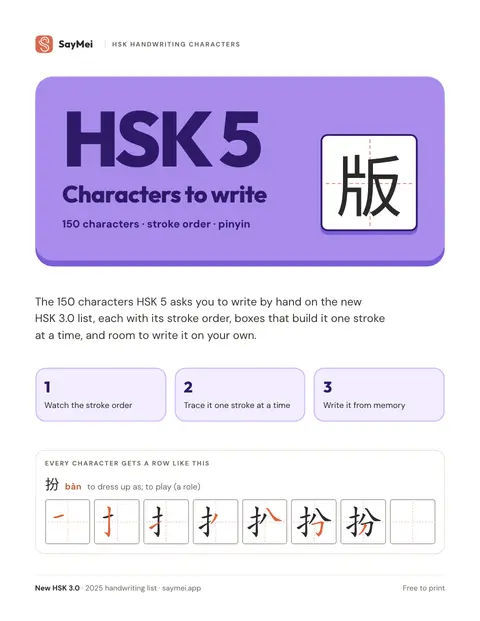
The 150 characters HSK 5 asks you to write by hand on the 2025 HSK syllabus (HSK 3.0), 550 in all with the levels below. Each gets its stroke order, a row of boxes that builds it one stroke at a time, empty boxes to write it from memory and a pinyin line.
- Characters:
- 150 to write · 550 in all by HSK 5
- Format:
- PDF · 8 sheets of up to 20 · 71 pages on A4 / 77 on US Letter
- Practice:
- Stroke order · boxes that add one stroke at a time · empty 田字格 (tián zì gé) boxes · a pinyin line
- List:
- HSK 3.0 handwriting list (2025 syllabus) · a QR code on every sheet for online practice
- Price:
- Free · no sign-up · updated Oct 27, 2026
Practice these characters online
Next step after the characters: HSK 5 Paraphrasing & Written Responses, free with a SayMei account.
All 150 HSK 5 characters to write
HSK 5's characters take from 1 to 15 strokes, 7.4 on average. The fewest: 乙 (yǐ, second). The most: 靠 (kào, to lean on). 68 of the 150 are written differently in traditional Chinese, and 12 have a second reading in the official word list. They are listed below in the syllabus's own order, which is roughly alphabetical by pinyin.
| # | Character | Pinyin | Meaning | Strokes | Traditional | Example words |
|---|---|---|---|---|---|---|
| 1 | 版 | bǎn | edition; version; page (of a newspaper) | 8 | 版 | 出版 chūbǎn to publish; 电子版 diànzǐbǎn electronic version |
| 2 | 扮 | bàn | to dress up as; to play (a role) | 7 | 扮 | 打扮 dǎban to dress up; 扮演 bànyǎn to play (a role) |
| 3 | 伴 | bàn | companion; partner; to accompany | 7 | 伴 | 伙伴 huǒbàn partner; companion; 陪伴 péibàn to keep sb company |
| 4 | 宝 | bǎo | treasure; precious | 8 | 寶 | 宝贝 bǎobèi treasure; darling; 宝贵 bǎoguì valuable; precious |
| 5 | 贝 | bèi | shell; shellfish | 4 | 貝 | 宝贝 bǎobèi treasure; darling; 贝壳 bèiké shell; seashell |
| 6 | 币 | bì | money; currency; coin | 4 | 幣 | 人民币 rénmínbì RMB (Chinese currency); 货币 huòbì currency |
| 7 | 闭 | bì | to close; to shut | 6 | 閉 | 关闭 guānbì to close; to shut down; 闭幕式 bìmùshì closing ceremony |
| 8 | 补 | bǔ | to mend; to make up for; to add | 7 | 補 | 补充 bǔchōng to add; to supplement; 补偿 bǔcháng to compensate |
| 9 | 布 | bù | cloth; to announce; to arrange | 5 | 布 | 分布 fēnbù to be distributed; 发布 fābù to announce; to release |
| 10 | 采 | cǎi | to pick; to gather; to adopt | 8 | 採 | 采用 cǎiyòng to use; to adopt; 采取 cǎiqǔ to adopt; to take (measures) |
| 11 | 册 | cè | volume; book (measure word) | 5 | 冊 | 注册 zhùcè to register; 相册 xiàngcè photo album |
| 12 | 测 | cè | to measure; to test | 9 | 測 | 测试 cèshì test; 预测 yùcè to predict; forecast |
| 13 | 叉 | chā | fork; cross | 3 | 叉 | 叉子 chāzi fork; 交叉 jiāochā to cross; to intersect |
| 14 | 吵 | chǎo | noisy; to quarrel | 7 | 吵 | 争吵 zhēngchǎo to quarrel; 吵架 chǎojià to quarrel |
| 15 | 沉 | chén | to sink; heavy; deep | 7 | 沉 | 沉默 chénmò silent; silence; 沉重 chénzhòng heavy |
| 16 | 称 | chēng | to call; to name; to weigh | 10 | 稱 | 称为 chēngwéi to be called; 名称 míngchēng name (of a thing) |
| 17 | 承 | chéng | to bear; to undertake; to continue | 8 | 承 | 承认 chéngrèn to admit; 承担 chéngdān to take on; to bear |
| 18 | 尺 | chǐ | ruler; Chinese foot (1/3 meter) | 4 | 尺 | 尺子 chǐzi ruler; 尺寸 chǐcùn size; measurements |
| 19 | 冲 | chōng | to rush; to dash; to rinse | 6 | 衝 | 冲突 chōngtū conflict; 冲击 chōngjī impact; to hit hard |
| 20 | 充 | chōng | full; to fill; to charge | 6 | 充 | 充分 chōngfèn full; ample; 充满 chōngmǎn to be full of |
| 21 | 虫 | chóng | insect; worm; bug | 6 | 蟲 | 昆虫 kūnchóng insect; 虫子 chóngzi bug; insect |
| 22 | 抽 | chōu | to draw out; to take out; to smoke | 8 | 抽 | 抽象 chōuxiàng abstract; 抽奖 chōujiǎng lucky draw |
| 23 | 丑 | chǒu | ugly | 4 | 醜 | 丑陋 chǒulòu ugly; 丑恶 chǒu'è ugly; evil |
| 24 | 臭 | chòu | smelly; to stink | 10 | 臭 | |
| 25 | 传 | chuán | to pass on; to spread | 6 | 傳 | 传统 chuántǒng tradition; traditional; 宣传 xuānchuán to promote; to publicize |
| 26 | 创 | chuàng | to create; to start | 6 | 創 | 创造 chuàngzào to create; 创作 chuàngzuò to create (art or writing) |
| 27 | 代 | dài | generation; era; to replace | 5 | 代 | 代表 dàibiǎo to represent; representative; 年代 niándài decade; era |
| 28 | 胆 | dǎn | courage; gall bladder | 9 | 膽 | 大胆 dàdǎn bold; daring; 胆小 dǎnxiǎo timid |
| 29 | 旦 | dàn | dawn; day (as in 元旦) | 5 | 旦 | 一旦 yídàn once (something happens); 元旦 Yuándàn New Year's Day |
| 30 | 挡 | dǎng | to block; to keep off | 9 | 擋 | 阻挡 zǔdǎng to block; 抵挡 dǐdǎng to hold back; to resist |
| 31 | 敌 | dí | enemy; to oppose | 10 | 敵 | 敌人 dírén enemy; 无敌 wúdí unbeatable |
| 32 | 冻 | dòng | to freeze; frozen | 7 | 凍 | 冻结 dòngjié to freeze (assets, prices); 冷冻 lěngdòng to freeze |
| 33 | 斗 | dòu | to fight; to struggle | 4 | 鬥 | 奋斗 fèndòu to strive; to fight for; 泰斗 tàidǒu leading authority |
| 34 | 豆 | dòu | bean; pea | 7 | 豆 | 豆腐 dòufu tofu; 土豆 tǔdòu potato |
| 35 | 独 | dú | alone; only; independent | 9 | 獨 | 独立 dúlì independent; 独特 dútè unique |
| 36 | 吨 | dūn | ton | 7 | 噸 | |
| 37 | 范 | fàn | model; example; range | 8 | 範 | 范围 fànwéi range; scope; 规范 guīfàn standard; norm |
| 38 | 防 | fáng | to prevent; to guard against | 6 | 防 | 防止 fángzhǐ to prevent; 预防 yùfáng to prevent |
| 39 | 访 | fǎng | to visit | 6 | 訪 | 采访 cǎifǎng to interview; 访问 fǎngwèn to visit; to interview |
| 40 | 疯 | fēng | crazy; mad | 9 | 瘋 | 疯狂 fēngkuáng crazy; 疯子 fēngzi madman |
| 41 | 佛 | fó | Buddha; Buddhism | 7 | 佛 | 仿佛 fǎngfú as if; seemingly |
| 42 | 府 | fǔ | government office; mansion | 8 | 府 | 政府 zhèngfǔ government; 首府 shǒufǔ capital (of a region) |
| 43 | 妇 | fù | woman; wife | 6 | 婦 | 妇女 fùnǚ woman; women; 夫妇 fūfù married couple |
| 44 | 搞 | gǎo | to do; to make; to get | 13 | 搞 | 搞笑 gǎoxiào funny; 搞鬼 gǎoguǐ to play tricks |
| 45 | 贡 | gòng | tribute; to offer | 7 | 貢 | 贡献 gòngxiàn contribution; to contribute |
| 46 | 构 | gòu | to build; to form; structure | 8 | 構 | 机构 jīgòu organization; institution; 结构 jiégòu structure |
| 47 | 古 | gǔ | ancient; old | 5 | 古 | 古代 gǔdài ancient times; 古老 gǔlǎo ancient; old |
| 48 | 柜 | guì | cabinet; cupboard | 8 | 櫃 | 柜子 guìzi cupboard; cabinet; 柜台 guìtái counter (in a shop) |
| 49 | 哈 | hā | ha (laughter); to breathe out | 9 | 哈 | |
| 50 | 含 | hán | to hold in the mouth; to contain | 7 | 含 | 包含 bāohán to contain; 含量 hánliàng content; amount |
| 51 | 胡 | hú | reckless; foreign; beard | 9 | 胡 | 胡同 hútòng alley; hutong; 胡子 húzi beard; mustache |
| 52 | 湖 | hú | lake | 12 | 湖 | 湖泊 húpō lake |
| 53 | 华 | huá | China; splendid | 6 | 華 | 中华 Zhōnghuá China; Chinese (formal); 中华民族 Zhōnghuá Mínzú the Chinese nation |
| 54 | 挥 | huī | to wave; to wipe away | 9 | 揮 | 发挥 fāhuī to bring into play; 指挥 zhǐhuī to conduct; to command |
| 55 | 挤 | jǐ | crowded; to squeeze | 9 | 擠 | 拥挤 yōngjǐ crowded; 挤压 jǐyā to squeeze; to press |
| 56 | 甲 | jiǎ | first; shell; nail | 5 | 甲 | 指甲 zhǐjia fingernail |
| 57 | 架 | jià | frame; shelf; measure word for planes | 9 | 架 | 书架 shūjià bookshelf; 打架 dǎjià to fight |
| 58 | 艰 | jiān | difficult; hard | 8 | 艱 | 艰苦 jiānkǔ hard; difficult; 艰难 jiānnán difficult; hard |
| 59 | 局 | jú | bureau; office; situation; game | 7 | 局 | 邮局 yóujú post office; 局面 júmiàn situation |
| 60 | 巨 | jù | huge; giant | 4 | 巨 | 巨大 jùdà huge; 巨额 jù'é huge amount |
| 61 | 军 | jūn | army; military | 6 | 軍 | 冠军 guànjūn champion; 军队 jūnduì army |
| 62 | 均 | jūn | equal; average; all | 7 | 均 | 平均 píngjūn average; 人均 rénjūn per person |
| 63 | 靠 | kào | to lean on; to rely on; near | 15 | 靠 | 依靠 yīkào to rely on; 可靠 kěkào reliable |
| 64 | 宽 | kuān | wide; broad | 10 | 寬 | 宽度 kuāndù width; 宽阔 kuānkuò wide; broad |
| 65 | 亏 | kuī | to lose (money); thanks to | 3 | 虧 | 亏损 kuīsǔn loss (financial); 多亏 duōkuī thanks to |
| 66 | 括 | kuò | to include; to enclose | 9 | 括 | 包括 bāokuò to include; 概括 gàikuò to summarize |
| 67 | 劳 | láo | labor; work | 7 | 勞 | 劳动 láodòng labor; to work; 劳动力 láodònglì labor force |
| 68 | 泪 | lèi | tear (from crying) | 8 | 淚 | 眼泪 yǎnlèi tears; 泪水 lèishuǐ tears |
| 69 | 类 | lèi | kind; type; category | 9 | 類 | 人类 rénlèi humankind; 类型 lèixíng type; kind |
| 70 | 立 | lì | to stand; to set up | 5 | 立 | 建立 jiànlì to establish; 成立 chénglì to set up; to found |
| 71 | 良 | liáng | good; fine | 7 | 良 | 良好 liánghǎo good; 优良 yōuliáng fine; excellent |
| 72 | 疗 | liáo | to treat; to cure | 7 | 療 | 治疗 zhìliáo to treat; treatment; 医疗 yīliáo medical care |
| 73 | 烈 | liè | strong; fierce; intense | 10 | 烈 | 强烈 qiángliè strong; intense; 激烈 jīliè intense; fierce |
| 74 | 领 | lǐng | to lead; collar; to receive | 11 | 領 | 领导 lǐngdǎo leader; to lead; 领域 lǐngyù field; area |
| 75 | 令 | lìng | to cause; order; command | 5 | 令 | 命令 mìnglìng order; command; 夏令营 xiàlìngyíng summer camp |
| 76 | 龙 | lóng | dragon | 5 | 龍 | 龙头 lóngtóu faucet; leader; 恐龙 kǒnglóng dinosaur |
| 77 | 陆 | lù | land | 7 | 陸 | 陆续 lùxù one after another; 陆地 lùdì land |
| 78 | 录 | lù | to record; to copy | 8 | 錄 | 录取 lùqǔ to admit (to a school); 记录 jìlù to record; record |
| 79 | 骂 | mà | to scold; to curse | 9 | 罵 | |
| 80 | 秘 | mì | secret | 10 | 秘 | 秘密 mìmì secret; 秘书 mìshū secretary |
| 81 | 某 | mǒu | some; a certain | 9 | 某 | |
| 82 | 念 | niàn | to read aloud; to miss; idea | 8 | 念 | 概念 gàiniàn concept; 观念 guānniàn idea; concept |
| 83 | 派 | pài | to send; group; style | 9 | 派 | 派出所 pàichūsuǒ local police station; 派遣 pàiqiǎn to send; to dispatch |
| 84 | 配 | pèi | to match; to go with | 10 | 配 | 分配 fēnpèi to allocate; to assign; 配合 pèihé to cooperate |
| 85 | 盆 | pén | basin; pot | 9 | 盆 | 盆地 péndì basin (geography) |
| 86 | 碰 | pèng | to bump; to touch; to meet | 13 | 碰 | 碰见 pèngjiàn to run into; 碰撞 pèngzhuàng to collide |
| 87 | 匹 | pǐ | measure word for horses; to match | 4 | 匹 | 匹配 pǐpèi to match |
| 88 | 拼 | pīn | to put together; to spell; to go all out | 9 | 拼 | 拼音 pīnyīn pinyin; 拼命 pīnmìng with all one's might |
| 89 | 齐 | qí | neat; even; together | 6 | 齊 | 整齐 zhěngqí neat; tidy; 齐全 qíquán complete |
| 90 | 欠 | qiàn | to owe; to lack | 4 | 欠 | 欠缺 qiànquē to lack; shortcoming; 拖欠 tuōqiàn to be behind on payments |
| 91 | 曲 | qǔ | song; tune | 6 | 曲 | 歌曲 gēqǔ song; 弯曲 wānqū curved; bent |
| 92 | 权 | quán | right; power; authority | 6 | 權 | 权利 quánlì right (legal); 权力 quánlì power; authority |
| 93 | 劝 | quàn | to advise; to persuade | 4 | 勸 | 劝说 quànshuō to persuade; 劝阻 quànzǔ to dissuade |
| 94 | 忍 | rěn | to bear; to endure | 7 | 忍 | 忍受 rěnshòu to endure; to bear; 忍耐 rěnnài to endure; patience |
| 95 | 晒 | shài | to bask; to dry in the sun | 10 | 曬 | |
| 96 | 舍 | shě | to give up; to part with | 8 | 捨 | 舍不得 shěbude to hate to part with; 宿舍 sùshè dormitory |
| 97 | 设 | shè | to set up; to design | 6 | 設 | 建设 jiànshè to build; construction; 设计 shèjì to design; design |
| 98 | 神 | shén | god; spirit; magical | 9 | 神 | 精神 jīngshen spirit; energetic; 神秘 shénmì mysterious |
| 99 | 升 | shēng | to rise; liter | 4 | 升 | 上升 shàngshēng to rise; 升级 shēngjí to upgrade |
| 100 | 胜 | shèng | to win; victory | 9 | 勝 | 胜利 shènglì victory; 战胜 zhànshèng to defeat; to overcome |
| 101 | 诗 | shī | poem; poetry | 8 | 詩 | 诗人 shīrén poet; 诗歌 shīgē poetry |
| 102 | 石 | shí | stone; rock | 5 | 石 | 石头 shítou stone; rock; 石油 shíyóu oil; petroleum |
| 103 | 似 | sì | similar; to seem | 6 | 似 | 似乎 sìhū it seems; 似的 shìde as if; like |
| 104 | 势 | shì | power; force; trend | 8 | 勢 | 优势 yōushì advantage; 形势 xíngshì situation |
| 105 | 守 | shǒu | to guard; to keep; to observe | 6 | 守 | 遵守 zūnshǒu to obey; to follow (rules); 防守 fángshǒu to defend; defense |
| 106 | 私 | sī | private; personal | 7 | 私 | 私人 sīrén private; personal; 隐私 yǐnsī privacy |
| 107 | 素 | sù | plain; vegetarian; element | 10 | 素 | 因素 yīnsù factor; 素质 sùzhì quality; character |
| 108 | 宿 | sù | to stay overnight; lodging | 11 | 宿 | 宿舍 sùshè dormitory; 住宿 zhùsù accommodation; to stay (overnight) |
| 109 | 挑 | tiāo | to choose; to carry on a pole | 9 | 挑 | 挑选 tiāoxuǎn to choose; to pick; 挑战 tiǎozhàn challenge |
| 110 | 团 | tuán | group; ball; round | 6 | 團 | 团队 tuánduì team; 集团 jítuán group; corporation |
| 111 | 退 | tuì | to retreat; to return (sth) | 9 | 退 | 退出 tuìchū to quit; to withdraw; 退休 tuìxiū to retire |
| 112 | 拖 | tuō | to drag; to pull; to delay | 8 | 拖 | 拖鞋 tuōxié slippers; 拖延 tuōyán to delay |
| 113 | 伟 | wěi | great | 6 | 偉 | 伟大 wěidà great; 雄伟 xióngwěi magnificent |
| 114 | 未 | wèi | not yet | 5 | 未 | 未来 wèilái future; 未必 wèibì not necessarily |
| 115 | 胃 | wèi | stomach | 9 | 胃 | 胃口 wèikǒu appetite |
| 116 | 武 | wǔ | martial; military | 8 | 武 | 武术 wǔshù martial arts; 武器 wǔqì weapon |
| 117 | 夕 | xī | evening; sunset | 3 | 夕 | 除夕 chúxī Chinese New Year's Eve; 前夕 qiánxī eve |
| 118 | 析 | xī | to analyze; to divide | 8 | 析 | 分析 fēnxī to analyze; analysis; 解析 jiěxī to analyze |
| 119 | 席 | xí | seat; mat; banquet | 10 | 席 | 主席 zhǔxí chairman; 出席 chūxí to attend |
| 120 | 闲 | xián | free; idle; leisure | 7 | 閒 | 休闲 xiūxián leisure; 空闲 kòngxián free time; idle |
| 121 | 显 | xiǎn | obvious; to show | 9 | 顯 | 明显 míngxiǎn obvious; 显示 xiǎnshì to show; to display |
| 122 | 县 | xiàn | county | 7 | 縣 | |
| 123 | 形 | xíng | shape; form | 7 | 形 | 形成 xíngchéng to form; 形式 xíngshì form; shape |
| 124 | 宣 | xuān | to announce; to declare | 9 | 宣 | 宣布 xuānbù to announce; 宣传 xuānchuán to promote; to publicize |
| 125 | 寻 | xún | to look for; to seek | 6 | 尋 | 寻找 xúnzhǎo to look for; 寻求 xúnqiú to seek |
| 126 | 训 | xùn | to train; to teach | 5 | 訓 | 训练 xùnliàn to train; training; 培训 péixùn to train; training |
| 127 | 咬 | yǎo | to bite | 9 | 咬 | |
| 128 | 依 | yī | according to; to rely on | 8 | 依 | 依据 yījù basis; according to; 依然 yīrán still; as before |
| 129 | 乙 | yǐ | second; B | 1 | 乙 | |
| 130 | 亿 | yì | hundred million | 3 | 億 | 亿万 yìwàn hundreds of millions |
| 131 | 义 | yì | meaning; justice | 3 | 義 | 意义 yìyì meaning; significance; 义务 yìwù duty; obligation |
| 132 | 益 | yì | benefit; profit | 10 | 益 | 利益 lìyì interest; benefit; 有益 yǒuyì beneficial |
| 133 | 映 | yìng | to reflect; to shine | 9 | 映 | 反映 fǎnyìng to reflect; to report; 放映 fàngyìng to show (a film) |
| 134 | 余 | yú | extra; remaining; more than | 7 | 餘 | 其余 qíyú the rest; 业余 yèyú amateur; spare-time |
| 135 | 玉 | yù | jade | 5 | 玉 | 玉米 yùmǐ corn |
| 136 | 圆 | yuán | round; circle; yuan | 10 | 圓 | 圆满 yuánmǎn satisfactory; perfect; 团圆 tuányuán reunion |
| 137 | 载 | zài | to carry; to load (as in 下载) | 10 | 載 | 下载 xiàzài to download; 记载 jìzǎi to record (in writing) |
| 138 | 造 | zào | to make; to build | 10 | 造 | 造成 zàochéng to cause; 创造 chuàngzào to create |
| 139 | 占 | zhàn | to occupy; to take up | 5 | 占 | 占线 zhànxiàn (phone line) busy; 占卜 zhānbǔ to tell fortunes |
| 140 | 召 | zhào | to call together; to summon | 5 | 召 | 召开 zhàokāi to convene; to hold (a meeting); 号召 hàozhào to call on; appeal |
| 141 | 政 | zhèng | politics; government | 9 | 政 | 政治 zhèngzhì politics; 政府 zhèngfǔ government |
| 142 | 织 | zhī | to weave; to knit | 8 | 織 | 组织 zǔzhī organization; to organize; 纺织 fǎngzhī textile; spinning and weaving |
| 143 | 制 | zhì | system; to control; to make | 8 | 制 | 制度 zhìdù system; rules; 制定 zhìdìng to draw up; to formulate |
| 144 | 治 | zhì | to govern; to treat (illness) | 8 | 治 | 政治 zhèngzhì politics; 治疗 zhìliáo to treat; treatment |
| 145 | 致 | zhì | to send; to cause; fine | 10 | 致 | 导致 dǎozhì to lead to; to cause; 一致 yízhì unanimous; consistent |
| 146 | 猪 | zhū | pig | 11 | 豬 | |
| 147 | 竹 | zhú | bamboo | 6 | 竹 | 竹子 zhúzi bamboo; 竹竿 zhúgān bamboo pole |
| 148 | 抓 | zhuā | to grab; to catch | 7 | 抓 | 抓紧 zhuājǐn to hurry; to make the most of |
| 149 | 状 | zhuàng | shape; state; condition | 7 | 狀 | 状态 zhuàngtài state; condition; 状况 zhuàngkuàng condition; situation |
| 150 | 追 | zhuī | to chase; to pursue | 9 | 追 | 追求 zhuīqiú to pursue; 追究 zhuījiū to look into; to hold sb responsible |
How to use it
- Read the pinyin and meaning on the sheet's first page, and say each character out loud.
- Follow the row that builds the character one stroke at a time, tracing each new stroke in the order shown.
- Write it from memory in the empty boxes and its pinyin on the line, then scan the QR code to check your strokes online.
Common questions
How many characters do you need to write for HSK 5?
150 new ones. The 2025 HSK syllabus (HSK 3.0) adds 150 characters to its handwriting list, 书写字 (shū xiě zì), at HSK 5, for 550 in all with the levels below. You need to recognize more than you write: 431 new reading characters at HSK 5, 1,527 in all.
Is the HSK 5 characters PDF free?
Yes. It is a free PDF in A4 or US Letter, with no account or email needed; the page picks the paper used in your country. The 150 characters come in 8 sheets of up to 20, 71 pages on A4, and every sheet has a QR code that opens online practice for its characters.
What is on each page?
Each sheet starts with its characters' pinyin and meanings. Then every character gets its stroke order as a strip, a row of 田字格 (tián zì gé) boxes that adds one stroke at a time in color, empty boxes to write it from memory and a line for its pinyin. Stroke-direction cards close each sheet.
Which HSK 5 characters have the most strokes?
靠 (kào, to lean on) has 15 strokes, the most at HSK 5; 乙 (yǐ, second) has just 1. The average is 7.4 strokes.
How is this different from the HSK 5 writing workbook?
The writing workbook traces every word of the level in fading boxes, a word at a time. These sheets are for the 150 single characters HSK 5 asks you to write from memory, built up one stroke at a time. Learn the characters here first, then write them inside words in the workbook.
Can I print copies for my class?
Yes. Print as many copies as you like — it's free. Print every sheet or only the ones your class needs; to change the characters on a sheet, open it in the worksheet generator and edit it there.
Keep going
HSK 5 writing workbook · HSK 6 handwriting characters · HSK 4 handwriting characters · All 1,200 HSK handwriting characters · Stroke order worksheet maker · Chinese writing grid paper · HSK 5 lessons with Mei Lin
Handwriting characters by level
Character list: the 2025 HSK syllabus, 书写字 (Center for Language Education and Cooperation). Pinyin choices, meanings and traditional forms: SayMei. Updated Oct 27, 2026.