ChineseSkill review: real prices, what's free and how it compares to HelloChinese
ChineseSkill review checked Nov 2026: 715 live lessons across 4 Chinese tracks, real Premium vs Premium+ prices, 250 iOS reviews and HelloChinese math.


ChineseSkill runs four separate Chinese courses under one login, from Mainland Mandarin to Hokkien. We checked its live lessons, pricing code and store reviews to see if it earns your cash.
This review helps you weigh ChineseSkill against HelloChinese, SuperChinese, Duolingo and SayMei. We checked its live web courses, pricing code, terms, blog and US App Store reviews in November 2026.
Key takeaways
- Four Chinese tracks set it apart. One login opens Mainland Mandarin, Taiwan Mandarin, Hong Kong Cantonese and the October 2026 Hokkien track.
- Yearly plans beat HelloChinese on price. Web Premium saves ten dollars a year and Premium+ saves fifty, though its 75% badge oversells a real 58% cut.
- Free access is ad-free yet brief. Tone Training and sound guides stay free, while core units lock after a few lessons or unit six.
- We counted 715 live web lessons across all tracks. Mainland Mandarin holds 218 core lessons to HSK 4, well below old "500+ lessons" claims.
- Cantonese and web tracks carry real gaps. ChineseSkill confirms Cantonese skips tone scoring, writing and Booster drills, and two web sound pages still show Mainland Pinyin.
- App Store scores bounced back in 2026. After a rough dip during a paywall shift, written US reviews climbed back to 4.54 stars as new tracks shipped.
Clear notes, four tracks and messy pricing
ChineseSkill is one of the oldest Chinese apps on iOS, first listed in February 2014. Built in Beijing by Yiyan Technology, it is the sister app to LingoDeer.
We checked its live course trees, pricing page, help notes, blog and store listings to score seven learner jobs:
What you need · Verdict · What ChineseSkill gives you
Beginner grammar and structure
Strong
75 Mainland units with Knowledge cards and native audio
Taiwan, Cantonese and Hokkien
Strong
Four separate tracks; Cantonese skips scoring, writing and Booster
Yearly value and web access
Strong
$59.99/yr Premium, synced web app, 3-yr, 6-yr and iOS lifetime
Character writing and HSK banks
Strong
Stroke grids in Mandarin units; New HSK 1–9 Character Bank on Plus
Speaking, tones and AI Tutor
Partly
Free Tone Training, Speak-to-Answer, AI Tutor; tone accuracy unproven
Mainland depth past HSK 4
Partly
Main path stops at HSK 4; no word count or HSK 3.0 map published
Graded stories and free full course
Missing
Store slide shows graded readers; no library count; early paywall
Sources: ChineseSkill pricing, languages, US App Store, June 2026 blog and live web syllabi, checked 25 November 2026.
The trade-off stands out early. We rate ChineseSkill high for grammar notes, regional Chinese and yearly value, while HelloChinese leads on Mainland depth and stories.
How much does ChineseSkill really cost in 2026?
ChineseSkill splits web plans into Premium and Premium+, while Apple's store adds older names beside them. Where you pay sets both the bill and your refund rights.
On chineseskill.com/pricing, Premium opens the core course for $11.99 monthly or $59.99 yearly. Premium+ adds the AI Tutor, Fluency Builder and HSK banks at a higher yearly tier.
Watch the discount tags on both tabs. Each yearly plan wears a bright "75% OFF" badge in ChineseSkill's live web code. Against twelve monthly bills, the real cut on both tiers is 58%.
ChineseSkill also sells one-time web passes for three or six years with no auto-renew. Its Black Friday 2026 page cuts the six-year pass to $199.99 under an "85% OFF" tag.
Check that anchor math too. The banner compares the pass against six years billed monthly; against the normal six-year web rate, the real cut is 17%.
Pick your study span, tier and goal to compare exact US totals against four rivals:
Compare ChineseSkill plans against HelloChinese, SuperChinese, Duolingo and SayMei
Pick how long you'll study, which ChineseSkill tier you are weighing and your main goal: you get the cheapest billing path and exact US totals across five Mandarin apps.
How long you'll study
ChineseSkill plan
Your main goal
For 1 year of ChineseSkill Premium, cheapest is Yearly (web or App Store): $59.99
About $5 a month. Paying monthly would cost $143.88.
For lowest annual or multi-year spend, ChineseSkill Premium ($59.99/yr) ties SuperChinese PLUS and saves $10 a year over HelloChinese; skip Lifetime ($159.99+) unless you plan to study past year three.
Every way to pay for 1 year of ChineseSkill Premium
- Yearly (web or App Store), once$59.99Saves 58% against 12 monthly bills (site tags it 75% off); 7-day first-time web refund
- Quarterly (web), 4 times$99.96Cheapest 3-to-6-month route; US App Store lists quarterly at $25.99
- Monthly (web or App Store), 12 times$143.88Cancel any month; beats quarterly only for a 1-month test
- App Store Lifetime (lower SKU), one-time$159.99Apple also lists a $399 Lifetime SKU; beats yearly only past year 3
ChineseSkill vs Mandarin rivals for 1 year
ChineseSkill Premium (cheapest)
- Total (1 year)
- $59.99
- Budget & lifetime
- Strong
- Best plan & trade-off
- Yearly (web or App Store)
- Total (1 year)
- $69.99
- Budget & lifetime
- Partly
- Best plan & trade-off
- Yearly ($69.99; $48.99 sale). 2,500+ words & 430+ grammar points in Mainland Mandarin; 1,000+ stories need Premium+ ($149.99/yr); no web app
- Total (1 year)
- $59.99
- Budget & lifetime
- Strong
- Best plan & trade-off
- App Store yearly ($59.99). 8 levels to ~HSK 5 with line-by-line speech scoring; CHAO AI costs extra ($109.99/yr iOS); no browser course
- Total (1 year)
- Free
- Budget & lifetime
- Strong
- Best plan & trade-off
- Free with ads. Full Simplified course free (~82% of HSK 4 words); no handwriting drills, no tone training, no Traditional track
- Total (1 year)
- $71.88
- Budget & lifetime
- Strong
- Best plan & trade-off
- 12 x $5.99. 200 live Mei Lin speaking min/mo with tone coaching, 169 HSK 1-3 Stories, Tones & free HSK 1-9 Characters; Mandarin only
Prices checked 25 November 2026 in US dollars on chineseskill.com/pricing, the US App Store and saymei.app/pricing. A plan longer than your window counts in full.
Sources: chineseskill.com/pricing, ChineseSkill US App Store (id777111034), HelloChinese, SuperChinese, Duolingo and saymei.app/pricing, checked 25 November 2026. Black Friday 2026 cuts the 6-year web Premium+ pass from $239.99 to $199.99.
Here is how ChineseSkill's monthly cost sits beside four main Mandarin rivals:
Sources: ChineseSkill pricing, US App Store, HelloChinese, SuperChinese, Duolingo and SayMei pricing, checked 25 November 2026. Black Friday 2026 cuts ChineseSkill 6-Year Premium+ to $199.99, or $2.78 a month.
Over a year, ChineseSkill saves ten dollars on Premium and fifty on web Premium+ beside HelloChinese's full rate. It ties SuperChinese at five dollars a month on yearly Premium.
Apple's store adds extra clutter. We pulled all ten in-app lines from ChineseSkill's US App Store page, and web and store menus split:
Web Premium
- Monthly
- $11.99
- Quarterly
- $24.99
- Annual
- $59.99
- Multi-year or lifetime
- Not sold on web
Web Premium+
- Monthly
- $19.99
- Quarterly
- $39.99
- Annual
- $99.99
- Multi-year or lifetime
- 3-yr $189.99; 6-yr $239.99 ($199.99 BF)
US App Store Premium
- Monthly
- $11.99
- Quarterly
- $25.99
- Annual
- $59.99
- Multi-year or lifetime
- Lifetime $159.99 or $399.00
US App Store extra labels
- Monthly
- $12.99 / $14.99
- Quarterly
- Not listed
- Annual
- $79.99
- Multi-year or lifetime
- Full Access & Annual Plan labels
Sources: live web pricing bundle at chineseskill.com/pricing, Black Friday 2026 page and US App Store store data, 25 November 2026.
Quarterly Premium costs one dollar more on iOS than on the web, and Apple lists older Full Access labels plus two Lifetime prices. Check chineseskill.com first. One quirk in its live checkout code also confirms its lineage: buy buttons route orders to internal slugs called lingodeer and lingodeerplus.
We would skip Lifetime until you study for a month. Even the cheaper Apple Lifetime tier takes nearly three years to beat yearly Premium, and most learners finish HSK 4 sooner.
What stays free, and where the paywall hits
ChineseSkill is free to install and runs no ads, even on free accounts. Its team confirmed that rule on its June 2026 blog, making early sessions calmer than Duolingo.
Ad-free does not mean a free full course. ChineseSkill names no set free cap, and its October 2026 blog notes it claims no fixed free allowance.
We checked the live web tree and recent mobile reviews to find the gate. On the live Mainland syllabus, the first six units through Age & Counting hold sixteen lessons before the first Test Out gate, and every later gate shows a lock icon.
Mobile users often hit locks even sooner. US reviewers in late 2024 and late 2025 stopped right after Age & Counting before Professions. A Canadian user in February 2026 hit a lock after three lessons, and earlier users stopped after lesson one or two.
What stays free still earns space on your phone. ChineseSkill's App Store page keeps Tone Training and sound guides free across tracks, including Pinyin, Jyutping and Hokkien.
When you pay, the live feature table draws a clear split:
- Premium opens five core tools: the Main Course, SRS Reviews, native videos, the Pinyin Guide and Tone Training.
- Premium+ adds six extra tools: the AI Tutor, Travel Phrasebook, Fluency Builder, HSK Word Bank, HSK Character Bank and Practice Zone games.
Read the refund rules first, because two official pages clash. The web FAQ promises a seven-day refund on first-time yearly web buys, and the Black Friday page matches that on its six-year pass.
Yet Section 8.3 of ChineseSkill's Terms of Service calls all payments final except at company choice, and Section 8.4 waives withdrawal rights. Store buys go through Apple or Google only.
Web renewals cancel in PayPal under Yiyan Technology HK, per the help article. We also found three support emails inside the pricing code: nihao@chineseskill.com in the FAQ, hi@chineseskill.com in a popup, and support@chineseskill.com on the button link. Keep nihao@chineseskill.com and a receipt copy.
Four Chinese courses in one account, with clear catches
Regional Chinese is ChineseSkill's sharpest edge. Neither HelloChinese nor SuperChinese offers a separate Taiwan Mandarin track, Hong Kong Cantonese or Hokkien.
On ChineseSkill's languages page, one paid plan opens four tracks:
- Mainland Mandarin: Simplified script and Pinyin, built toward HSK 4.
- Taiwan Mandarin: Traditional script, Taiwanese voices and Zhuyin or Pinyin for Taiwan's TOCFL exam.
- Hong Kong Cantonese: Spoken Cantonese with Jyutping or Yale and either script.
- Hokkien: Added in October 2026 with native audio, Tâi-lô spelling and SRS review.
We opened all four live web trees on chineseskill.com and counted every unit and core lesson by hand:
Source: direct count of all units and lessons on chineseskill.com/language/chinese-{mainland,taiwan,hongkong,hokkien}/course/beginner-1, 25 November 2026. Total across all four tracks: 244 units and 715 core lessons.
The Taiwan track earns its slot. Everyday words shift across the strait: a taxi changes from mainland 出租车 to Taiwan 計程車, and rubbish shifts from 垃圾 to 垃圾.
Flipping a Traditional switch in HelloChinese swaps character shapes while keeping Beijing audio and wording. ChineseSkill's Taiwan track adds an early Nationalities unit, Taiwanese voices and Zhuyin drills. The new Hokkien track also drew quick praise from a Penang retiree in November 2026.
We also found three clear catches outside Mainland Mandarin:
- Cantonese drops five headline tools. ChineseSkill's team confirmed in June 2026 and October 2026 that Cantonese skips speech scoring, tone drills, writing grids, videos and Booster drills on every plan.
- Booster hides outside Mainland on the web. On chineseskill.com, the Booster tab shows only on Mainland Mandarin, matching Apple's Mandarin-only footnote.
- Two web sound pages still show Mainland Pinyin. Only Cantonese loads its own Jyutping guide on the web. Both the Taiwan and Hokkien web alphabet pages still show Mainland Pinyin text with Simplified horse, 马.
Reviews from June 2024 and March 2025 also flagged Simplified script inside Traditional notes, and a May 2026 Taiwan learner asked for a lasting default switch. Even so, ChineseSkill leads outside Mainland Mandarin.
Still picking a script or variety? Read Simplified vs Traditional Chinese and Mandarin vs Cantonese.
Grammar notes, course depth and the HSK 3.0 gap
Older blogs still claim ChineseSkill packs "500+ lessons". Our live count shows what one learner gets and where that figure came from.
Across all four live web trees, the site totals 715 core lessons, with Mainland Mandarin holding a third of that count. ChineseSkill's blog quotes bigger per-track totals once mobile writing and review tasks are counted per unit.
Each unit uses short ten-to-fifteen-minute rounds backed by Knowledge cards. Chief Linguist Jie Zhang notes on the homepage that teachers from Peking University, Beijing Foreign Studies University, NUS and Indiana University write the notes.
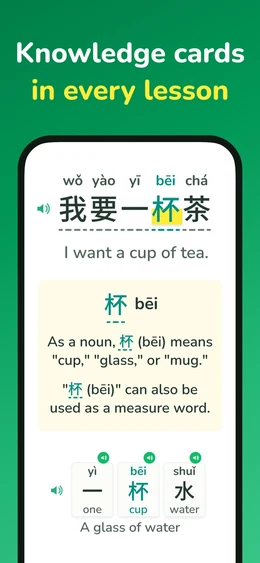
Those clear cards explain why public r/ChineseLanguage threads checked in November 2026 call ChineseSkill a hidden gem beside Duolingo. One card teaches cup, 杯, as noun and measure word inside "I want a cup of tea", 我要一杯茶, and "a glass of water", 一杯水.
Walking all Mainland units shows a clean lower-intermediate spine. Early units cover greetings, family, food, counting and dates. Late units teach result, potential and directional complements, the 把 sentence, the 被 passive, TV shows and business.
That grammar spine fits HSK 1 through early HSK 4 well. Exam takers hit a catch on word totals.
The last regular HSK 2.0 exam passed on 7 November 2026. The first regular HSK 3.0 exam runs in December 2026, with computer sign-ups closing ten days before test day.
ChineseSkill's opening slide wears a purple "HSK 3.0" pill. Yet its Main Course prints no word count and never says whether "zero to HSK 4" tracks the old 1,200-word list or the new 2,000-word HSK 3.0 syllabus. ChineseSkill's June 2026 blog admits an HSK 4 claim does not prove full exam prep.
Past the main tree, Premium+ puts exam drills in the Booster tab on mobile:
- Fluency Builder: Everyday dialogues across HSK 1 to HSK 5 with spaced review.
- HSK Word Bank: SRS flashcard lists covering HSK 1 through HSK 6 words.
- HSK Character Bank: Searchable characters for New HSK 1 to 9, with custom decks.
Neither plan offers timed mocks or speaking timers, so add free HSK practice tests and our HSK exam guide.
Free Tone Training, Speak-to-Answer and the AI Tutor
ChineseSkill packs more speech tools into one app than most starter courses, including a voice update in November 2026. Still, one big caveat sits over every tone score.
Three tools handle speech across the app:
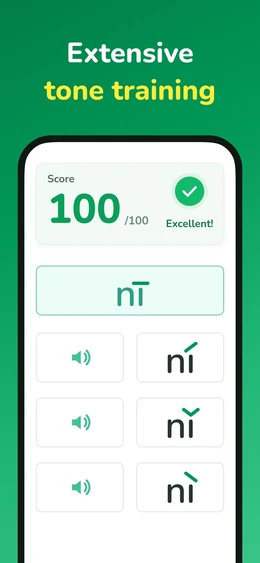
- Free Tone Training: Open to free users, drilling Mandarin tones with a score out of 100.
- Speak-to-Answer: Added in November 2026 for Mainland, Taiwan and Cantonese so you say answers aloud instead of tapping tiles.
- AI Tutor: Sold in Premium+, offering over a hundred topics, grammar notes, speech checks and speed controls.
Adding Speak-to-Answer inside lessons is a strong move because saying a line aloud builds recall faster than tapping tiles. Still, treat every numeric score with doubt.
Neither ChineseSkill nor any outside test has shown how well the app catches wrong tones. On its June 2026 blog, ChineseSkill admitted it has not proved which app spots tone slips best.
Users flag that limit in reviews. A US user in July 2026 gave three stars saying the AI "often gets your ratings wrong". An October 2026 user wished it explained how to fix a missed word rather than just marking it.
Speech science shows why apps stumble here. Recognisers guess words from context. Say buy, 买, with a falling tone and you say sell, 卖. Say sugar, 糖, with a flat tone and you say soup, 汤.
A review of 15 studies in ReCALL found speech tools fix sounds well, yet help pitch only a little. Mandarin tones are pitch.
Use free Tone Training and Speak-to-Answer to build speaking nerve. Then check your pitch curve on our free Tone Checker, which tests on-device against 984 clips at 80% tone accuracy, and read our guide to learning Chinese tones.
Character writing, SRS reviews and the reading gap
If you want to learn real characters instead of leaning on pinyin forever, ChineseSkill gets two basics right and leaves one clear gap.
First, every Mainland and Taiwan unit includes stroke-by-stroke writing in Simplified or Traditional script. Its store screen guides the first stroke of middle, 中, beside love, 爱, and book, 书. In a study of adult learners, handwriting built stronger memory for shape and meaning, while typing pinyin built sound links only.
Second, display settings let you fade aids gently from Pinyin or Zhuyin to Characters plus Tone Marks, then bare hanzi. A Canadian user in September 2026 noted there is no quick pinyin toggle inside a lesson, so set it first.
The Review tab backs those drills with a clean spaced review queue across words, lines, characters and bookmarks. Paired with Practice Zone games and weekly leagues, the pace feels brisk and drill-led, much like sister app LingoDeer.
Extended reading is where ChineseSkill stops short, and its store slides muddy the point.
Its fifth US App Store slide claims "Graded readers for every level", showing a short page of Hua Mulan, 花木兰. Yet neither the store text nor the pricing table lists graded readers at all.
We checked ChineseSkill's June 2026 blog to settle it. Under reading, the team wrote "Graded stories advertised; count not verified", and told readers who want stories to shortlist HelloChinese.
Treat ChineseSkill as a drill and dialogue course, not a story app. Past a few hundred words, add a pick from our best Chinese graded readers guide, like Du Chinese or SayMei Stories.
Web app, offline downloads and recent updates
Many adults prefer typing Mandarin on a laptop over tapping phone tiles. Here ChineseSkill beats HelloChinese and SuperChinese cleanly.
ChineseSkill runs a synced web app at chineseskill.com on Windows, Mac and Chromebook beside iOS and Android. One login keeps progress synced, and the English site hosts 8,618 public dictionary pages.
Two platform limits stand out:
- Mobile gets Premium+ first. ChineseSkill's pricing FAQ notes some Premium+ tools are not yet on the web, and Booster sits only on Mainland Mandarin in browsers.
- No native Mac app. Unlike HelloChinese, Apple's device list covers iPhone, iPad, iPod touch and Apple Vision, leaving Mac users on the web app.
For travel, ChineseSkill offers one-click offline course downloads on mobile for all four tracks, while AI Tutor chats still need internet. On Apple's privacy card, Purchases, Contact Info, User Content and Identifiers link to you, while Location and Diagnostics stay unlinked.
Older 2014 apps sometimes stall out. ChineseSkill instead shipped steady updates through late 2026:
Late 2025
- Release
- v9.0 series
- What shipped
- App redesign and stricter free-tier gates
Sep 2026
- Release
- v9.6 series
- What shipped
- Fixes for restoring buys and cut-off choices at large fonts
24 Oct 2026
- Release
- v9.7.0
- What shipped
- Brand-new Hokkien course with 180+ lessons and Tâi-lô
23 Nov 2026
- Release
- v9.7.5
- What shipped
- Speak-to-Answer mode for Mainland, Taiwan and Cantonese
Sources: US App Store version history, ChineseSkill blog and Apple RSS version tags, checked 25 November 2026.
That pace confirms active care heading into 2027, with real work going into regional Chinese and voice drills.
What 250 App Store reviews and Reddit actually say
ChineseSkill's store scores look strong on both major stores, though total count sits roughly half of HelloChinese's scale:
US App Store
- Rating
- 4.83
- Count
- 15,430
- Note
- Version 9.7.5, updated 23 Nov 2026; listed Feb 2014
Google Play
- Rating
- 4.7
- Count
- 171,000
- Note
- 5M+ downloads; in-app items $4.99 to $299.99
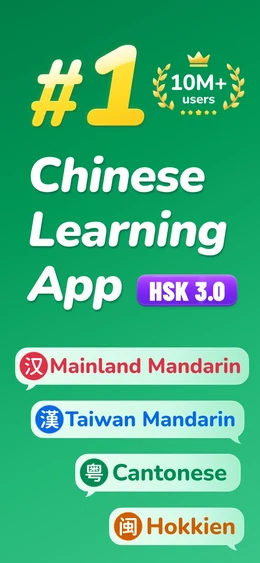
Sources: Apple iTunes Lookup and Google Play US, 25 November 2026. App Store graphic #1 displays a "10M+ users" badge across all platforms.
Headline stars hide turning points. We pulled pages one through five of Apple's US RSS feed in November 2026, covering 250 reviews over five years.
Those reviews average 4.54 stars overall, with 32 critical reviews of one to three stars. Splitting them by year reveals a sharp dip in 2025 and a clear rebound in 2026:
Source: our count of all 250 reviews in Apple US RSS pages 1–5, 25 November 2026. Annual means: 4.95 (2021), 4.65 (2022), 4.60 (2023), 4.59 (2024), 3.97 (2025), 4.54 (2026).
That 2025 dip tracks cleanly with tighter paywalls, cut-off buttons and early redesign shocks. Through November 2026, review volume jumped and scores recovered as Cantonese, Hokkien and fixes shipped.
Next, we hand-coded every critical review across our sample:
Source: hand-coded audit of all 32 critical reviews in Apple US RSS pages 1–5, 25 November 2026. Reviews raising multiple themes count in each.
Four real gripes stand out from our count:
- Purchase and lifetime hiccups: Two early-2026 users could not tap subscribe, a February 2026 user lost an old Lifetime plan after an update, and an April 2026 user cited an unanswered refund claim.
- Paywall shock: Returning users missed older free lessons, while new US and Canadian learners hit locks early in the tree.
- Sister-app mix-ups: Two one-star users in 2025 accused ChineseSkill of copying LingoDeer, unaware both come from Yiyan Technology.
- Traditional leaks: Two Traditional-script users in 2024 and 2025 hit Simplified text inside extra drills and games.
Positive US reviews show clear fans. Roughly one in six praise writing practice, and over one in eight prefer ChineseSkill to Duolingo. Others praise tone drills, crisp notes and regional tracks.
Public r/ChineseLanguage threads checked in November 2026 echo that mix. Learners like its calm feel and grammar cards, question paying $150+ for Lifetime on a starter app, and agree you need graded readers and live speech past HSK 3.
Is ChineseSkill better than HelloChinese, SuperChinese or Duolingo?
Your best pick comes down to your target variety, budget and need for stories or browser study.
ChineseSkill vs HelloChinese
We unpack this match-up in our HelloChinese vs ChineseSkill guide. HelloChinese wins for Mainland depth and stories: its August 2026 course passed 2,500 words, and Premium+ opens over a thousand audio stories. ChineseSkill wins on yearly price, laptop study and regional tracks.
ChineseSkill vs SuperChinese
SuperChinese ties ChineseSkill Premium at $59.99 yearly on iOS and beats its lower Lifetime SKU at $139.99. Its eight levels reach roughly HSK 5 and score every spoken line, though CHAO AI costs extra. Pick SuperChinese for a deeper Mainland phone path; pick ChineseSkill for browser study or regional tracks.
ChineseSkill vs Duolingo
Duolingo wins on zero spend because its whole Simplified course stays free with ads and reaches roughly 82% of HSK 4 words. Yet Duolingo lacks writing grids, tone drills and Cantonese or Hokkien tracks. See our Duolingo alternatives for Chinese guide for free pairings.
Here is how we match each goal to the right app in November 2026:
Taiwan Mandarin, Cantonese or Hokkien
- Pick
- ChineseSkill Premium
- US price
- $59.99/yr
- Why it wins here
- Four separate regional tracks plus synced browser study
Deepest Mainland path and stories
- Pick
- HelloChinese
- US price
- $69.99/yr ($149.99 Plus)
- Why it wins here
- 2,500+ words, 430+ grammar points and 1,000+ audio stories
Longer phone course with cheaper lifetime
- Pick
- SuperChinese PLUS
- US price
- $59.99/yr or $139.99 life
- Why it wins here
- Eight levels to ~HSK 5 with line-by-line speech scoring
Free full Simplified course
- Pick
- Duolingo
- US price
- Free with ads
- Why it wins here
- Whole course unlocked free; pair with tone and writing tools
Deep graded reading past HSK 3
- Pick
- Du Chinese
- US price
- $119.99/yr ($89.99 sale)
- Why it wins here
- 3,779 readings with voice-actor audio and offline mode
Budget HSK 1–3 graded stories
- Pick
- SayMei Stories
- US price
- $2.99/mo
- Why it wins here
- 169 books in 1,161 chapters, Simplified and Traditional
Live spoken lessons with tone coaching
- Pick
- SayMei Premium
- US price
- $5.99/mo
- Why it wins here
- 200 live minutes/mo with Mei Lin plus Stories and Flashcards
Human conversation and exam coaching
- Pick
- An italki tutor
- US price
- About $20/hour
- Why it wins here
- Real human conversation and tailored exam feedback
Sources: ChineseSkill pricing, HelloChinese, SuperChinese, Duolingo, Du Chinese, SayMei pricing and SayMei competitor guides, checked 25 November 2026.
Want a wider shortlist across flashcards, dictionaries and podcasts? Browse our best apps to learn Chinese guide.
Where SayMei fits, and where it doesn't
SayMei is our app, built solely for Mandarin. One account works on saymei.app and in our iPhone and Android apps. SayMei is also an app for iPhone and Android: get the app.
ChineseSkill gives you structured drills; SayMei turns those words into live spoken Mandarin and daily reading. Three parts fill ChineseSkill's gaps:
- Live talks with Mei Lin: SayMei Premium costs $5.99 a month for 200 live minutes monthly across HSK 1 to HSK 6, fixing tones as you reply. Unused minutes roll over while active, and $2.99 Boost packs never expire.
- Graded reading and TV: SayMei Stories holds 169 books for HSK 1 to HSK 3 in Simplified or Traditional script, inside Premium or alone for $2.99 monthly with eight free books. Free SayMei TV plays real shows and clips with tappable subtitles.
- Free HSK 3.0 tools: Free accounts open SayMei Characters for all 1,200 handwriting characters of the November 2025 HSK syllabus, 402 printable PDF workbooks, HSK 1 to 9 word lists, 3,500+ dialogues and our free Tone Checker.
We want to be plain about where ChineseSkill beats us and where SayMei stops short:
- Mandarin only. SayMei does not teach Hong Kong Cantonese, Hokkien or a Zhuyin Taiwan track. Pick ChineseSkill for those tracks.
- Offline and lookup limits. Live Mei Lin lessons need internet, so only due flashcards work offline on mobile beside paper PDFs. We are not an offline dictionary like Pleco, and we do not book human tutors or mark exams.
- Reading ceiling and store regions. SayMei Stories stop at HSK 3 rather than native novels. Our iPhone app is not yet on the App Store in the EU, mainland China, Morocco or Afghanistan, where learners use saymei.app in a browser.
SayMei's seven-day trials for Stories Unlimited and Premium also take a card and auto-renew unless cancelled. See our best AI apps to learn Chinese guide for more speaking picks.
What to do next
- Try the free start and Tone Training first. Test opening units and free Tone Training on phone and browser before paying.
- Compare web prices against your app store. Check chineseskill.com beside Apple or Google to skip pricier store labels.
- Pay monthly before buying multi-year. Confirm your daily habit before spending on a multi-year or lifetime pass.
- Check non-Mainland limits before upgrading. Verify Cantonese exclusions and web sound-page gaps outside Mainland Mandarin.
- Add stories and live speaking early. Pair course drills with graded reading and pitch-checked speech past HSK 1.
When you are ready to turn lesson words into live speech, try a spoken lesson with Mei Lin.
FAQ
Is ChineseSkill worth it in 2026?
Yes in 2026 for beginners who want crisp grammar notes, an ad-free course, laptop access or separate tracks in Taiwan Mandarin, Cantonese or Hokkien. Yearly web Premium at $59.99 saves ten dollars over HelloChinese. Skip it for Mainland depth past HSK 4 or a big story shelf, where HelloChinese and Du Chinese do more.
How much does ChineseSkill cost in 2026?
On chineseskill.com in November 2026, Premium costs $11.99 monthly or $59.99 yearly, with a quarterly option too. Premium+ starts at $19.99 monthly or $99.99 yearly, plus one-time three-year and six-year web passes and a Black Friday deal. Apple's US store adds Full Access yearly plans and two Lifetime tiers.
How much of ChineseSkill is free in 2026?
In 2026, ChineseSkill stays ad-free for all users and keeps Tone Training and sound guides free across tracks, though it prints no fixed free lesson count. On the live Mainland web tree, six units sit before the first Test Out gate. Mobile reviews report locks starting anywhere from lesson two or three up to unit six.
What is the difference between ChineseSkill Premium and Premium+?
In November 2026, ChineseSkill Premium opens five core tools: the Main Course, SRS Reviews, native speaker videos, the Pinyin Guide and Tone Training. Premium+ adds six booster tools on top: the AI Tutor, Travel Phrasebook, Fluency Builder talks for HSK 1 to 5, the HSK 1 to 6 Word Bank, the New HSK 1 to 9 Character Bank and Practice Zone games.
Is ChineseSkill better than HelloChinese?
Your goal decides the winner in 2026. HelloChinese leads for Mainland depth and stories, with over 2,500 words and over a thousand audio stories on Premium+. ChineseSkill wins on yearly price, laptop browser access, multi-year or lifetime passes and separate tracks in Taiwan Mandarin, Hong Kong Cantonese and Hokkien.
Does ChineseSkill teach Traditional Chinese, Cantonese or Hokkien?
Yes, all three sit beside Mainland Mandarin under one login in 2026. Our web count found 76 Taiwan units, 46 Cantonese units and 47 Hokkien units. One catch: ChineseSkill's team confirms Cantonese skips tone scoring, writing, videos and Booster drills, and two non-Mainland web sound pages still display Mainland Pinyin.
How far does ChineseSkill take you for HSK 3.0?
ChineseSkill's Mainland path holds 75 units and 218 core lessons covering HSK 4 grammar, including complements, the 把 sentence and the 被 passive. It prints no word count or HSK 3.0 match. With HSK 3.0 starting in December 2026 at 2,000 words for HSK 4, Premium+ adds HSK 1 to 6 Word and New HSK 1 to 9 Character Banks.
How do you cancel ChineseSkill and get a refund?
Cancel at least 24 hours before renewal where you paid: Apple ID on iOS, Google Play on Android, or PayPal automatic payments under Yiyan Technology HK on the web. In November 2026, ChineseSkill's web FAQ offers a seven-day refund on first-time yearly and Black Friday six-year web buys via nihao@chineseskill.com, while Apple and Google handle store refunds.
Sources
Checked 25 November 2026 unless noted. No paid accounts were created, no trial was started and nothing was bought.
- ChineseSkill site and pricing: homepage, pricing and feature matrix, languages, Black Friday 2026, Terms of Service (§8.1–8.4), Privacy Policy and cancellation help
- Live web syllabi and sound pages: Mainland Mandarin, Taiwan Mandarin, Hong Kong Cantonese, Hokkien, Taiwan alphabet, Hokkien alphabet and English sitemap
- ChineseSkill blog (2026): Duolingo alternatives (8 June 2026), Cantonese guide (8 October 2026), Taiwan vs Mainland and Hokkien launch (24 October 2026)
- Stores, reviews and lineage: US App Store, Apple US RSS (pages 1–5, n=250), Canada RSS, Google Play US, LingoDeer Dev Log and public r/ChineseLanguage threads
- HSK, rivals and studies: Nov 2025 HSK 3.0 syllabus, CTI 2009 HSK 2.0 table, HelloChinese, SuperChinese, Duolingo, Du Chinese, SayMei pricing, Ngo et al. (2024) ReCALL doi:10.1017/s0958344023000113 and Guan et al. (2011) doi:10.1037/a0023730
Methods
This review uses only public primary sources checked on 25 November 2026 without creating paid accounts or starting a paid trial.
- Syllabus count: We fetched all four public beginner-1 course pages on chineseskill.com and counted every unit, core lesson and Test Out gate by script, alongside checking each track's live tabs and web alphabet pages.
- Pricing check: US rates come from ChineseSkill's live pricing code, Black Friday 2026 page and Apple's US App Store store data on 25 November 2026; discount percentages were verified against monthly billing.
- 250-review audit: We pulled pages one through five of Apple's US App Store RSS feed (24 September 2021 to 19 November 2026), grouped ratings by year and hand-coded all 32 critical reviews; reviews raising two themes count in both.
- Language checks: All Simplified, Traditional, pinyin and Tâi-lô examples were checked against standard references.
If you spot an error or price change, tell us: we update and fix mistakes.