Memrise review for Chinese: native video clips, AI chat, and what changed since the redesign
Memrise Chinese review checked Nov 2026: real prices ($61.99/yr vs $131.99 lifetime), 589 scenarios audited, AI Buddies gap, pinyin bugs and rivals.


Memrise rebuilt its app around street clips and AI chat, then pulled user HSK decks off phones. We checked what still holds up for Mandarin in November 2026.
This review helps you weigh Memrise against HelloChinese, Anki, FluentU or SayMei before paying. We audited Memrise's live Chinese course, both help desks, its terms, store listings and 100 recent App Store reviews in November 2026.
Key takeaways
- The yearly plan is fair, yet web prices hide behind login. Apple lists $61.99 a year, while memrise.com hides dollar figures on its public pricing cards.
- Native street clips remain the standout draw. Memrise pairs real speakers with 418 official clips across hundreds of short Chinese scenes.
- Early lessons lean hard on hyphenated pinyin. Seven in ten items we checked in five public lessons skipped hanzi, and Memrise admits its pinyin toggle has display bugs.
- New AI Buddies leave out Mandarin for English speakers. Official help docs list 17 Latin-script target languages, leaving Chinese learners with older MemBot chats that can't be saved.
- HSK tags, handwriting, Traditional script and offline mode are missing. Zero scenes carry HSK labels, cloud tools ended offline use, and half of Hanzi scenes sit behind Pro.
- Community decks returned partly as Word Lists in 2026. Legacy decks stay web-only at community-courses.memrise.com, while roughly 800 began moving back into the app.
Real native clips, sharp Mandarin gaps
Memrise began as a flashcard site built on user decks and quirky memory aids. Today we see a very different product built around topic scenes, street clips and AI chat.
We checked Memrise's live Chinese course, both support desks, legal terms and store pages to score every Mandarin job:
What you need · Verdict · What Memrise gives you
Native short video clips
Strong
418 official clips plus YouTube tab; YouTube embeds prompt sign-in
Everyday Mandarin words
Partly
4,593 official items across 16 topics; strong casual phrases
Characters, pinyin and scripts
Partly
Simplified only; 51% of Hanzi Pro-locked; broken pinyin toggle
Spaced review and drills
Partly
Fixed 8-step ladder resets misses to 4 hours; typing stays on
HSK and grammar path
Missing
Zero HSK tags, no grammar track, no handwriting drills
AI speaking and tones
Missing
AI Buddies omit Mandarin; MemBot lacks saved logs or tone checks
Offline use and China
Missing
Zero offline mode in new app; YouTube embeds blocked in China
Sources: Memrise Chinese course, Help Center, Terms and US App Store, checked 25 November 2026.
Memrise still trains your ear on real Mandarin voices better than textbook drill apps. Everywhere a Chinese learner needs structure, characters or tone coaching, we found big gaps.
How much does Memrise cost in 2026?
Finding Memrise's web price without signing up is oddly hard. On memrise.com/en/learn-chinese, a Free versus Pro grid lists perks with zero prices. We inspected the page code and found it loads a stylesheet built for pricing cards without prices, sending visitors to a login gate at app.memrise.com/payment/plans.
Memrise's plan help page confirms prices appear only after sign-in or inside the app. In November 2026, the homepage also ran a Black Friday banner promising up to 70% off Pro with no base price shown.
Apple's store page gives the clearest US numbers. Here is every Memrise Pro plan listed on the US App Store on 25 November 2026:
Monthly Plan
- Price
- $24.99
- Effective monthly
- $24.99
- Notes
- Skip while 3-Month costs the same
3-Month Plan
- Price
- $24.99
- Effective monthly
- $8.33
- Notes
- Cheapest pick for one to six months
Annual Pro
- Price
- $61.99
- Effective monthly
- $5.17
- Notes
- Promo offers also appear at $58.99–$79.99
Lifetime Offer
- Price
- $131.99
- Effective monthly
- One-off
- Notes
- 60% off list; beats Annual in year three
Lifetime (list)
- Price
- $329.99
- Effective monthly
- One-off
- Notes
- Takes six years to beat Annual
Source: Memrise US App Store, checked 25 November 2026. Google Play lists in-app items from $0.99 to $349.99.
Two pricing quirks stand out right away. First, the quarterly plan costs the exact same as a single month, so we'd skip Monthly from day one. Second, never pay the list Lifetime price when Annual stays cheaper for five full years. Even the discounted Lifetime Offer takes three years to break even.
One paid plan unlocks every language across web, iPhone and Android. Even so, Memrise's family policy confirms you can't share a plan through Apple Family Sharing or Google Play Family Library.
Compare exact totals across one to twenty-four months for your study goal:
Compare what Memrise and its Mandarin rivals actually cost
Pick how long you'll study, whether you count the $131.99 Lifetime Offer and what matters most: you get the cheapest Memrise plan and exact US totals against HelloChinese, Anki, FluentU and SayMei.
How long you'll use it
Memrise pricing
What matters most
For 1 year of Memrise Pro, cheapest is Annual Pro (US App Store): $61.99
About $5.17 a month. Paying monthly at $24.99 would cost $299.88.
For short native Mandarin clips, Memrise Annual ($61.99/yr) undercuts FluentU ($143.99/yr), though SayMei TV is free and avoids Memrise's YouTube sign-in snag.
Every way to pay for 1 year of Memrise Pro
- Annual Pro (US App Store), once$61.99$5.17/mo effective; beats 3-month from month 7 onward; 30-day web refund
- 3-Month plan (US App Store), 4 times$99.96Same price as one monthly bill; cheapest option for 1 to 6 months
- Monthly (US App Store), 12 times$299.88Cancel any month; 14-day refund window on web only
- Lifetime list price, once$329.99One-off; takes 6 years to beat renewing Annual at $61.99
Memrise vs Mandarin rivals for 1 year
Memrise Pro (cheapest)
- Total (1 year)
- $61.99
- Native short video clips
- Strong
- Best plan & catch
- Annual Pro (US App Store)
- Total (1 year)
- $69.99
- Native short video clips
- Partly
- Best plan & catch
- Yearly ($69.99). 2,500+ words, 430+ grammar points, handwriting & Traditional option; speaking repeats set lines
- Total (1 year)
- Free
- Native short video clips
- Missing
- Best plan & catch
- Free on desktop & Android ($24.99 once on iPhone). Built-in FSRS-6 scheduler & custom HSK 3.0 decks offline; you supply decks and audio
- Total (1 year)
- $143.99
- Native short video clips
- Strong
- Best plan & catch
- Yearly sale ($143.99). Short curated Mandarin clips, 6 subtitle mixes & Traditional script; streaming only
- Total (1 year)
- Free
- Native short video clips
- Strong
- Best plan & catch
- Free. Free real Chinese dramas & everyday YouTube videos with hanzi, pinyin, English & tappable words
- Total (1 year)
- $71.88
- Native short video clips
- Strong
- Best plan & catch
- 12 × $5.99. 200 live Mei Lin speaking min/mo + SayMei TV, 169 Stories, 3,500+ Dialogues & offline FSRS
Prices checked 25 November 2026 in US dollars on the Memrise US App Store listing (id635966718), SayMei's HelloChinese, Anki and FluentU guides, and saymei.app/pricing. A plan longer than your window counts in full.
Sources: Memrise US App Store (id635966718), SayMei's HelloChinese, flashcard and FluentU reviews, and saymei.app/pricing, checked 25 November 2026. Memrise hides web prices behind login; US App Store also lists promo annual offers at $58.99 to $79.99.
Here is how Memrise's monthly rate stacks up against the main Mandarin rivals we track:
Sources: Memrise US App Store, SayMei's HelloChinese, FluentU, SuperChinese and flashcard guides, and SayMei pricing, checked 25 November 2026. AnkiMobile on iPhone costs $24.99 once.
On its yearly rate, Memrise costs under half of FluentU's web sale. Still, HelloChinese runs just eight dollars more over a full year and delivers a complete Mandarin course.
Refunds, auto-renew and lifetime fine print
Memrise's refund and upgrade terms hide four catches inside its Help Center and Terms of Use. We suggest checking them before adding a card.
First, the bold month-long refund promise skips Monthly plans. Clause 11 limits that guarantee to quarterly and yearly web plans via app.memrise.com/premium/refunds/. Monthly web buyers get only the 14-day UK legal window, renewals earn no refunds, and Apple handles every iOS bill.
Second, paid plans auto-renew by default within a day before your term ends. Clause 10 warns that sale plans may renew at full price unless you cancel under Profile, Settings and Account at least 24 hours ahead.
Third, Lifetime carries strict fine print. Clause 10 defines Lifetime as a hundred years or until Memrise stops offering the service. If you start on Annual and later switch to Lifetime, Memrise's upgrade page confirms you lose unused months with no partial refund. Support even suggests opening a new account instead.
Fourth, Memrise's legal text shows its age. Memrise Limited runs out of London under English law and sets an age floor of 13. Clause 2 still lists Google Plus for sign-up, years after Google shut it down in April 2019.
If you buy Memrise, we'd stick to four simple habits:
- Buy quarterly or yearly on the web. Keep the 30-day refund option instead of relying on Apple.
- Skip Monthly altogether. The 3-month store plan costs the same upfront.
- Hold off on Lifetime. Even the sale offer loses to Annual for your first two years.
- Cancel at least a day early. Check the expiry date on your Account page right after.
What changed since the 2024 redesign?
Many older reviews still describe Classic Memrise: numbered Chinese levels, user HSK decks and visual hooks called Mems. Nearly all of that changed over a four-year overhaul.
We traced every milestone across Memrise's 2026 community-courses explainer and both Zendesk help desks:
Sep 2022
- What changed
- Mems removed sitewide
- Impact on Mandarin learners
- Lost user character mnemonics and radical hints
Dec 2023
- What changed
- Community Forum closed
- Impact on Mandarin learners
- Errata and course bugs moved to private tickets
Mar 2024
- What changed
- User courses pulled from apps
- Impact on Mandarin learners
- Popular HSK decks moved to community-courses.memrise.com
Apr 2024
- What changed
- Web opt-out ended
- Impact on Mandarin learners
- Learners could no longer switch back to Classic
Nov 2025
- What changed
- Shutdown reversed
- Impact on Mandarin learners
- Memrise confirmed decks would move back, not vanish
2026
- What changed
- Word Lists launch in app
- Impact on Mandarin learners
- Roughly 800 user decks began moving back into the app
Sources: Memrise Community Courses page and Zendesk notices on Mems, Forum, app removal and opt-out, checked 25 November 2026.
Today, Memrise splits study across three layers that easily confuse returning learners. Official courses sit in the main app under Learn, Immerse and Communicate tabs rather than numbered levels.
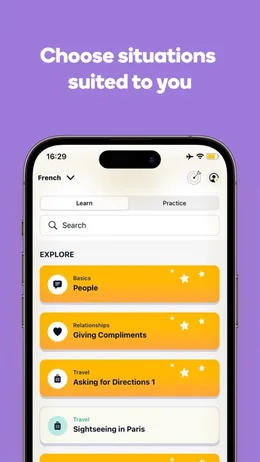
The second layer is Word Lists, Memrise's 2026 comeback for custom decks inside the app. You can build a list, study it on the main engine or browse curated lists. Yet Memrise's Wordlists page adds two tight rules. You can keep only one Active Wordlist per language at a time, and saving video words to your personal list requires Pro.
The third layer is the legacy archive at community-courses.memrise.com. Older HSK decks still work there in a browser with your normal login, yet they stay off the phone app and have no videos. Oddly, the legacy help desk still shows an article updated in November 2026 saying the site was extended to late 2025, even though the main site confirms it stays live.
Memrise's fast expansion leaves odd mismatches too. Its new community page cites 149 languages, while our check of the Chinese landing page still found 23 languages on its pricing card.
Native video clips and 589 Mandarin scenes
Look past the redesign drama, and Memrise's real Mandarin draw stays clear: short clips of real Chinese speakers talking at natural speed.
On Memrise's official Chinese course page, the course overview counts 4,593 words and phrases paired with 418 native clips across hundreds of scenes. A public Chinese Phrasebook lets you browse even more lines.
Hearing varied native voices pays off fast in Mandarin. Studio audio sounds slow and tidy, while street clips force your ear to catch real speed and accents right away.

We audited every one of Memrise's sixteen public Chinese topic pages to check what sits behind Pro. We counted 589 unique scenes with zero overlap across topics. Most are free on the web shelf, 72 carry a Pro lock, and four in five include a preview clip.
Paywalls don't spread evenly across those shelves. Only about one scene in eight is locked overall, yet character study and travel hit far steeper walls:
Source: direct count across all 16 public topic pages under memrise.com/en/learn-chinese/chinese-course, 25 November 2026. Eight other shelves (Society, Sports, Introductions, Education, Opinions, Social Life, Relationships, Work) have 0% to 6% Pro locks.
Free users can still sample hundreds of words, though the phone app adds ads, locks Pro Wordlists and limits Videos and MemBot chats. Over half of the Hanzi shelf requires Pro.
In the Videos tab, Memrise sorts longer clips into red, yellow and green bands by how many words you know. That costs far less than FluentU, though embedded YouTube clips bring a sign-in snag we cover below.
Characters, pinyin quirks and zero HSK alignment
Opening Memrise's public Mandarin lessons turned up our biggest surprise. Many starter scenes teach spoken lines in pinyin without showing Chinese characters at all.
We checked every item across five public Mandarin scenes:
| Public Mandarin scenario | Total items | Hanzi | Pinyin-only | Sample preview items |
|---|---|---|---|---|
| The Basics 1 | 19 | 6 | 13 | 你; hǎo!; ní-hǎo; wǒ qù! (damn!) |
| Greetings | 4 | 0 | 4 | zǎo a!; dōng-xi; zài-jiàn |
| In a Cafe | 8 | 0 | 8 | ní-hǎo; ké-yǐ a; wó shǒu-jī méi diàn le |
| 汉字 (Characters) 1 | 11 | 10 | 1 | 人; 大; 小; 好; ní-hǎo |
| Grammar Zai“ VS. ”Zai | 106 | 27 | 79 | hài; wǒ shì; kāi-xīn; 两; 错 |
Source: direct inspection of five public lesson pages under memrise.com/en/learn-chinese/chinese-course, 25 November 2026. Total: 43 hanzi and 105 pinyin-only items (71%).
Look closely at what we found. Seven in ten preview items skipped hanzi altogether. Even the first Characters lesson slipped pinyin-only hello, 你好, in at the end. Many lines also spell spoken tone changes with hyphens, like ní-hǎo and ké-yǐ a, instead of standard dictionary pinyin.
That choice creates friction once you try real Mandarin reading. Normal books, keyboards and exams expect standard tones on full words such as hello, 你好, or can, 可以. Skipping characters early just pushes reading work down the road.
Pinyin toggles inside the app have known glitches too. Memrise added a Romanisation toggle in Learning Settings, yet a June 2026 notice confirms display bugs and admits the toggle isn't working well yet.
Four wider Chinese gaps sit right beside that bug. Memrise supports mainland Simplified characters, 简体字, only, with zero option for Traditional characters, 繁体字. Cantonese sits on memrise.com/en/learn-cantonese strictly as user-made word lists, not a native-video course.
Character writing is missing as well. Those 55 Hanzi scenes test sight matching only, never stroke order or writing from memory. You will still need Skritter or Pleco for handwriting.
Worst for exam candidates, not one Chinese scene carries an HSK label. With HSK 3.0 launching in December 2026, our HSK 3.0 guide shows why unlabelled phrasebooks leave students hundreds of exam words short. Even grammar looks thin: just one scene title mentions grammar, with a typo in its name, while The Basics 1 teaches damn, 我去, beside hello and yes.
If you want to read real menus, sit an HSK exam or study Taiwan Mandarin, Memrise's scenes won't get you there alone.
MemBot, AI Buddies and Mandarin tone feedback
Memrise pushes AI speaking hard in 2026. Its marketing highlights both MemBot and six newer AI Buddies: Grammar, Role Play, Translator, Culture, Conjugation and Assistant Buddy, plus Pronunciation Buddy inside Word Information.
We read Memrise's AI Buddies help page, updated in September 2026, and spotted a major catch for Mandarin learners. For English speakers, the Buddies cover 17 languages: Danish, Dutch, French, Galician, German, Icelandic, Indonesian, Italian, Polish, Brazilian and European Portuguese, Norwegian, Swahili, Swedish, Turkish, and Spain and Mexico Spanish.
Every single one uses the Latin alphabet. Mandarin Chinese is missing for English speakers. Chinese appears only as a base language for Chinese speakers studying European languages, and even then without Pronunciation Buddy.
Mandarin learners get older MemBot chats in the Conversations tab instead. Memrise's redesign FAQ also confirms it removed Classic Pronunciation mode, pointing learners to MemBot's mic button.
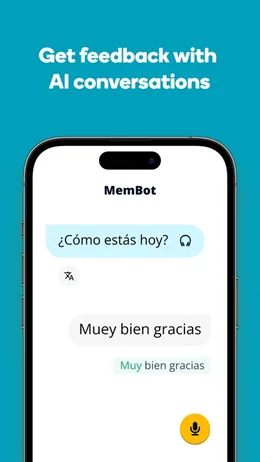
Three published facts limit MemBot for spoken Chinese:
- Stale model labels and lost chats. Memrise's Chinese page still says MemBot runs on GPT-3 in November 2026, while its help page says GPT3.5. A November 2026 FAQ confirms you can't save chats to review later.
- No published tone-accuracy data. MemBot fixes text typos and grammar, as the store screen shows, yet Memrise prints no tone-grading rules or pitch tests.
- Speech tools struggle with pitch. Flip one tone in Mandarin, and buy, 买, turns into sell, 卖. A 2024 ReCALL review of 15 studies found speech tools improve clear sounds well, yet help pitch only modestly.
You also can't hide chat prompts on your home screen, per Memrise's FAQ. Typing Chinese replies means adding a Chinese keyboard in your phone settings first.
For active tone work, read our guide to learning Chinese tones or test your pitch on our free Tone Checker. Treat MemBot as light roleplay chat, not a real tone coach.
Fixed spaced review, typing traps and no offline mode
Memrise still sells itself on memory science, so we checked its exact review intervals on its November 2026 SRS page.
Instead of adapting intervals to how hard each word feels, Memrise runs a rigid eight-step ladder. Reviews step from four hours to twelve hours, one day, six days, twelve days, forty-eight days, ninety-six days and six months. Miss a card once, and it drops straight back to four hours.
That hard reset hurts once you juggle hundreds of characters. In the Anki review benchmark cited in our Chinese flashcard apps guide, modern FSRS-6 cut error roughly in half against older SM-2. A fixed ladder treats easy words and stubborn look-alikes the exact same way.
Three daily quirks add extra friction:
- Typing tests can't be switched off. You can turn off tapping drills in Learning Settings, yet Memrise's help page says typing stays mandatory. Worse, web and phone Learning Settings don't sync.
- Strict gloss order trips up answers. One Canadian Mandarin learner noted that typing multi-meaning words in a different order marks a right answer wrong, such as noodle, 面, which also means flour or face.
- Offline mode is gone. Memrise's redesign page states plainly that cloud tools mean zero offline mode in the new app. Flights and subways cut off your review queue completely.
Embedded YouTube clips add one more catch. A June 2026 support notice says YouTube's embed rules now force users to sign into YouTube inside Memrise's Videos tab. Memrise calls the issue outside its control, telling users to filter to Memrise shorts only. In mainland China, YouTube embeds also fail without a VPN.
Here is how Memrise's review engine compares with dedicated Chinese flashcard apps:
Scheduler
- Memrise
- Fixed 8-step ladder
- Anki
- SM-2 or FSRS-6
- Pleco Flashcards
- Custom or SRS
- SayMei Flashcards
- FSRS
Offline reviews
- Memrise
- None
- Anki
- Full offline
- Pleco Flashcards
- Full offline
- SayMei Flashcards
- Due cards in apps
HSK 3.0 lists
- Memrise
- None official
- Anki
- Community decks
- Pleco Flashcards
- Built-in ($29.99 bundle)
- SayMei Flashcards
- Built-in HSK 1–9
Native video clips
- Memrise
- 418 official clips
- Anki
- DIY add-ons
- Pleco Flashcards
- Audio only
- SayMei Flashcards
- Audio + SayMei TV
Sources: Memrise Help Center, SayMei's Chinese flashcard apps and Pleco guides, and SayMei ground truth, checked 25 November 2026.
For reliable daily reviews on trains or planes, we'd pick Anki, Pleco or SayMei Flashcards over Memrise's cloud-only ladder.
Store stars hide bugs, paywalls and redesign friction
Headline store scores look bright at first glance, yet fresh written feedback tells a split story. Here is where Memrise's store profiles stood in late November 2026:
US App Store
- Rating
- 4.78
- Count
- 217,837
- Context
- Version 2026.11.16, updated 23 Nov 2026; listed since May 2013
Google Play
- Rating
- 4.40
- Count
- 1,571,052
- Context
- Free download; in-app items $0.99 to $349.99
Trustpilot
- Rating
- 1.50
- Count
- ~142
- Context
- Indexed TrustScore ("Bad"); small pool citing billing and support
Sources: Apple iTunes lookup, Google Play and indexed Trustpilot listing, checked 25 November 2026. Exact averages: 4.776 on US App Store and 4.395 on Google Play.
Why does Apple sit near five stars while Trustpilot sits near one? App Store scores pool thirteen years of legacy taps, while Trustpilot collects web buyers upset by auto-renew bills, slow replies or broken lifetime unlocks.
To check what learners experience now, we pulled and hand-coded all 100 entries in Apple's US and Canada most-recent review feeds. Those recent written reviews averaged 3.53 stars, with roughly three in ten giving one or two stars. Here is what came up most often:
Source: hand count of all 100 reviews in Apple's US (avg 3.78) and Canada (avg 3.28) most-recent XML feeds on 25 November 2026. Reviews can raise multiple themes. How we coded them.
Both sides show up clearly. Happy learners love hearing real people instead of robotic audio and call Memrise less nagging than Duolingo. Yet three in ten recent writers ran into technical snags: endless loading when picking a language, dead audio mid-drill, error screens on buddies and overlapping iPad text.
Paywalls and cut features drew the angriest posts. One US user in November 2026 called out the hidden paywall after sign-up. A Canadian user quit in August 2026 after seeing offline mode had vanished.
Lifetime buyers raised a fresh gripe too. One US buyer who upgraded to Lifetime in August 2026 reported that new exam-prep modules demanded another plan on top of Lifetime Pro.
Two recent Canadian reviews named Chinese directly. One gave a single star in September 2026 because the picker showed generic "Chinese" rather than clear Mandarin. A five-star learner in September 2025 loved the drills yet asked Memrise to fix strict multi-meaning typing and give pinyin more care.
Public r/ChineseLanguage and r/memrise threads checked in November 2026 echo our count. Mandarin learners still like the native street clips for ear training, yet most point beginners to HelloChinese, SuperChinese or Anki now that community HSK decks sit off the phone app.
Memrise vs HelloChinese, Anki and FluentU
Most Mandarin learners weighing Memrise compare it against three distinct tools: a full Chinese course, a pure flashcard engine or a video immersion app.
Memrise vs HelloChinese
HelloChinese is built strictly for Mandarin, and the gap shows fast. Its main track teaches over 2,500 words with step-by-step grammar, switches between Simplified and Traditional characters, drills stroke-by-stroke writing and adds graded stories on Premium+.
HelloChinese yearly costs just eight dollars more than Memrise Annual. For beginners, we think that tiny gap buys a real course, clear pinyin lessons and character writing. Keep Memrise only as a side app for street clips once your base is set.
Memrise vs Anki
Anki beats Memrise on flashcard control, offline study and HSK 3.0 readiness. It is free on computers and Android, carries a single one-off fee on iPhone and ships with built-in FSRS-6 spacing.
The trade-off is setup work. Anki starts blank until you load a deck and audio, while Memrise gives you hundreds of ready-made native clips in two taps. For long-term word retention past your first few months, we'd pick Anki easily, as our Chinese flashcard apps guide explains.
Memrise vs FluentU
FluentU pushes Memrise's clip model further with clickable dual subtitles, six subtitle views and full Traditional character support across drama scenes, songs and news.
FluentU also charges more than double Memrise's yearly rate even on its permanent web sale, and recent reviews flag rising bugs plus a one-clip daily YouTube import cap. Neither app saves video offline. For quick Simplified street clips on a budget, Memrise wins on price; for Traditional subtitles on longer clips, FluentU wins on features while free SayMei TV wins on cost.
Who should use Memrise, and better Mandarin picks
We'd still consider Memrise for Mandarin if:
- You want cheap street-clip listening drills. Real native speakers train your ear nicely beside a main course, and you can sample basic scenes free.
- You study European languages too. One paid plan unlocks all languages, and Spanish, French or German actually include the new AI Buddies.
- You want quick casual phrases for a trip. Short topic lists skip dry grammar rules and get spoken lines into your ear fast.
We'd skip Memrise, or keep it strictly as a side tool, if:
- You are starting Mandarin from zero. Skipping pinyin rules, grammar and handwriting builds habits you'll have to unlearn later.
- You need HSK 3.0 prep or Traditional characters. Zero HSK tags, broken pinyin toggles and Simplified-only lessons leave big holes.
- You rely on offline study or tone checks. Cloud-only drills stop on flights, and Mandarin still lacks AI Buddies and tone grading.
Here is what we'd pick instead for each Mandarin goal:
A beginner Mandarin course
- Pick
- HelloChinese
- US price
- $11.99/mo or $69.99/yr
- Why it beats Memrise here
- 2,500+ words, grammar, handwriting and Traditional
An HSK-focused app
- Pick
- SuperChinese
- US price
- $11.99/mo or $59.99/yr
- Why it beats Memrise here
- HSK 1–5 path, Traditional toggle and $139.99 lifetime
Free offline HSK 3.0 cards
- Pick
- Anki
- US price
- Free ($24.99 iOS)
- Why it beats Memrise here
- Built-in FSRS-6 spacing and custom offline decks
Offline dictionary and SRS
- Pick
- Pleco
- US price
- Free; $24.99 web bundle
- Why it beats Memrise here
- Standard dictionary plus HSK 3.0 flashcards offline
Free Chinese dramas and clips
- Pick
- SayMei TV
- US price
- Free
- Why it beats Memrise here
- Official YouTube dramas and clips with tappable words
Traditional short-clip captions
- Pick
- FluentU
- US price
- $143.99/yr web sale
- Why it beats Memrise here
- Six subtitle views and Traditional script toggle
Deep graded reading
- Pick
- Du Chinese
- US price
- $14.99/mo or $119.99/yr
- Why it beats Memrise here
- Over 3,000 graded stories with offline voice audio
Live spoken lessons with tones
- Pick
- SayMei Premium
- US price
- $5.99/mo
- Why it beats Memrise here
- 200 live Mei Lin minutes monthly plus offline FSRS cards
Human conversation and exams
- Pick
- An italki tutor
- US price
- About $20/hour
- Why it beats Memrise here
- Live human feedback matched to your exact goal
Sources: SayMei's live competitor guides and SayMei pricing, checked 25 November 2026.
If you like multi-language apps yet want clear grammar notes for Chinese, read our LingoDeer review. For dual subtitles on YouTube and Netflix, check our Chinese dual subtitles guide.
Where SayMei fits, and where it doesn't
SayMei is our own app, built strictly for Mandarin instead of dozens of languages. One account works on saymei.app and in our iPhone and Android apps. SayMei is also an app for iPhone and Android: get the app.
Four parts line up directly with what learners want from Memrise:
- SayMei TV is free. Stream official Chinese dramas and everyday YouTube videos with hanzi, pinyin, English and tappable words, saving terms with a free account.
- SayMei Flashcards runs FSRS. Free accounts study ten new HSK 3.0 words a day, with offline due-card review in our iPhone and Android apps.
- Free tools and workbooks fill core gaps. Download 402 printable PDF workbooks with a free account, or test your pitch on our free Tone Checker at 80% accuracy.
- SayMei Premium costs $5.99 a month. Unlock 200 live spoken minutes monthly with Mei Lin across HSK 1 to 6, plus 169 graded Stories in Simplified or Traditional, over 3,500 Dialogues and unlimited Flashcards.
We'll be just as plain about where Memrise beats us, and where SayMei stops short. One Memrise plan covers dozens of languages and offers a one-off Lifetime tier, while SayMei teaches Mandarin only on monthly plans. Memrise also weaves short street clips straight into word drills, whereas we separate SayMei TV viewing from flashcard reviews.
We also have clear limits of our own. Live Mei Lin lessons need internet, so only due flashcards work offline beside printed PDFs. SayMei Stories currently stop at HSK 3, and we don't build an offline OCR dictionary like Pleco or book human tutors. Our iPhone app also isn't yet on the App Store in the EU, mainland China, Morocco or Afghanistan.
SayMei's seven-day trials for Stories Unlimited and Premium take a card and auto-renew unless cancelled. Pick SayMei when you want live tone coaching, HSK 3.0 lists and offline FSRS cards; keep Memrise free if you just want extra street-clip ear training.
What to do next
- Try free Chinese scenes first. Browse Memrise's Basics and Food clips to see if its hyphenated pinyin slows you down.
- Build on a real Mandarin spine. Use HelloChinese, SuperChinese or SayMei as your main course so grammar, characters and HSK 3.0 words stay solid.
- Keep HSK decks on FSRS. Put daily word reviews in Anki, Pleco or SayMei Flashcards rather than Memrise's cloud-only ladder.
- Pick Annual on the web if you pay. Skip Monthly and keep the month-long web refund window.
Ready to speak Mandarin out loud with live tone feedback? Try a first lesson with Mei Lin or open our HSK vocabulary lists.
FAQ
Is Memrise good for learning Chinese in 2026?
Memrise works well as a cheap listening and word-drill extra, not as your main Chinese course. Its 418 native clips train your ear on real voices at a fair yearly price. Still, Memrise lacks HSK tags, handwriting, Traditional characters, offline use and Mandarin AI Buddies, so beginners need a structured course beside it.
How much does Memrise cost in 2026, and is Lifetime worth it?
Memrise hides web prices behind sign-in. Apple's US store in November 2026 lists Monthly at $24.99, 3-Month at $24.99, Annual at $61.99, Lifetime at $329.99 and a Lifetime Offer at $131.99. Skip Monthly completely. Annual beats the discounted Lifetime Offer for two full years and beats the list price for five years.
What happened to Memrise Community Courses for Chinese?
In March 2024, Memrise pulled user courses, including popular HSK decks, out of its phone apps and moved them to community-courses.memrise.com. After reversing plans to delete them, Memrise began bringing roughly 800 user decks back into the main app as Word Lists during 2026, while the web archive stays live.
Does Memrise teach Chinese characters, Traditional Chinese or HSK?
Only partly for characters, and not at all for Traditional script or HSK. Memrise's official course uses mainland Simplified characters only and carries zero HSK tags across 589 audited scenes. Its Hanzi shelf tests sight matching without handwriting, with half behind Pro, while seven in ten items in five sampled lessons showed pinyin only.
Does Memrise check Mandarin tones or include AI Buddies for Chinese?
Not with its newest AI tools. Memrise's official help docs confirm its six new AI Buddies cover 17 Latin-script languages for English speakers and omit Mandarin in November 2026. Chinese learners get older MemBot chat, which can't save logs and prints no tone-accuracy test, while Classic Pronunciation mode was cut in the redesign.
Can you use Memrise offline or in mainland China?
No offline mode exists in the redesigned app. Memrise's October 2026 help docs confirm cloud-based practice tools need a live internet link, ending the offline downloads Classic Pro once offered. In mainland China, Memrise's Videos tab also relies partly on embedded YouTube clips, which fail without a VPN and prompt YouTube sign-in everywhere.
Is Memrise better than HelloChinese or Anki for Mandarin?
For most learners, HelloChinese and Anki each beat Memrise at its main job. HelloChinese costs $69.99 a year in November 2026 and teaches grammar, handwriting, Traditional script and thousands of words step by step. Anki is free on computers and Android with offline FSRS-6 spacing, while Memrise wins only on ready-made street clips.
How do you cancel Memrise and get a refund?
Cancel where you paid, at least a day before renewal. Web buyers open Profile, Settings and Account to stop auto-renew, then ask for refunds at app.memrise.com/premium/refunds/. Quarterly and yearly web plans get a 30-day guarantee, while monthly web plans get 14 days under UK law. Renewals aren't refundable, and Apple handles iOS refunds.
Sources
Checked 25 November 2026 unless noted. No accounts were created, no trial was started and nothing was bought.
- Memrise pages: Homepage, Learn Chinese, Chinese Course, Basics, Hanzi, Basics 1, Characters 1, Grammar Zai, Phrasebook, Cantonese, 2026 Community Courses and Terms
- Main Help Center (memrisebeta.zendesk.com): New Memrise, plans, refunds, Lifetime, Annual to Lifetime, cancelling, Family Sharing, AI Buddies, saving MemBot, disabling Conversations, Wordlists, Romanisation toggle, Romanisation bugs, SRS schedule, typing tests, Videos tab, YouTube sign-in, opt-out and community app removal
- Legacy Help Center (memrise.zendesk.com): Mems removal, Forum closure and Community Courses status
- Stores and reviews: US App Store (4.78, 217,837 ratings, v2026.11.16), US RSS (50 recent), Canada RSS (50 recent), Google Play (4.40, 1,571,052 ratings) and Trustpilot (1.5, ~142 reviews); public r/ChineseLanguage and r/memrise threads checked on 25 November 2026
- Competitors and research: SayMei live Oct–Nov 2026 guides (HelloChinese, Chinese flashcard apps, FluentU, SuperChinese, Pleco, Du Chinese, online Chinese tutors), SayMei pricing; Ngo, T. T.-N., Chen, H. H.-J. & Lai, K. K.-W. (2024), ReCALL 36(1), doi:10.1017/s0958344023000113
Methods
We checked Memrise's public pages, course JSON data, both Zendesk Help Centers, Terms of Use and store listings on 25 November 2026 without creating an account, starting a trial or buying a plan.
- Mandarin course audit: Extracted the course overview payload on memrise.com/en/learn-chinese/chinese-course (554 scenarios, 4,593 learnables, 418 videos, 77 missions; Phrasebook 5,766) and all 16 Chinese topic pages, deduplicating by scenario ID (589 unique scenarios: 517 free, 72 Pro-locked, 479 with preview video) and checking all 148 items across five scenarios for hanzi versus pinyin-only previews.
- Pricing and policy audit: Verified live US App Store in-app purchases on 25 November 2026 alongside all 91 articles on memrisebeta.zendesk.com, 126 articles on memrise.zendesk.com and Memrise's Terms of Use.
- App Store review coding: Pulled all 100 entries in Apple's US (50 reviews, 8 August to 16 November 2026) and Canada (50 reviews, 14 September 2025 to 14 November 2026) most-recent XML feeds on 25 November 2026, reading and hand-coding every review across six non-exclusive themes.
- Competitors and Mandarin: Rival US prices match SayMei's October–November 2026 guides and live pricing; all characters and tone-marked pinyin were checked against CC-CEDICT.
If you spot an error or price change, tell us: we update and fix mistakes.