World classic, retold in simple Mandarin
Beauty and the Beast
美女与野兽
Beauty and the Beast (美女与野兽, Měinǚ yǔ yěshòu) is a fairy tale by Jeanne-Marie Leprince de Beaumont, retold in simple Mandarin as a 5-chapter story with audio for learners at about HSK 2 (Elementary).
Retold from Jeanne-Marie Leprince de Beaumont's 1756 fairy tale: a merchant's youngest daughter asks for a single rose, and pays for it by living in the palace of a Beast who asks her the same question every night.
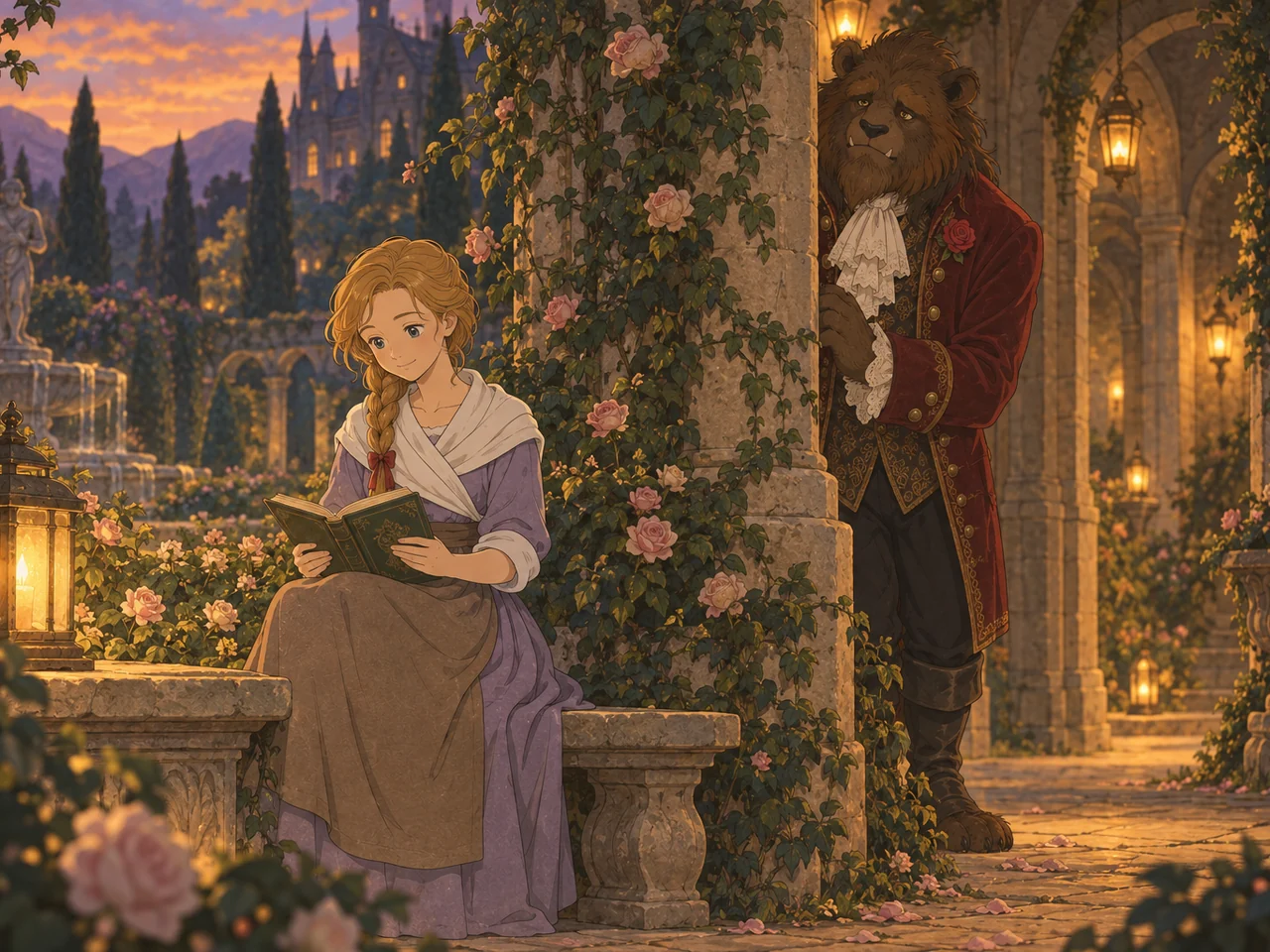
Meet the voices
- Narrator · 旁白 — Tells Beaumont's old French tale plainly and gently, with a soft spot for the girl who asked for a rose.
- Beauty · 美儿 — The merchant's youngest daughter: cheerful, hardworking and honest, she would rather make her father smile than own a new dress.
- Father · 爸爸 — A merchant who lost his ships and his fortune, a gentle, worried man who would do anything for his three daughters.
- Eldest Sister · 大姐 — The eldest daughter, proud and vain, who misses her old dresses and balls and can't bear to see her little sister loved.
- Second Sister · 二姐 — The middle daughter, lazy, loud and greedy, who sleeps till ten and always wants whatever her big sister wants, and a little more.
- The Beast · 野兽 — The frightening master of an enchanted palace: gruff and blunt, he hates flattery, loves his roses, and has the kindest heart in the story.
- The Prince · 王子 — A handsome young prince who appears in the Beast's garden at the very end, with a secret to tell.
- The Good Fairy · 仙女 — A wise and powerful fairy who has been watching Beauty's kindness all along.
5 chapters, one journey
Chapter 1: Just One Rose
我只要玫瑰花
Her family has lost everything, and Beauty only wants to see her father smile again. When he rides off to town, she asks him for just one rose.
Free to read
Chapter 2: The Beast in the Garden
花园里的野兽
A soft bed, new clothes, hot chocolate and a garden full of roses: the empty palace seems so kind. Then Father picks one rose for Beauty, and its owner finds him.
Free to read
Chapter 3: Supper with the Beast
和野兽吃晚饭
Beauty rides to the palace sure that the Beast will eat her. Instead she finds a room with her name on the door, a mirror that shows her home, and a Beast with a question.
Free to read
Chapter 4: One More Week
再住一个星期
Every night at nine the Beast asks his question, and every night Beauty says no. Then she goes home for one week, and her jealous sisters hatch a plan.
Free to read
Chapter 5: Beauty's Answer
美儿的回答
Beauty hurries back to the palace, but when nine o'clock comes, the Beast does not. Her dream was true, and now only her answer can save him.
Free to read
Key words in Beauty and the Beast
Behind the story
This book retells La Belle et la Bête, the version of Beauty and the Beast that Jeanne-Marie Leprince de Beaumont published in 1756 in her Magasin des enfants, a book of lessons and stories she wrote while working as a governess in London. She cut down a much longer 1740 version by Gabrielle-Suzanne de Villeneuve into the short, clear tale most later tellings follow: the merchant's lost ships, the single rose, the question asked every night, the magic mirror and ring, and a Beast who nearly dies of sadness in his garden.
Chinese readers know the tale as 美女与野兽, “the beautiful girl and the wild beast,” and the title has become an everyday phrase: people jokingly call a couple 美女与野兽 when a pretty woman's partner is much plainer than she is. Beaumont's heroine got her name because everyone called her “the beautiful child” when she was little; in this book she is 美儿, “little beauty.”
Did you know?
- Beaumont's tale has a stern ending that many retellings leave out: a good fairy turns the two jealous sisters into stone statues at the palace gate, until they admit their faults.
- In 2016, researchers who traced folktales across many languages estimated that the story of Beauty and the Beast may be around four thousand years old.
- In Chinese a rose is 玫瑰 (méigui). Red roses are a favorite gift on 520, May 20, a day popular with couples because 五二零 sounds a little like 我爱你, “I love you.”